
Yangshuo at a Glance
| Item | Information |
|---|---|
| Province | Guangxi |
| Nearest City | Guilin |
| Recommended Stay | 2–3 Days |
| Famous For | Karst Mountains |
| Best Season | September–November |
| Main Activities | Cycling, Bamboo Rafting, Hiking |
| Nearest Airport | Guilin Liangjiang Airport (KWL) |
| Railway Station | 📍 Destination Address 请带我去:阳朔站 (Yangshuo Station) Take me to: Yangshuo Station (located in Xingping, ~35km from town) |
Is Yangshuo worth visiting?
Yes. Yangshuo is one of China's most scenic destinations, famous for its karst mountains, bamboo rafting, countryside cycling, and Li River landscapes. Most travelers spend 2–3 days exploring the Yulong River, Xingping Ancient Town, Moon Hill, and West Street.
Why Visit Yangshuo?
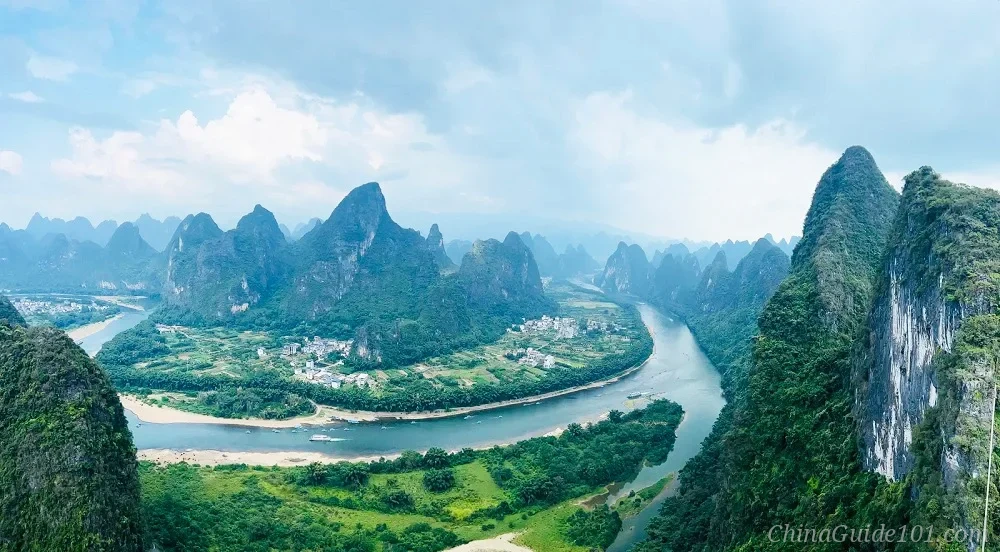
If you've ever flicked through a Chinese landscape painting come to life, it was almost certainly inspired by Yangshuo. The moment the karst peaks begin to rise from the Li River mist, you understand why this corner of Guangxi has become one of the most photographed and talked-about destinations in all of China.
PRO TIP: YANGSHUO IN 2026
For anyone asking "Is Yangshuo worth visiting?" — the answer in 2026 is still a resounding yes, but for reasons that go way beyond the postcard.
This is China's most classic landscape, the kind that has graced countless movie screens and the back of the 20 RMB note. It delivers world-class karst topography that rivals Halong Bay or Phang Nga Bay, yet feels far more intimate because you're cycling right through the base of the limestone towers. Yangshuo also happens to be one of the most foreigner-friendly small towns in the country. Many tourist-oriented restaurants offer English menus, major scenic spots have bilingual signage, and a relaxed, open-air cafe culture makes it a soft landing for independent travellers who might be intimidated by megacities like Beijing or Shanghai. But perhaps the most overlooked reason to come is that Yangshuo is a genuine outdoor activity paradise. Rock climbing, cycling, river drifting, hiking — you can stitch together an adventure holiday that has nothing to do with temples or shopping malls. Above all, it shows visitors a side of China that looks nothing like the skyscrapers they expect: farmers tending paddy fields, water buffalo cooling off in the shallows, and old men poling bamboo rafts under ancient bridges. In a country that's urbanising at breakneck speed, Yangshuo still feels like a deep, calming breath.
What Is Yangshuo Famous For?
If you're searching "Why is Yangshuo famous?" — you're not alone. This small county has an outsized reputation, and it's earned it through a combination of natural drama and outdoor culture that few places on earth can match.
The star of the show. Thousands of limestone peaks, shaped like upturned teeth, sugar loaves and sleeping giants, create a skyline that's unmistakable. These towers are what make every photograph from Yangshuo instantly recognisable.
The Li River (Lijiang) is the liquid thread that ties the scenery together. Its 83-kilometre stretch from Guilin to Yangshuo is the most celebrated river journey in China, and the section around Xingping is the actual landscape printed on the 20 RMB banknote.
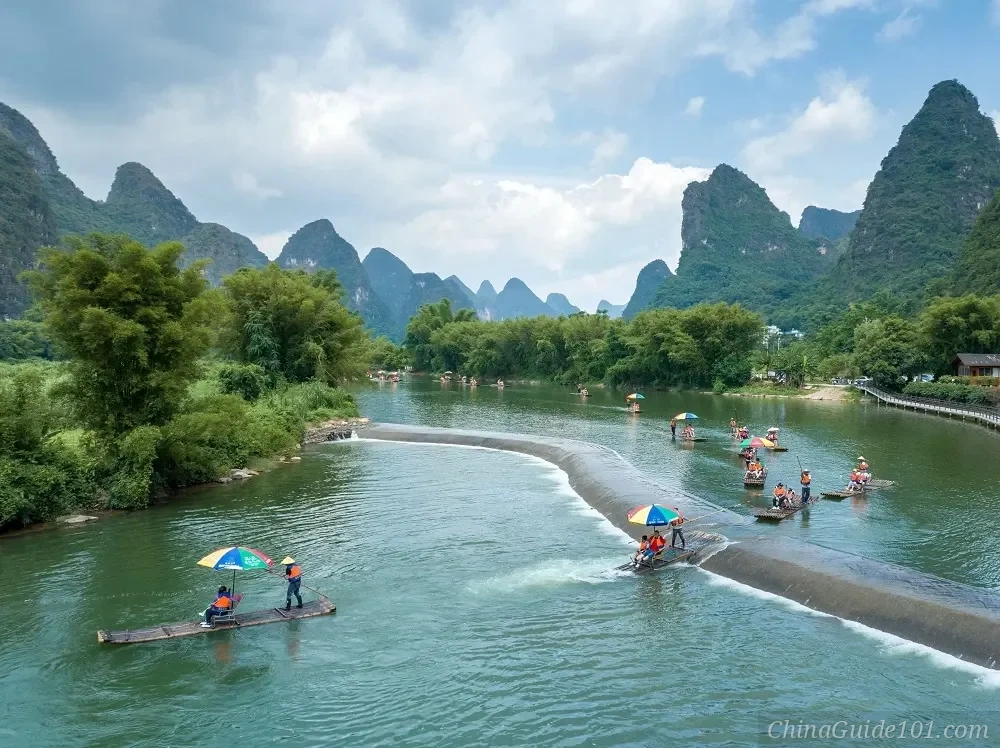
Smaller, greener, quieter. The Yulong River (遇龙河) winds through bamboo forests and under ancient stone bridges. It's the heart of Yangshuo's bamboo rafting scene and arguably offers a more intimate encounter with rural life than the busy Li River.
- 20 RMB Viewpoint
You'll find this exact spot in Xingping Ancient Town. Hold up a 20 RMB note, line up the peaks, and snap the iconic photo. It's a pilgrimage for both domestic and international tourists. - Cycling Paradise
Yangshuo is arguably the best place in China to ride a bike. The terrain is flat, the dedicated cycling paths are scenic, and electric bikes have made it accessible to everyone. You can ride for hours through rice paddies and under karst arches without seeing a single car.
- Rock Climbing (Miss the season)
With hundreds of established climbing routes on limestone karst, Yangshuo is one of the world's premier rock climbing destinations. It attracts climbers of all levels, from beginners trying their first outdoor climb to experts tackling overhanging tufas. The climbing season runs best in autumn and spring.
Where Is Yangshuo?
Yangshuo is a county town nestled in the northeast of Guangxi Zhuang Autonomous Region, in southern China. Its landscape is defined by the Li River watershed, which winds from the city of Guilin some 83 kilometres downstream all the way to Yangshuo town. Many travellers think of Guilin and Yangshuo as two separate destinations, but they're tightly linked: Guilin is the regional hub with the biggest airport and rail connections, while Yangshuo is the countryside escape where the scenery reaches its crescendo.
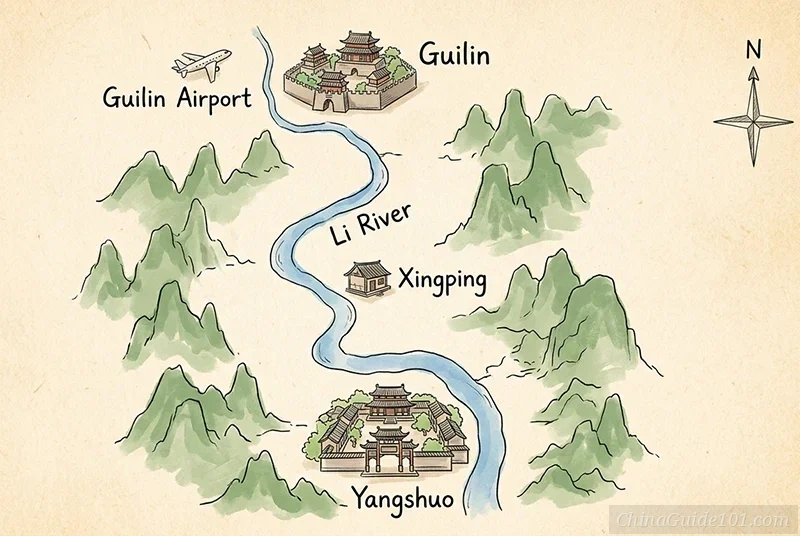
To visualise the geography: Guilin city sits at the northern end of the Li River, with Guilin Liangjiang Airport to its northwest. The Li River flows southward, carving through the karst belt. Yangshuo town lies at the southern end of the classic river stretch. Xingping Ancient Town is perched roughly midway along the river, near the famous big bend.
PRO TIP: LOCATION MAP
A clear location map can help you understand these spatial relationships at a glance — keep one saved on your phone before you travel.
How Many Days Do You Need in Yangshuo?
The length of your stay dictates how deeply you'll connect with the landscape. Some people rush through on a day trip from Guilin; others stay a week and still feel they haven't seen enough. Here's a realistic breakdown.
A single day is painfully short but possible if you're on a tight China itinerary. You'd typically arrive early, speed-walk a section of West Street, join a bamboo raft ride on the Yulong or Li River, and maybe squeeze in a quick visit to Moon Hill before catching the last bus back to Guilin. You'll get a taste of the karst scenery, but you'll miss the slow magic that makes Yangshuo special.
Two days is the sweet spot for first-time visitors who want to hit the highlights without feeling frantic. You can cover an iconic river experience, one major viewpoint, a countryside cycling route, and still have an evening to enjoy the nightlife.
With three days you can add layers. Mix classic sightseeing with off-the-beaten-path villages, do a sunrise hike up Xianggong Hill, and maybe watch the Impression Liu Sanjie light show. This is the recommended length if you enjoy photography or just want to slow down.
Four to five days opens the door to deeper exploration. You can base yourself in two different areas — say, two nights near West Street and two nights in the Yulong River valley — and include activities like rock climbing, bamboo weaving workshops, or a day trip to the Xingping area to hunt down the 20 RMB banknote view at different times of day. It also gives you enough flexibility to wait out a rainy day.
PRO TIP: THE GOLDILOCKS ZONE
For most independent travellers, 2–3 days is the Goldilocks zone. You'll leave feeling you've truly experienced the place, rather than just ticking a box.
Best Time to Visit Yangshuo
Timing can make or break your trip here, and the region's weather has a few quirks that overseas visitors often overlook. Guangxi has a pronounced subtropical monsoon climate, which means a defined rainy season and sticky summers. Choosing the right window will affect how much you see — and how much you sweat.
Spring is a mixed bag. March can still be chilly and damp, but by April the countryside erupts in fresh green and wildflowers. The Li River is often shrouded in rolling mist, creating those iconic moody photographs. Average temperatures range from 15°C to 26°C (59°F–79°F). The downside? Rain. May marks the official start of the rainy season, with frequent afternoon downpours. However, showers usually pass quickly, and the humidity hasn't yet reached its peak. Pack a light waterproof jacket and you'll be fine.
Summer is hot, humid and wet — sometimes extremely so. Temperatures hover between 26°C and 34°C (79°F–93°F), with humidity often above 80%. This is the core of the Guangxi monsoon, and you should expect sudden, torrential rain that can cause the rivers to swell and turn a milky jade colour. On the bright side, summer delivers the most dramatic water flow for bamboo rafting, and the karst peaks look especially lush. Early mornings and late afternoons are the only sane times for outdoor activities.
For most travellers, autumn is hands-down the best season to visit Yangshuo. The rain tapers off after mid-September, humidity drops, and daytime temperatures settle into a perfect 20°C–28°C (68°F–82°F). The skies clear to a deep blue that contrasts brilliantly with the green rice terraces and limestone peaks.
Winter is mild by northern standards but can feel colder than the numbers suggest because of the damp air. Daytime highs sit around 10°C–15°C (50°F–59°F), while nights can dip near freezing. Snow is virtually unheard of, but the grey, drizzly days can persist for a week at a time. On the plus side, you'll have the rice terraces and river viewpoints almost to yourself. Hotel rates are at their lowest, and the misty winter scenery has a soft, monochrome beauty. Just bring layers and a good attitude toward unpredictable weather.
- Foreign tourists frequently assume it's "just a bit of drizzle," but a proper rain poncho and waterproof shoes make a world of difference.
- Do not underestimate the rain: it's not unusual for trails to become slippery and for some bamboo raft docks to suspend operations during heavy rainfall for safety.
PRO TIP: AUTUMN TRAVEL
October and early November are especially popular, so book accommodation in advance if you're visiting during the National Day holiday (first week of October), when domestic tourism spikes.
Yangshuo vs Guilin: Which Should You Choose?
The "Yangshuo vs Guilin" question comes up constantly, and it's understandable — they share the same karst landscape, yet offer completely different experiences. The table below breaks down the practical differences.
| Aspect | Yangshuo | Guilin |
|---|---|---|
| Natural Scenery | ✅ Better — you're inside the landscape | Good, but more urban |
| Nightlife | ✅ Better — West Street buzzes until late | Quieter, spread out |
| Transport Hub | ❌ Worse — Yangshuo Station is far from town | ✅ Better — major airport and multiple train stations |
| Hotel Options | Similar — boutique guesthouses and resorts | Similar — larger city hotels |
| Atmosphere | Countryside, small-town, laid-back | City, parks, business travellers |
| Best For | First-time visitors wanting the classic landscape | Transit or as a city break |
PRO TIP: THE VERDICT
The verdict:If you only have time for one destination, choose Yangshuo. Guilin works well as a transit point and has a couple of worthwhile sights, but Yangshuo is where the postcard China you've imagined actually lives. Many travellers land in Guilin and head straight to Yangshuo by bus or Li River cruise, spending their entire stay in Yangshuo's river valleys.
Typical Travel Costs in Yangshuo
Travellers often search "How much does Yangshuo cost?" and the answer is refreshing: compared to China's big cities, Yangshuo offers exceptional value. Prices are quoted in Chinese Yuan (¥). Here's what you can expect per person, per day, broken down by travel style.
| Expense | Budget Traveller (¥200–400/day ) | Mid-range (¥500–1,000/day ) | Comfortable (¥1,200+/day ) |
|---|---|---|---|
| Accommodation | Hostel dorm or basic guesthouse (¥60–120 ) | Boutique hotel or riverside guesthouse (¥250–500 ) | Resort or luxury villa (¥800+) |
| Meals | Local rice noodles and street snacks (¥30–60 ) | Restaurant meals, beer fish dinner (¥80–200 ) | High-end dining with drinks (¥250+) |
| Transport | Bus, shared bike (¥20–50 ) | E-bike rental, occasional taxi (¥50–150 ) | Private car with driver (¥300+) |
| Activities | One bamboo raft or hiking (¥80–150 ) | Two activities, entry fees (¥150–350 ) | All-inclusive guided tours (¥500+) |
| Total/day | ¥200–400 | ¥500–1,000 | ¥1,200+ |
Typical fixed costs (approximate, subject to seasonal change):
- Beer Fish dinner for two:¥80–150
- Bamboo raft ride (per person, varies by route):¥160–400
- Mid-range hotel (double room):¥250–500
- E-bike rental (full day):¥40–60
- Taxi from Yangshuo Station to town:¥80–100
- Impression Liu Sanjie ticket (varies by seating and season): from ¥220
- Moon Hill admission: a small entrance fee is charged (check current price locally)
- Always confirm prices at the official ticket counter or through your accommodation.
- The best way to control costs is to travel outside the October National Day holiday and Chinese New Year, when prices can double or triple.
- Touts on the street often inflate rates.
Top Things to Do in Yangshuo
This is where your camera memory card starts to sweat. The sights are arranged roughly as you'd encounter them moving through the landscape, from the intimate Yulong River to the epic Li River viewpoints.
Explore Yulong River
If you only have time for one landscape immersion, make it the Yulong River (遇龙河). This tributary of the Li River meanders through bamboo groves, rice paddies and under ancient stone bridges, with far less motorised boat traffic than the main Li River. The banks are lined with wildflowers most of the year, and the gentle current reflects the surrounding karst like a quicksilver mirror. Unlike the wide Li River, the Yulong feels cosy and personal — you're often close enough to wave at farmers planting rice. Whether you float on a bamboo raft or cycle alongside it, the Yulong corridor is the Yangshuo that still lives up to the old legends.
Take a Bamboo Raft Ride
Here's a reality check for 2026 that most English-language websites still get wrong: the term "bamboo rafting" no longer means the long, silent, hand-poled drift that early backpackers raved about. On the Li River, the iconic rafting stretch between Yangdi and Xingping is now primarily operated with motorised rafts built from PVC pipes and powered by outboard engines. They're safe and will get you to the 20 RMB viewpoint, but they buzz rather than whisper.
On the Yulong River, the story is mixed. Genuine bamboo rafts do exist, and on some sections — particularly the route from Jinlong Bridge to Old County (旧县) — you may still be punted along by a boatman with a long pole. However, in response to growing visitor numbers and labour shortages, many Yulong piers now use electric-powered bamboo rafts that glide with a low hum. The trade-off is that you can cover more distance, and the experience is still wonderfully scenic. The key is to manage expectations: you won't be silently drifting along untamed rapids like a Tang dynasty poet. You will be sitting on a flat raft wearing a life jacket, often in a convoy of other rafts, but the karst backdrop remains extraordinary. Prices vary by route and season, so check at the official dock. Book through official channel mini-programs or at the dock, never through random touts.
Cycle Through the Countryside
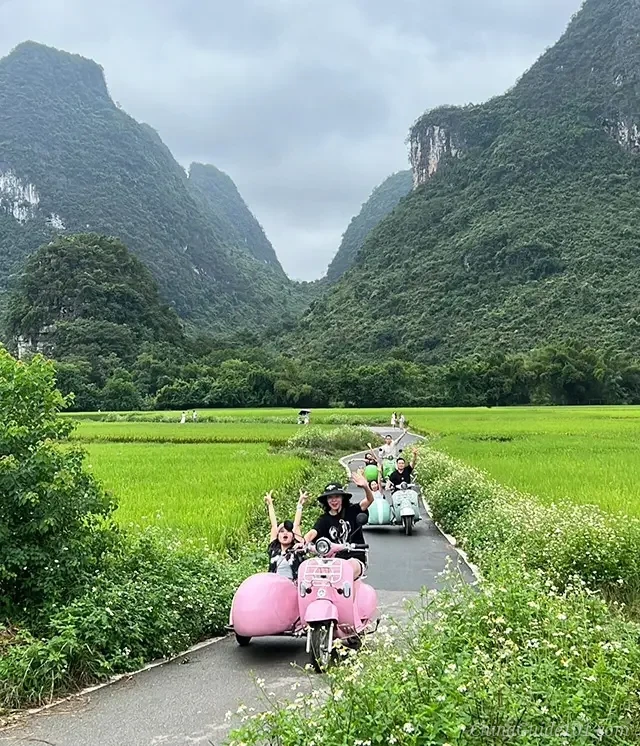
Yangshuo is, without exaggeration, one of the best places in Asia for casual cycling. You rent a sturdy city bike or an e-bike (electric scooter-style bikes are now ubiquitous) and simply follow the lanes that weave between rice paddies and limestone towers. There are two classic routes. The Yulong River Scenic Area loop takes you along the riverbank past Dragon Bridge, through villages where elders still wash clothes in the stream. The second is the Ten-Mile Gallery (十里画廊) road, a flat, dedicated cycling path that runs from the edge of town towards Moon Hill, with continuous postcard views. E-bikes cost around ¥40–60 per day, include a helmet, and let you cover much more ground without collapsing in the humidity. Download an offline map via Amap before you go, as signage can be patchy on smaller lanes.
Explore Ten-Mile Gallery
The Ten-Mile Gallery (十里画廊) is less a single sight and more a panorama road that unfolds for about 16 kilometres from the edge of Yangshuo town to Moon Hill. While cars are now restricted on much of the route, it's a paradise for e-bikes and bicycles. Designated pull-over spots let you stop and gawk at peaks named "Camel Crossing the River" or "Sister Peak". There are also small side paths leading to farmhouses, orchards and unofficial viewpoints. If you're short on time, riding the Ten-Mile Gallery in the golden hour before sunset is one of the easiest, most rewarding things you can do in Yangshuo. Avoid midday when the sun is harsh and the road can feel like a baking pan.
Visit Moon Hill
Moon Hill (月亮山) is exactly what it sounds like: a limestone arch with a perfect circular hole through its summit, formed by millennia of wind and water erosion. It's located about 8 km south of town, easily reached by bike or e-bike along the Ten-Mile Gallery road. A steep 800-step stone staircase takes you up to the arch, where you can walk right through the "moon" and look out over the corduroy pattern of rivers and fields below. The hike takes 30–50 minutes depending on fitness. Go early to beat the heat and the tour bus crowds. An admission fee is typically charged; check current ticket prices before visiting as they can change. Bring water and mosquito repellent, and be aware the steps can be treacherous after rain.
Walk Along West Street
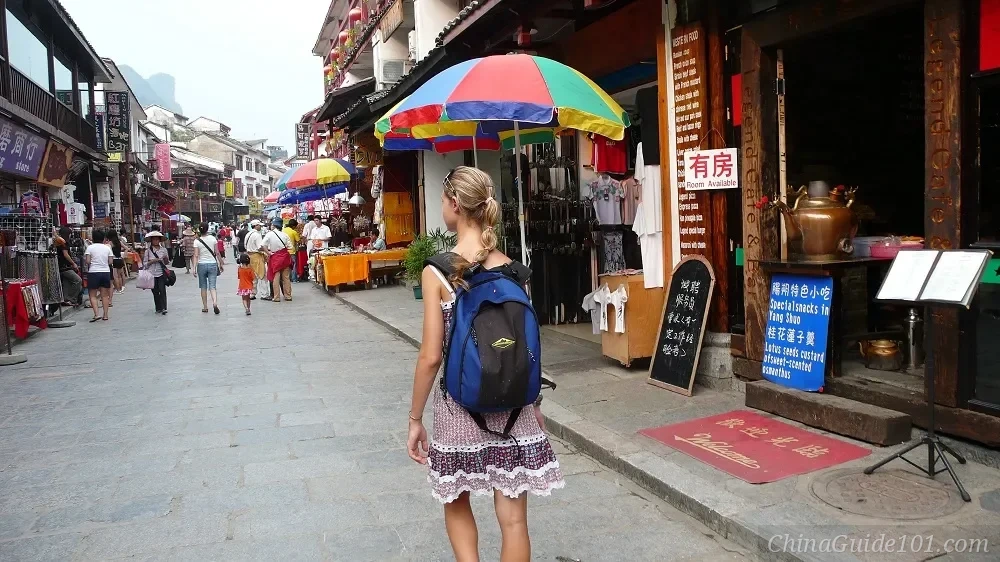
West Street (西街) is the beating, neon-lit heart of Yangshuo town. Its history stretches back over 1,400 years, but today it's a pedestrianised strip of souvenir shops, craft beer bars, hotpot joints and live music venues. During the day it can feel a bit sleepy, but after dark it transforms into a noisy carnival that has become a fixture of domestic Chinese tourism. For foreign visitors, West Street works best as a place to eat, grab a drink on a rooftop terrace, or simply people-watch. The side alleys are where you'll find better-value family-run restaurants and quirky cafes. Yes, it's touristy — but sit with a cold bottle of local Li River beer and watch the lanterns sway in the breeze, and you'll understand its appeal.
Watch Impression Liu Sanjie
Impression Liu Sanjie (印象·刘三姐) is an open-air spectacle directed by Zhang Yimou, the filmmaker behind the Beijing Olympics opening ceremony. The stage is a 2-kilometre stretch of the Li River itself, with the karst peaks lit up as the natural backdrop. Over 600 performers, mostly local fishermen and farmers, take part in a show that blends folk songs, lights and choreographed bamboo rafts. It's big, it's bold, and love it or loathe it, it's undeniably unique. The show runs most nights at 8:00 pm; ticket prices vary by seating category and season. Book online a day ahead during busy seasons. The outdoor venue means performances can be cancelled in heavy rain — something to keep in mind during summer.
Climb Xianggong Hill
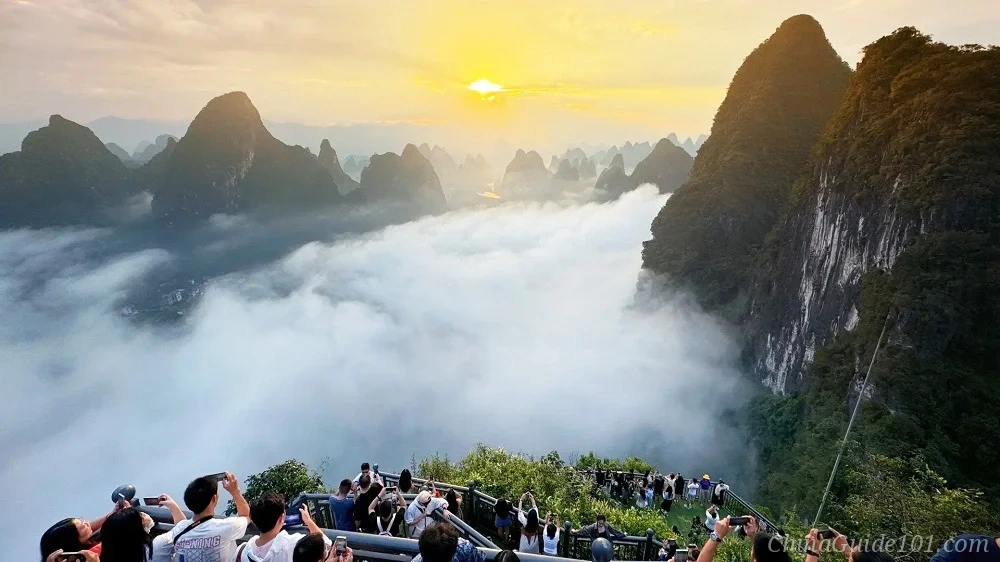
Xianggong Hill (相公山) delivers the single most iconic panoramic shot in the Yangshuo region: a perfect serpentine bend of the Li River wrapped by an amphitheatre of razor-sharp karst peaks. Many of the most famous drone photographs and promotional images of the Li River are taken from Xianggong Hill — if you've seen a jaw-dropping view of mist-shrouded pinnacles reflected in the river, odds are it was captured here. Located on the opposite side of the river from Yangshuo town, the hill requires a pre-dawn start if you want sunrise. It's a steep but short 15–20 minute climb up concrete steps to the summit viewing platform. An entrance fee is charged. Check current ticket prices before visiting. The easiest way to get there is to join an organised sunrise minivan tour from Yangshuo (departing around 4:30 am) or to hire a private car. Photographers should bring a tripod and arrive early to secure a spot on the cramped platform. Even if you're not a morning person, the mist-filled valley at daybreak is worth every lost hour of sleep.
Visit Xingping Ancient Town
Xingping (兴坪) is a quiet, time-worn settlement on the Li River about 35 km from Yangshuo town, and it's world-famous for one very specific reason: the view printed on China's 20 RMB note. The exact spot is a short walk from the town dock along the riverbank, marked by a viewpoint platform where you can hold up a 20 RMB bill and align it with the real peaks behind. Beyond the banknote photo, Xingping's old street still has flagstone lanes, Ming and Qing dynasty architecture, and a laid-back rhythm that Yangshuo's West Street lost years ago. You can also take a short motorised Li River raft to the famed "Nine Horse Fresco Hill" or simply sip tea at a riverside guesthouse. Many travellers using Yangshuo Railway Station find Xingping more convenient than Yangshuo town itself — more on that later.

- Download an offline map via Amap before you go, as signage can be patchy on smaller lanes.
- Riding the Ten-Mile Gallery in the golden hour before sunset is one of the easiest, most rewarding things you can do in Yangshuo.
- Go early to Moon Hill to beat the heat and the tour bus crowds. Bring water and mosquito repellent.
- Photographers heading to Xianggong Hill should bring a tripod and arrive early to secure a spot on the cramped platform.
- Book bamboo rafts through random touts. Never do that.
- Avoid midday at Ten-Mile Gallery when the sun is harsh and the road can feel like a baking pan.
- Be aware the Moon Hill steps can be treacherous after rain.
PRO TIP: SHOWS & ALLEY DINING
For West Street, the side alleys are where you'll find better-value family-run restaurants and quirky cafes. For Impression Liu Sanjie, book online a day ahead during busy seasons. The outdoor venue means performances can be cancelled in heavy rain — something to keep in mind during summer.
Best Photography Spots in Yangshuo
Photography is a core reason many travellers make the pilgrimage to Yangshuo. The interplay of light, mist and limestone creates compositions that feel almost unfair — point your camera anywhere and you'll walk away with something frame-worthy. But a few locations stand head and shoulders above the rest.
The undisputed champion. The elevated platform looks down on a perfect S-curve of the Li River, with a wall of karst peaks receding into the distance. Sunrise is magical, but late afternoon light can also work if you don't mind a few more people. Bring a telephoto lens to compress the layers.
This is the exact view that appears on the 20 yuan banknote. Come early in the morning to avoid the selfie-stick crowd, and experiment with framing a physical banknote against the real peaks. A polarising filter helps cut the glare off the river.
The ancient stone bridges along the Yulong, especially Dragon Bridge (Yulong Qiao), offer gorgeous reflections on calm days. Late afternoon light warms the stone and turns the river gold. A wide-angle lens lets you capture the bridge, the river and the peaks beyond.
From the arch itself, you can frame the patchwork of fields and distant mountains through the circular hole — a classic Yangshuo composition. The climb is short but steep, so a compact tripod or Gorillapod is handy.
Rather than one fixed spot, the Ten-Mile Gallery offers constantly changing roadside views of karst towers, rice fields and fruit orchards. Use an e-bike to scout compositions; the soft light just before sunset brings out textures in the limestone and greens in the paddies.
- Bring a telephoto lens to compress the layers at Xianggong Hill.
- Come early in the morning to 20 RMB Viewpoint to avoid the selfie-stick crowd, and experiment with framing a physical banknote against the real peaks. A polarising filter helps cut the glare off the river.
- At Yulong River Bridges, shoot in late afternoon light as it warms the stone and turns the river gold. Use a wide-angle lens to capture the bridge, the river and the peaks beyond.
- Bring a compact tripod or Gorillapod for Moon Hill as the climb is short but steep.
- Use an e-bike to scout compositions at Ten-Mile Gallery; the soft light just before sunset brings out textures in the limestone and greens in the paddies.
- Don't miss the late afternoon light at Xianggong Hill if you don't mind a few more people.
How to Get to Yangshuo
Yangshuo's transport puzzle confuses a lot of first-timers because the town is neither the airport hub nor the primary high-speed rail station town. Here's how to navigate it.
From Guilin Airport
Guilin Liangjiang International Airport (KWL) is about 70 km from Yangshuo. The most convenient option is the direct airport shuttle bus to Yangshuo town, which takes around 1.5–2 hours and costs roughly ¥70–90 . Buses run roughly every 1–2 hours from late morning until early evening. If you land at night, your best bet is a taxi or pre-booked transfer (approx.¥220–300 ).
From Guilin Railway Station
Guilin has multiple train stations, which confuses things further. Guilin Station (桂林站) and Guilin North (桂林北) serve conventional and some high-speed trains, while Guilin West (桂林西) is the main high-speed hub. From any of these, you can take a public bus to Guilin's central bus station and then a direct coach to Yangshuo (1.5 hrs, around ¥30 ). Alternatively, take a taxi or Didi directly, which will cost ¥150–200 .
High-Speed Train — Yangshuo Railway Station Catch
This is the crucial detail most travel guides skip. In recent years, the easiest way for domestic and international tourists to reach the area is the high-speed train direct to Yangshuo Railway Station (阳朔站). It sits on the Guiyang–Guangzhou high-speed line, with regular services from Guangzhou, Shenzhen, Hong Kong (Kowloon) and Guilin. The catch? Yangshuo Railway Station isn't in Yangshuo town at all. It's actually in Xingping, about 35 km (a 50–60 minute bus ride) from West Street.
When you exit the station, you'll find official green shuttle buses to Yangshuo town for about ¥20 . They drop you near the central bus terminal, a short walk or taxi ride from West Street. If you're heading to Xingping Ancient Town first, it's a quick 15-minute local bus or taxi ride from the station. Keep this quirk in mind, especially if you're booking a late arrival and expect to step directly into a lively downtown — you won't. Plan your first night accordingly.
- Keep this station quirk in mind, especially if you're booking a late arrival, and plan your first night accordingly.
- When you exit the station, look for the official green shuttle buses to Yangshuo town for about ¥20 .
- Don't expect to step directly into a lively downtown when you arrive late at Yangshuo Railway Station — you won't.
- Don't get confused by Guilin's multiple stations (Guilin, Guilin North, Guilin West) without checking your specific train ticket.
PRO TIP: LI RIVER CRUISE OPTION
And of course, the classic Li River cruise from Guilin to Yangshuo (4–5 hours on a tourist boat) remains one of the world's great river journeys, depositing you right at the Yangshuo dock. It costs ¥300–450 and includes lunch. If you have the time, it's far more memorable than a bus.
Where to Stay in Yangshuo
Your base shapes your experience profoundly. Yangshuo's accommodation clusters into three distinct zones, each with a completely different vibe.
West Street Area
Staying in or just off West Street puts you in the centre of the action. You're walking distance from countless restaurants, bars, and the shuttle bus drop-off points. This area is best for first-time visitors who want convenience, nightlife, and don't mind street noise until late. Choose a side alley hotel rather than directly on the main drag if you value sleep. Options range from clean hostels to mid-range boutique hotels, typically ¥150–500 per night.
Yulong River Area
The Yulong River valley, especially around Jima, Chaoyang and the Dragon Bridge area, is where you come to slow down. Lodgings here are typically standalone guesthouses and countryside retreats nestled right beside rice fields and karst peaks. You'll wake up to fog drifting over the river and the sound of cicadas. This is the ideal zone for couples, families and anyone seeking a genuine rural escape. The trade-off is that you need your own transport — scooters or e-bikes — to get into town for dinner. Many guesthouses offer bike rentals and home-cooked meals.
Xingping Area
For photographers and travellers obsessed with the Li River dawn, Xingping makes an excellent alternative base. The town has a small but growing collection of guesthouses, some with terraces directly overlooking the iconic banknote bend. It's quieter than Yangshuo, with fewer Westernised cafes, but the early-morning access to Xianggong Hill and Lao Zhai Hill is unbeatable. This area is also super convenient if you're arriving or departing via Yangshuo Railway Station.
- Choose a side alley hotel rather than directly on the main drag in West Street Area if you value sleep.
- Stay in Yulong River Area if you want to wake up to fog drifting over the river and the sound of cicadas, as it is the ideal zone for couples, families and anyone seeking a genuine rural escape.
- Consider Xingping Area if you are a photographer or traveller obsessed with the Li River dawn, or if you're arriving or departing via Yangshuo Railway Station.
- Don't stay directly on the main drag of West Street if you are sensitive to street noise until late.
- Don't forget that you need your own transport — scooters or e-bikes — to get into town for dinner if you choose the Yulong River Area.
What to Eat in Yangshuo
Yangshuo's food scene blends rustic Guangxi flavours with a dash of international influence from years of catering to backpackers. The local dishes are hearty, often spicy-sour, and built around freshwater fish and rice.
Beer Fish (啤酒鱼)
You'll see "Yangshuo Beer Fish" on nearly every menu, and for good reason. This is the town's signature dish: chunks of Li River fish (usually carp or catfish) braised in a clay pot with local beer, tomatoes, green peppers, garlic and a tangle of fresh herbs. The sauce is tangy, slightly bitter from the beer, and soaked up beautifully with steamed rice.

Guilin Rice Noodles (桂林米粉)
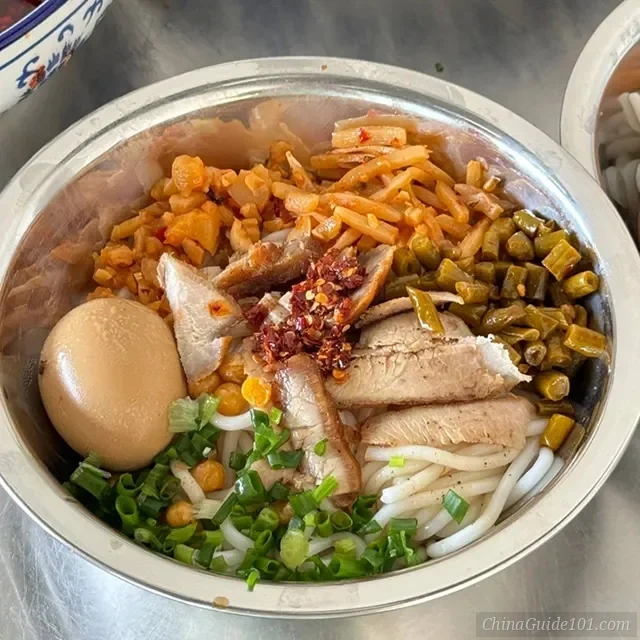
A humble bowl of Guilin rice noodles is the breakfast of champions. The round, white noodles are served in a broth with slices of beef or pork, pickled beans, peanuts, spring onions and a spoonful of chilli oil. You'll find stalls and hole-in-the-wall shops all over Yangshuo. A bowl costs as little as ¥8–12 . Add a fried egg or a doufu puff for extra substance.
Local Guangxi Cuisine
Branch out beyond the famous two dishes and you'll uncover distinctive Zhuang and Yao minority flavours. Try tianluo niang (田螺酿), large river snails stuffed with minced pork and garlic, then steamed or braised.Ban yu hot pot (斑鱼火锅), thinly sliced spotted snakehead fish you cook yourself at the table, is a delicate, peppery specialty.Lipu taro is served as a sweet-savoury layered dish with pork belly. Markets near the town centre offer street snacks like sticky rice wrapped in bamboo leaves and grilled river shrimp on skewers. Don't miss the fruit stalls: pomelos, kumquats and mangosteens from the surrounding orchards are ridiculously fresh and cheap.
- Go to a busy local joint rather than a tourist-trap restaurant with pushy touts for Beer Fish. Places on Diecui Road or side lanes off West Street tend to be more authentic.
- The proper way to eat Guilin Rice Noodles is to mix everything together first, slurp the noodles, then finish the broth.
- Branch out beyond the famous two dishes to try tianluo niang ,Ban yu hot pot , and fresh orchard fruits from local stalls.
- Don't choose tourist-trap restaurants with pushy touts when looking for authentic Yangshuo Beer Fish.
- Don't miss the fruit stalls near the town centre where pomelos, kumquats and mangosteens are ridiculously fresh and cheap.
Suggested Yangshuo Itineraries
Here's how to thread the best sights into a logical, unhurried flow. Times assume a base in the West Street area.
One Day
Morning:Arrive early from Guilin (bus or Li River cruise). Head straight to the Yulong River for a bamboo raft ride (Jinlong Bridge to Old County).Afternoon:Hire an e-bike and ride the Ten-Mile Gallery to Moon Hill, stopping for photos.Evening:Dinner and a wander down West Street. If you have energy left, catch the Impression Liu Sanjie show. This is a packed day; it works, but you'll sleep well.
Two Days
Day 1:Arrive and settle in. Cycle the Yulong River loop in the afternoon, taking time to visit Dragon Bridge and village lanes. Watch sunset from a riverbank cafe. Evening on West Street.Day 2:Pre-dawn trip to Xianggong Hill for sunrise, then return to Yangshuo. After breakfast, take the shuttle bus to Xingping Ancient Town. Photograph the 20 RMB banknote scene, wander the old street, and have lunch by the Li River. Return to Yangshuo for a relaxed evening.
Three Days
Day 1:Countryside cycling day – Yulong River and Ten-Mile Gallery, combined with a bamboo raft ride. Evening: Impression Liu Sanjie.Day 2:Full day around Xingping – Xianggong Hill sunrise, Xingping old town, Li River motorised raft, and an optional hike up Laozhai Hill (steep but wild views).Day 3:Moon Hill hike in the morning, explore local markets and food alleys in town. Depart or head onwards.
Four Days
Day 1:Settle in, rent e-bikes, ride to Dragon Bridge and explore the Yulong River's northern villages.Day 2:Xianggong Hill sunrise, Xingping tour. Return to Yangshuo and try a local cooking class or beer fish dinner.Day 3:Li River cruise from Guilin if you haven't done it, or revisit your favourite spots for photography. Moon Hill and Ten-Mile Gallery afternoon.Day 4:Relax, shop for local embroidery and art, or try rock climbing at one of the beginner-friendly karst crags.
PRO TIP: THE LUXURY OF A RAIN DAY
A four-day itinerary gives you the luxury of a rain day, which in Guangxi is a genuine asset.
Practical Travel Tips
Getting the logistics right can mean the difference between a smooth trip and a frustrating one. Yangshuo is very foreigner-friendly, but there are still a few China-specific quirks to plan for.
Q: Mobile Payments
China runs on mobile payments, and Yangshuo is no exception.Alipay and WeChat Pay are accepted everywhere from the smallest tofu stall to the biggest hotel. As of 2026, both platforms allow foreign tourists to link international credit and debit cards (Visa, Mastercard) directly to the app. Set up your Alipay and WeChat accounts at home, complete identity verification, and add your card before you land. Keep an eye on transaction limits, and always have a backup card. For a detailed walkthrough, read our China Mobile Payment Guide .
Q: Internet Access and VPN
The Great Firewall still exists. Google, Facebook, Instagram, WhatsApp and many foreign news sites are blocked without a VPN. If you use an international roaming SIM or eSIM data plan, data is typically routed outside China, so you can access blocked services without a VPN. However, if you rely on local Wi-Fi or buy a Chinese SIM card, you must install a reliable VPN before you leave home. Not all VPNs work consistently in China, so have at least two options and test them. Yangshuo's guesthouses and cafes almost all provide Wi-Fi, but speeds vary in rural areas. For a comprehensive setup guide, see our China Internet & VPN Guide .
Q: Transportation Apps
Google Maps is not accurate or reliable inside China. Instead, download Amap (高德地图) or Baidu Maps before your trip.Amap has an English interface option and works brilliantly for driving, cycling and walking directions in Yangshuo, right down to the narrowest field paths. For ride-hailing, Didi (available in the Alipay app or as a standalone English-friendly app) is the local equivalent of Uber and is safe and affordable. For intercity trains, use the 12306 app or Trip.com to book high-speed rail tickets in English.
Q: Language Barrier
While Yangshuo has more English speakers than most Chinese towns, the vast majority of restaurant owners, bike rental shops and bus drivers speak no English at all. A translation app on your phone (Baidu Translate or a Google Translate download with the offline Chinese package) is invaluable. Learn a few phrases:nǐ hǎo (hello),xièxie (thank you),duōshao qián (how much?), and have your hotel name written in Chinese characters to show taxi drivers.
Q: Cash vs Card
It's wise to carry a small stash of cash (¥500–1,000 ) for rural guesthouses that might not have mobile payment QR codes registered to a business account, or for impromptu fruit purchases from roadside grandmas. ATMs accepting foreign cards are available in Yangshuo town near West Street, but they occasionally go offline. Major hotels and tourist-facing restaurants accept credit cards, but don't count on plastic in small villages. Cash is also the fallback if your phone dies.
Q: Weather and Rainy Season
Assume you will encounter rain, especially if you're visiting between April and August. Pack a light rain jacket, a travel umbrella, and quick-dry clothing. Waterproof footwear is a godsend when the trails turn into clay slipways. Humidity can be intense, so breathable fabrics are your friend. Even in summer, bring a light fleece or hoodie for air-conditioned buses and evenings on the river — it can feel cool once the sun dips behind the karst. Check the local weather before booking bamboo raft rides; operators suspend services if water levels rise too quickly.
- Set up your Alipay and WeChat accounts at home, complete identity verification, and add your card before you land.
- Install at least two reliable VPNs before you leave home if you rely on local Wi-Fi or a Chinese SIM card.
- Download Amap (高德地图) and Didi (or use it inside Alipay) for accurate navigation and ride-hailing.
- Carry a small stash of cash (¥500–1,000 ) for rural areas and roadside fruit purchases.
- Pack a light rain jacket, a travel umbrella, quick-dry clothing, and waterproof footwear if visiting between April and August.
- Don't rely on Google Maps inside China as it is not accurate or reliable.
- Don't count on plastic credit cards in small villages.
- Don't book bamboo raft rides without checking the local weather, as operators suspend services if water levels rise too quickly.
Frequently Asked Questions
Q: Is Yangshuo worth visiting?
Absolutely. It offers some of the most stunning karst landscapes on earth, combined with a relaxed small-town vibe and endless outdoor activities. It's a highlight of any China itinerary.
Q: How many days should I spend in Yangshuo?
Two to three full days is ideal for first-time visitors. This allows you to do a river raft ride, a sunrise hike, cycling through the countryside, and a visit to Xingping Ancient Town without feeling rushed.
Q: What is the best month to visit Yangshuo?
October and November are near-perfect, with blue skies, pleasant temperatures and little rain. April and May are lovely but wetter. The summer months (June–August) are hot and rainy, yet the landscape is vividly green.
Q: Can foreigners visit Yangshuo independently?
Yes, Yangshuo is one of the easiest destinations in China for independent foreign travellers. English signage is common in tourist areas, many guesthouses are used to hosting international guests, and it's straightforward to book activities on your own.
Q: Is Yangshuo better than Guilin?
It depends what you're after. Guilin is a larger city with urban amenities, parks and caves, while Yangshuo puts you right in the middle of the countryside scenery that made the region famous. Most tourists prefer to base themselves in Yangshuo and pass through Guilin only for transport.
Q: Is bamboo rafting safe?
Yes, all official bamboo rafting routes require life jackets, and operators cancel services when river conditions become dangerous. The rafts are low to the water but stable. Supervise children closely, and always choose licensed docks rather than unofficial operators.
Q: Can I use Google Maps in Yangshuo?
No, Google Maps is not functional or accurate in mainland China. Download Amap (高德地图) and use it for all navigation. It's the most reliable option for cycling paths and walking routes.
Q: Do I need cash in Yangshuo?
You can manage almost entirely with mobile payments, but it's smart to carry a few hundred yuan in cash for small village purchases, tuck shops that might not accept foreign-linked QR payments, and emergencies.
Q: How do I get from Yangshuo Railway Station to Yangshuo town?
The station is located near Xingping, about 35 km from Yangshuo town. Green shuttle buses run directly to the central bus terminal in Yangshuo (50–60 minutes,¥20 ). Taxis and Didis are also available, costing around ¥80–100 .
Q: What should I pack for Yangshuo?
Lightweight, breathable clothing, a solid rain jacket, comfortable walking shoes or trail runners, mosquito repellent, sunscreen, and a power bank for your phone. A VPN-installed phone and a printed copy of your hotel address in Chinese are also wise.
Q: Is Yangshuo safe for solo female travellers?
Yes, Yangshuo is generally very safe, with a friendly, open atmosphere. Harassment is rare. Exercise the usual precautions: avoid unlit rural paths at night alone, watch your drink in bars, and book tours through licensed operators.
Q: Can I climb karst peaks without a guide?
Some peaks like Xianggong Hill and Moon Hill have well-maintained stone steps and can be climbed independently. Others, particularly rock climbing routes, require technical gear and a guide. Do not attempt unmarked or fenced-off trails — karst limestone can be unstable and slippery.
Q: Can you visit Yangshuo without speaking Chinese?
Yes, you can. While most locals outside the tourism industry speak only Chinese, many guesthouses, bike rental shops and larger restaurants in Yangshuo have some English capability, and translation apps are widely used. Learning a few basic phrases will go a long way, but you can get by without Mandarin.
Q: Is Yangshuo suitable for families with children?
Absolutely. Yangshuo is very family-friendly. The e-bike paths are flat and safe, bamboo rafts are stable and life jackets are provided, and the Impression Liu Sanjie light show fascinates children. Many guesthouses have family rooms and outdoor space. Supervise children closely near water and on hiking trails.
Essential China Travel Guides Before Visiting Yangshuo
A smooth trip to Yangshuo starts with knowing the broader travel essentials for China. These guides will help you handle payments, stay connected, sort out your visa, and move around the country confidently — all things that directly affect your time in Yangshuo.
China Mobile Payment Guide — How to set up Alipay and WeChat Pay as a foreigner.
China Internet & VPN Guide — Everything you need to know about staying online and bypassing the firewall.
China Visa Checker — Find out if you need a visa and how to apply.
China Transportation Guide — Tips for trains, buses, flights and ride-hailing apps across the country.
With these resources and the local knowledge above, you'll be fully equipped to enjoy everything Yangshuo has to offer. Safe travels!