
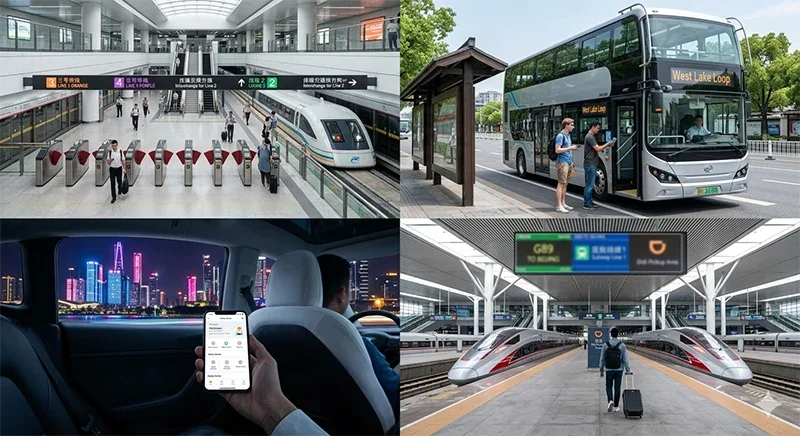
China's urban transportation network has evolved into one of the most efficient, extensive, and traveler-friendly systems in the world. From the sprawling subway networks that crisscross megacities to the ubiquitous ride-hailing services and affordable bus systems, getting from point A to point B has never been more straightforward or convenient. What truly sets 2026 apart is the unprecedented level of digital integration and internationalization: cashless payments are universal, English signage is standard in all major hubs, and smartphone apps act as all-in-one tools for navigation, payment, and communication. The core takeaway for any foreign visitor is simple:with a fully prepared smartphone, you can navigate China's cities with confidence and ease, just like a local . This guide will equip you with all the practical, up-to-date information you need to master every mode of transport, avoid common pitfalls, and travel smoothly across the country.
The "Big Three" of Urban Transport
Before stepping onto any train or bus, you must set up your digital toolkit. These three pillars—Digital Wallets ,Navigation Apps , and Offline Translation —are non-negotiable for a hassle-free experience.

PRO TIP: Pre-Trip Checklist
Download Alipay & WeChat, bind your international credit card, and download Amap (高德地图) BEFORE you land to avoid airport stress!
Digital Wallets: Alipay & WeChat Pay
In China, cash is increasingly obsolete, especially for public transit. The two essential apps are Alipay and WeChat Pay .Need help setting these up? Check out our China Pay 101: A Foreigner's Guide to Payment Methods (2026 Updated)for a step-by-step tutorial.
- Setup (Critical Pre-Travel Step): Download both apps before arriving or immediately upon landing. Register using your passport for real-name verification. You can link major international credit cards (Visa, Mastercard, JCB). For transportation, activate the Transport Card/Code function.Important : You must activate the code for each new city individually (e.g., Beijing Metro Code, Shanghai Metro Code). However, look for the "T-Union" (交通联合)logo in your app—this allows you to use one card/code across hundreds of cities nationwide. Alipay generally offers better support for foreign users, so prioritize it.
- How It Works : Once activated, a dynamic QR code appears. Hold this code in front of the scanner at subway turnstiles or on buses to automatically deduct the fare. It's fast, contactless, and works everywhere.
- Troubleshooting : If you don't receive SMS verification codes while roaming, use the Didi/Transport mini-programs within Alipay, which are often more reliable for foreign numbers.
- Backup Plan : If your phone dies or you have connectivity issues, keep a small amount of RMB cash (10–20 yuan notes) for single-journey tickets or a physical transit card, which can be purchased at station service centers.
Navigation Tools: Your Digital Compass
The days of getting lost in a Chinese megacity are over. Three apps will be your best companions:
- Amap (高德地图): The gold standard for local transit. It offers real-time subway and bus data , precise walking routes, and detailed indoor station maps. The English interface is excellent, and it’s optimized for China's road networks.
- Baidu Maps (百度地图): Strong on ride-hailing integration and offers accurate English search for landmarks. Great for confirming Didi pick-up points.
- Apple Maps : Serves as a reliable backup, especially for general orientation and finding your hotel.
While most apps are free, ensure your wallet is topped up for services:Local rides from $0.30
Language Barrier Hacks: Offline Translation
While English is widespread in transport hubs, you'll encounter situations where you need Chinese.
- Essential App : Download Google Translate and download the Chinese (Simplified) offline language pack .
- Key Function : Use the camera translation feature to instantly translate signs, tickets, or instructions.
- Pre-Written Phrases : Save these simple Chinese phrases with pinyin in your notes for emergencies:
- "Where is the subway station?" (地铁站在哪里? - Dìtiě zhàn zài nǎlǐ?)
- "Please take me to this address." (请带我去这个地址。- Qǐng dài wǒ qù zhège dìzhǐ.)
- "I need help." (我需要帮助。- Wǒ xūyào bāngzhù.)
Metro Mastery: Navigating the Subway
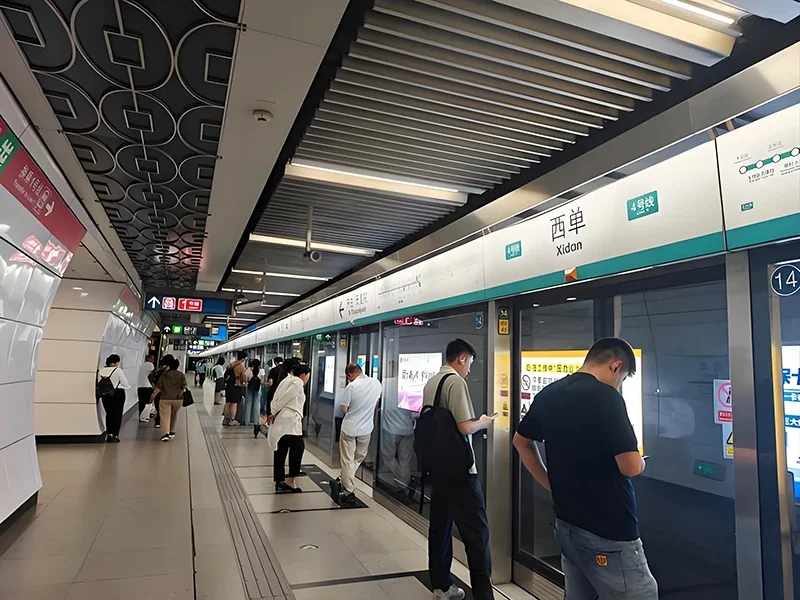
The subway is the king of urban transport in China. It is fast, affordable, incredibly extensive, and immune to traffic jams. Cities like Beijing, Shanghai, and Guangzhou have systems larger than those of London or New York.
Why Metro is King
- Unmatched Coverage : Reaches nearly every major tourist destination, business district, and train station.
- Punctuality : Trains run 24/7 in some cities and operate with near-perfect timekeeping (99%+ on-time rate).
- Cost : A typical ride costs 2–8 yuan , regardless of distance.
- Comfort : Air-conditioned, clean, and well-signposted.
Payment Methods
- QR Code (Primary Method):
- Alipay : Open app → Tap "Transport" → Select your city → "Metro" → Generate QR code.
- WeChat : Search for "Transport QR Code" (乘车码 - chéngchē mǎ) → Select city → Activate.
- Contactless Bank Cards : As of 2026, major cities (Beijing, Shanghai, Guangzhou, Chengdu) support direct tapping of Visa/Mastercard contactless cards at turnstiles. Ensure your card has contactless payment and small-payment no-PIN enabled.
- Buying Tickets (Single & Multi-Day Passes): If you prefer physical tickets, station ticket vending machines (TVMs) or service counters are your best option.
- Single-Journey Ticket : The standard choice for a one-off trip. You’ll receive a blue plastic token or paper card to tap in and insert out.
- Multi-Day Passes : Available in major cities like Beijing, Shanghai, and Guangzhou. Purchase 1-day, 3-day, or 5-day passes at service counters for unlimited travel—a great value for tourists.
For longer stays, consider an "IC Transport Card" (top-up card) from the service desk. It works across subways, buses, and some taxis, saving you from the hassle of city-specific app setups.
Navigating Signs
- Bilingual Everywhere : All signs, station names, and announcements are in Chinese and English .
- Color-Coded Lines : Each subway line has a unique color and number (e.g., Line 1 is Red, Line 2 is Green). Follow the color to transfer.
- Transfer Zones : Large, clearly marked "Transfer" (换乘 - huànchéng) signs guide you between lines. Follow the arrows—they are very efficient.
- Stand on the right side of escalators.
- Travel outside of rush hours (7:30–9 AM / 5:30–7 PM).
- Check first/last train times in your app.
- Eat on the train:Eating is prohibited on carriages (exceptions for infants/medical needs). Drinking water is usually fine but please be discreet.
- Block doors or aisles:Keep aisles clear for commuters and rapid boarding/exiting.
- Cut in line:Avoid pushing; lining up is the local standard and prevents conflict during peak hours.
Didi & Ride-Hailing: Taxis on Demand
Didi Chuxing (滴滴出行)is China's equivalent of Uber/Lyft and is the most convenient way to travel door-to-door, especially with luggage or for longer distances.
PRO TIP: SMS Verification
If you don't receive SMS verification codes while roaming, use the Didi mini-program within Alipay, which is often more reliable for foreign numbers.
How to Use Didi
You can use Didi in two ways:
- Standalone App (Recommended):
- Download the Didi app. It fully supports English .
- Sign-Up : Register with your foreign phone number (no Chinese number needed!). Enter your country code + number and verify via SMS.
- Payment : Link your international credit card (Visa/Mastercard) or use Alipay/WeChat Pay.
- Mini-Programs : Access Didi directly within Alipay (Transport tab) or WeChat (search "Didi"). This is often more reliable for foreign numbers.
Types of Services
- Express (快车): The standard, most popular option. Affordable 4-seat cars.
- Select (优享): Newer, nicer cars, slightly higher price.
- Taxi (出租车): Hail a traditional yellow cab via the app. You can pay cash or via the app.
- Luxury : Premium cars for special occasions.
Key Safety Features (Unique to China)
- Real-Time Tracking : Your exact location and route are shared with a central server.
- Share Your Trip : Tap "Share Trip" to send your live route to family/friends via WhatsApp/WeChat.
- One-Touch SOS : A prominent red button lets you report an emergency to Didi and easily call 110..
- Driver Info : The driver's name, photo, license plate, and car model are displayed before you get in.Always verify the plate matches the car!
The "Drop-off Point" Trap
A common mistake is poor pick-up coordination.
- Use the Map Pin : The app's GPS is very accurate.Do not move from the pinned location.
- Complex Areas (Malls/Airports): These have specific "Didi Waiting Zones (网约车乘车区)". Follow the in-app directions or signs—never wait at the main entrance .
- Message the Driver : Use the in-app chat (it auto-translates!) to confirm: "I am at the main entrance under the big screen."
Buses & Trams: The Local's Way
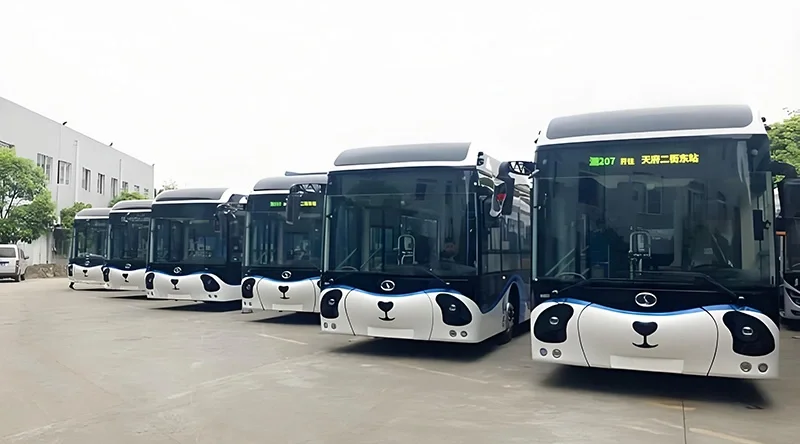
Buses are the backbone of neighborhood travel. They are incredibly cheap (1–2 yuan) and great for sightseeing or reaching areas not covered by the subway.
Bus Navigation
- Real-Time Tracking : Use Amap/Baidu Maps. Select "Bus" to see routes, stops, and exact arrival times ("3 minutes away"). No more waiting in vain!
- Route Numbers : Bus numbers are displayed clearly at stops and on the front of the bus.
Budget-friendly travel:1–2 yuan per ride
Boarding Etiquette & Payment
- Doors : Most buses use front door for boarding, back/middle door for exiting .
- Payment :
- Scan QR Code : Use the same Alipay/WeChat transport code as the subway.
- Cash : Exact change only (usually 1 or 2 yuan). Drivers do not give change.
- NFC Tap (New 2026 Feature): Most buses support NFC. Enable it on your phone; just tap the reader—no internet needed .
- Queue : Always line up. Pushing is rude and frowned upon.
Why Take the Bus?
- Scenic Routes : See the city street life up close.
- Short Trips : Faster than the subway for very short journeys (1–2 stops).
- Subway Deserts : Serves residential areas far from metro stations.
- Cheap : Unbeatable price for budget travelers.
Station-to-Hotel: Last-Mile Connectivity
Arriving at a massive airport or train station can be overwhelming. If your journey involves an HSR station, make sure you've checked our 2026 HSR Boarding Guide to avoid the "wrong station" trap. Here's how to smoothly get to your hotel.
Airports & Railway Stations
- Official Taxis : Look for the Taxi Stand (出租车等候区). Join the organized queue. These are regulated and use meters.
- Didi / Ride-Hailing :Do not book Didi at the main exit. Go to the designated "Online Car-hailing Waiting Area (网约车乘车区)", which is often a short walk or on a different floor. The app will guide you precisely.
- Airport Express / Subway : Most major airports are connected directly by subway. This is the cheapest (25–35 yuan ) and often fastest option into the city.
Critical Backup Tip
Always have a printed card or phone screenshot with:
- Your hotel's full Chinese address
- Hotel phone number
- A note: "Please take me to this hotel." (请带我去这家酒店。) This is essential if your phone dies, you lose internet, or need to ask a local/policeman for help.
Essential "Do's and Don'ts" (Etiquette & Safety)
- Queue for everything—buses, tickets, and elevators.
- Offer your seat to the elderly, pregnant women, or those with babies.
- Keep voices low and use headphones for music.
- Accept rides from "Black Cars" outside stations.
- Leave bags unattended or place wallets in back pockets.
- Cut in lines (it is considered highly rude).
Etiquette
- Queue Relentlessly : Chinese culture values queuing deeply. Line up for everything—tickets, buses, elevators. No cutting.
- Keep Quiet : Keep voices low on subways and buses. Avoid loud phone calls; use headphones for music.
- Offer Seats : Always give up your seat to the elderly, pregnant women, disabled, or adults holding babies.
- Luggage : Place bags under seats or on luggage racks. Do not block aisles or doors.
Safety
- Beware of "Black Cars (黑车)": Unlicensed, unregulated cars that congregate outside stations. They overcharge and are unsafe.Only use official taxis or Didi .
- Pickpockets : Crowded subways and bus stations are prime spots. Keep wallets/phones in zipped inner pockets, not back pockets or loose bags.
- Secure Your Bag : Never leave belongings unattended.
Emergency
- Police :110 (English-speaking operators available in major cities).
- Medical Emergency :120 .
- Fire :119 .
- Didi Help : Use the in-app emergency button.
- Ask for Help : Approach police officers (uniformed) or hotel staff. Most people are friendly and willing to assist.
FAQ: Common Challenges
Q: Can I use Didi without a Chinese phone number?
A: Yes!As of 2026, Didi fully supports registration with any international phone number . While SMS verification is the primary method, it is not your only option. If you face issues receiving SMS while roaming, you can use the Didi Mini-Program within Alipay to log in via your existing Alipay account, bypassing SMS requirements.
PRO TIP: Ensure Success
Always keep international roaming active to receive codes, and install both the Didi App and Alipay before you land to ensure you have multiple options ready.
Q: Why does my QR code sometimes fail to scan?
A:Common reasons include poor internet signal, a dirty turnstile scanner, or not activating the correct city's transport code . If all else fails, keep a 10-yuan note handy to buy a single-journey ticket as a backup .
Q: Can I eat or drink on the subway?
A: Generally, no.While regulations are in place to maintain cleanliness, they are rarely enforced with fines.Eating is prohibited on trains in most cities (exceptions for infants and medical needs).Drinking water is generally tolerated in many cities, though cities like Beijing and Shanghai have stricter "no drinking" policies on trains. To be safe and respectful, it is best to avoid consuming any food or drinks inside the train carriages. Station concourses (before turnstiles) are usually fine.
Q: What if my phone dies or I lose internet?
A:Always carry a physical hotel address card as your lifeline. You can also find a policeman or hotel staff and show them your address card. It is also recommended to carry 50–100 yuan in cash for emergencies.
Traveling around China in 2026 is an incredibly rewarding and accessible experience, designed with both locals and international visitors in mind. The combination of a vast, modern infrastructure, universal digital payments, and comprehensive English support has broken down the barriers that once made foreign travelers hesitant.
Ready to explore further?
Now that you've mastered urban transit, get ready for the next level:China High-Speed Rail 101: The Ultimate 2026 Train Travel Guide to connect between these major cities.
By mastering the tools outlined in this guide—your digital wallet, navigation apps, and a few key phrases—you gain the freedom to explore vibrant cities, ancient landmarks, and hidden gems with total confidence. China is waiting to be discovered; with your smartphone as your key, the entire country is yours to navigate smoothly, safely, and like a seasoned local. Embrace the journey!