
Imagine walking down a narrow alley in Chengdu as the evening air fills with the tingling aroma of Sichuan pepper and sizzling oil. Or picture yourself in a steamy Shanghai xiaolongbao shop, lifting a delicate soup dumpling with your chopsticks, careful not to break its thin skin. Then there's Beijing, where a roast duck is carved tableside with surgical precision, and Xi'an, where a Muslim vendor pulls wide, chewy noodles from a single piece of dough.
If you think Chinese food is just "General Tso's chicken" and fortune cookies, you're in for a delightful surprise. China's culinary landscape is as vast and varied as its geography — from the fire‑breathing stews of the southwest to the refined, subtly sweet dishes of the east. This guide is designed to help you, the traveling food lover, navigate that landscape with confidence. By the time you finish reading, you'll know how to order like a local, what to expect at different types of eateries, and how to turn every meal into a cultural adventure. Understanding Chinese food isn't just about eating — it's about understanding China itself.
The Core of Chinese Cuisine: Understanding the Regions
Chinese cooking is often summarized by the "Eight Great Cuisines" (ba da cai xi ), but for a traveler, it's easier to think in terms of four broad culinary regions. Each tells a different story about the land, climate, and people.
Northern Strength: Wheat, Lamb, and Bold Flavors
In the north, wheat reigns supreme. Noodles, dumplings, and steamed buns are everyday staples. The weather is cold and dry, so food tends to be hearty, salty, and often pickled.Beijing is the most famous northern destination: try Peking duck (crispy skin, thin pancakes, hoisin sauce) and zhajiangmian (noodles with fermented soybean paste).Dongbei (northeast) cooking is even more robust — braised pork with vermicelli, stewed chicken with mushrooms, and plenty of lamb hotpot. If you visit in winter, a bubbling lamb hotpot with sesame paste dipping sauce is pure comfort.
Southern Delicacy: Rice, Cantonese Mastery, and Dim Sum
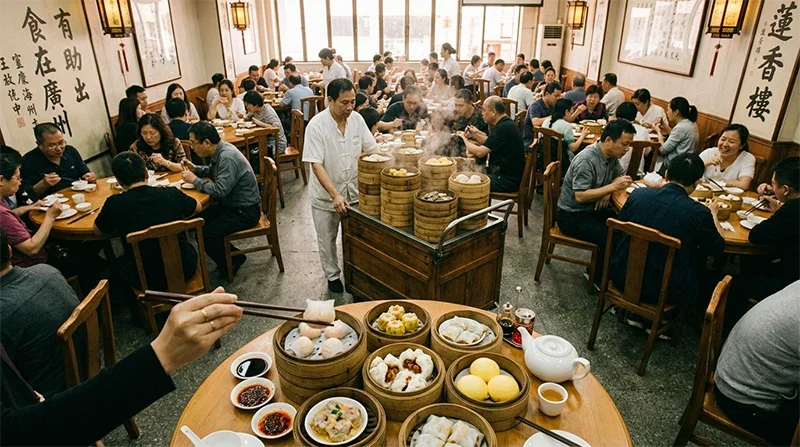
The south is rice country. With a mild climate and abundant rainfall, Guangdong province developed a cuisine that prizes freshness, lightness, and subtlety.Cantonese food is what many Westerners first think of as "Chinese," but the real thing goes far beyond takeout. Steamed fish with ginger and scallions, stir‑fried greens with garlic, and slow‑cooked soups are everyday treasures. And then there's dim sum — a morning or midday ritual of small plates: har gow (shrimp dumplings), siu mai (pork dumplings), cheung fun (rice noodle rolls), and egg tarts. In Hong Kong and Guangzhou, dim sum houses still push carts through crowded halls.
Western Heat: The Chili Philosophy of Sichuan and Hunan
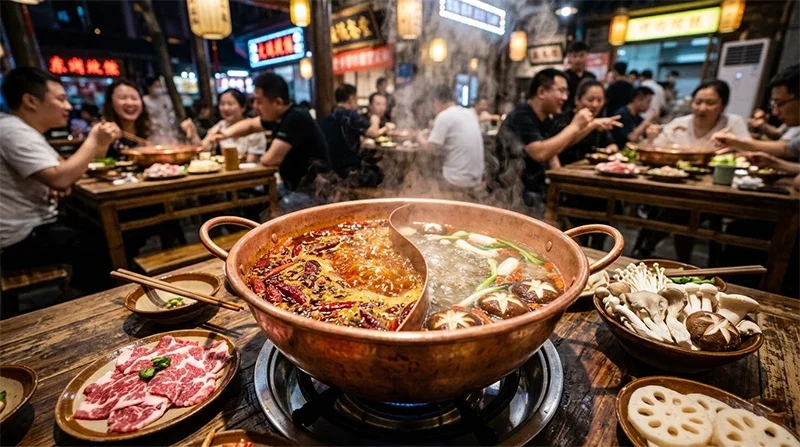
The west is for thrill‑seekers.Sichuan cuisine is famous for mala — a numbing‑spicy sensation created by dried chilies and Sichuan peppercorns. Dishes like mapo tofu (soft tofu in a spicy bean‑based sauce),kung pao chicken , and sichuan hotpot (a simmering cauldron of chili oil) are not to be missed.Hunan cuisine is simply spicy — no numbing element, just pure, direct heat from fresh chilies. Smoked and cured meats are also common. If you can't handle spice, many restaurants offer "foreigner mild," but a true local experience means a tingling tongue and a sweaty brow.
Eastern Gentleness: Huaiyang and Jiangsu's Subtle Sweetness
The east — particularly around Shanghai, Hangzhou, and Yangzhou — is known for refined, slightly sweet dishes and meticulous knife work.Huaiyang cuisine is one of the most respected styles in China, often served at state banquets. Think sweet and sour mandarin fish (cut to bloom like a flower),lion's head meatballs (pork meatballs braised in a light broth), and xiaolongbao (soup dumplings). The flavors are balanced, never aggressive. This is where you go for elegant, delicate meals that showcase technique over firepower.
Dining Etiquette & Cultural Norms
Eating in China is rarely a solo affair. Meals are shared, loud, and joyful. Understanding a few basic rules will help you feel comfortable and show respect.
The Round Table and Shared Dishes
Most group meals happen at a round table with a lazy Susan in the center. Everyone orders several dishes to share — no individual plates except for rice or soup. This is communal eating at its best. Use your own chopsticks to take food from the shared plates, or use the serving chopsticks if provided. Don't be shy; the host will often encourage you to try everything.
Seating and Toasting
In formal settings, the guest of honor sits farthest from the door, facing it. The host sits closest to the door. As a foreign visitor, you'll likely be offered a good seat. When toasting (ganbei — literally "dry glass"), hold your glass lower than someone senior or older as a sign of respect. It's fine to say ganbei and take only a sip, especially with baijiu (Chinese white spirit). If you don't drink, simply raise your tea cup.
Chopstick Basics
- Place chopsticks on the rest or horizontally across your bowl when pausing.
- Stick them upright into a bowl of rice — that resembles incense sticks for the dead.
- Use them to point at people, drum on the table, or spear food like a fork.
- Rummage through dishes for a choice piece. Take what's in front of you first.
The Art of Paying
PRO TIP: The Bill Ritual
After a meal, you might witness people "fighting for the bill." If you want to treat, say wo qing ke (it's my treat) and be firm. In casual settings with peers, splitting is becoming more common, especially via mobile payment.
How to Navigate Menus & Order Like a Pro
Menus are often picture‑heavy, but not always. Here's your toolkit.
Overcoming the Language Barrier
PRO TIP: Essential Tools
The OCR features in Google Translate and Microsoft Translator are really helpful for reading Chinese menu characters.
- Point at other tables.It's perfectly acceptable to gesture to a delicious-looking dish on a nearby table and say zhe ge (this one).
- Use food apps.Dianping (see below) has user‑uploaded photos of every dish. Show the photo to your server.
- Learn a few key phrases:
- Bu yao la – No spice
- Wei la – A little spice
- Wo you guo min – I have allergies (then point to a card — more on that later)
Ordering Strategy
For two people, order 2–3 dishes plus rice or noodles. For four, 4–5 dishes. Balance is key:
- Balance your meal: One meat, one vegetable, one tofu or egg dish.
- Mix textures: One dry stir‑fry, one saucy/braised dish, one soup or cold appetizer.
- Remember: Cold dishes (liang cai ) come first — try smashed cucumber, jellyfish, or drunken chicken.
A Traveler's Must‑Try List
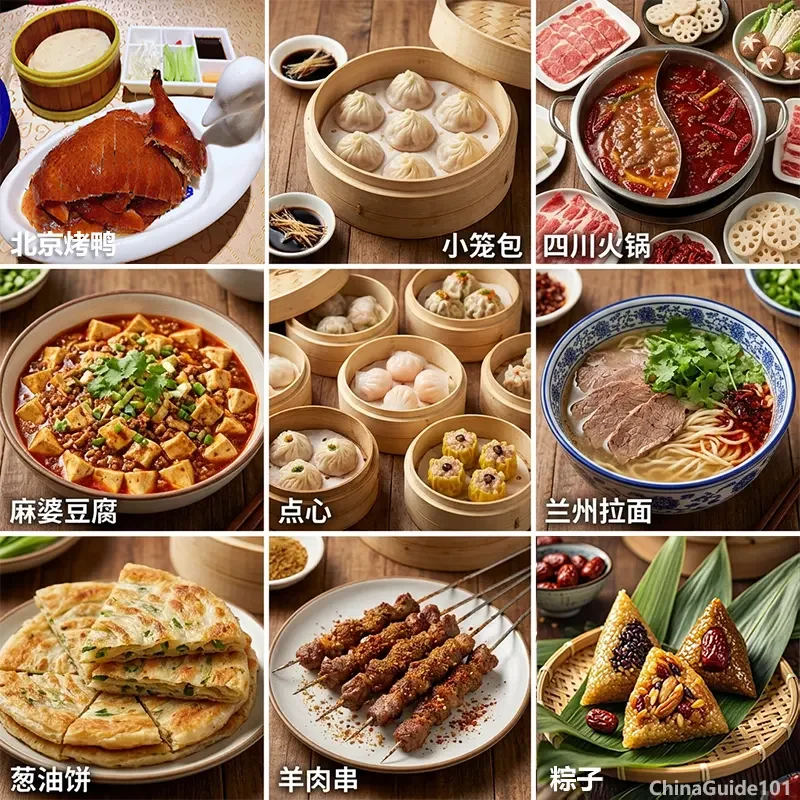
- Peking duck (Beijing) – Crispy skin, pancakes, and a sweet bean sauce.
- Xiaolongbao (Shanghai/Nanjing) – Soup dumplings. Bite a small hole, sip the broth, then eat.
- Hotpot (Chongqing/Sichuan) – You cook raw ingredients in a boiling pot of broth. Choose spicy, mild, or split (yuan yang guo).
- Mapo tofu (Sichuan) – Silky tofu in a spicy, numbing sauce.
- Jiaozi (North) – Boiled or pan‑fried dumplings, usually with pork and cabbage.
- Har gow & siu mai (Guangdong/Hong Kong) – Classic dim sum staples.
- Cong you bing (Everywhere) – Scallion pancake, crispy and flaky.
- Yang rou chuan (Xi'an/Xinjiang) – Cumin‑lamb skewers grilled over charcoal.
- Zongzi (Various) – Glutinous rice wrapped in bamboo leaves, with meat or red bean.
- La mian (Lanzhou) – Hand‑pulled beef noodle soup, clear broth.
Types of Dining Experiences
China offers eating experiences ranging from a 50‑cent street skewer to a $200 banquet. Here's what to expect.
Street Food & Night Markets
Every city has a night market — a carnival of smells, sizzles, and crowds. In Xi'an's Muslim Quarter, you'll find lamb skewers and persimmon cakes. In Chengdu, try dan dan mian (spicy noodles) and rabbit head (if you're adventurous). In Shanghai, look for shengjianbao (pan‑fried pork buns).
PRO TIP: Street Food Safety
Choose stalls with long lines (locals know best). Ensure food is cooked fresh in front of you. Avoid raw or pre‑washed greens. Bring your own napkins — wet wipes are your friend.
Casual Chain Restaurants
Chains offer consistency, pictures on menus, and often English translations. They're great for nervous first‑timers.
- Haidilao – Famous hotpot chain with outstanding service (free snacks, aprons, even nail painting while you wait).$$
- Xibei Youmian Cun – Northwestern noodles and lamb, very foreigner‑friendly.$
- Grandma's Home (Wai Po Jia)– Reliable Hangzhou‑style home cooking.$
- Din Tai Fung – Premium soup dumplings and noodles (many locations, but pricier).$$$
Fine Dining & Business Banquets
High‑end Chinese dining is a ritual. Expect a private room, a spinning Lazy Susan laden with a dozen dishes, and the host urging you to eat more. Dishes may include abalone, sea cucumber, Peking duck carved tableside, and elaborate fruit carvings. Dress neatly, pace yourself, and never empty your glass of baijiu unless you want a refill. If you're invited, bring a small gift (fruit, tea, or a bottle of wine) and thank the host afterwards.
Time‑Honored Brands (Lao Zi Hao)
These are historic restaurants, often over 100 years old, that have preserved traditional recipes. They can be touristy but are worth it for the history.
- Beijing:Quanjude (Peking duck) and Bianyifang (even older duck).
- Shanghai:Guangming Cun (dumplings and pastries).
- Hangzhou:Louwailou (on West Lake, famous for beggar's chicken).
Digital Tools for Foodies
China has leapfrogged the West in restaurant tech. A few apps will transform your dining experience.
Dianping– The Chinese Yelp
Download it before you go. It's in Chinese, but you can search by city and then browse photos. Look for:
- Restaurant ratings – 4 stars or above is good. Over 4.5 is excellent.
- User photos – These show you exactly what dishes look like.
- “Must‑try dishes"(推荐菜) – Click to see the top recommended items.
- Wait times – Some popular places let you join a virtual queue.
Meituan– Deals & Delivery
Meituan is the main platform for food delivery and group‑buy vouchers. Even without a Chinese bank account, you can often use Alipay or WeChat Pay linked to an international credit card.
PRO TIP: Hotel Delivery
Order to your hotel — the delivery person will call your phone. Have your hotel receptionist help if you don't speak Chinese. Most hotels accept deliveries at the front desk.
Scan to Order
In many mid‑range and up restaurants, you'll see a QR code on the table. Scan it with WeChat or Alipay. An English option is sometimes available. Browse the menu, order, pay, and the food comes to you. No need to flag down a waiter.
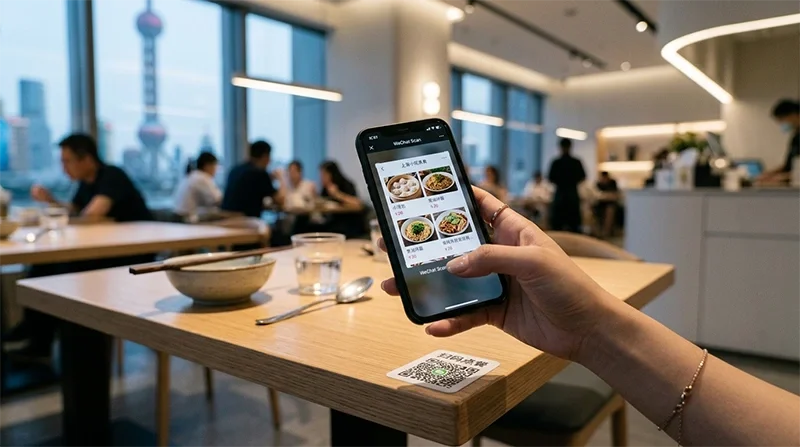
- Use QR codes for seamless ordering and payment.
- Hesitate to ask for a paper menu if needed:"You meiyou zhizhi caidan?"
Food Safety & Dietary Considerations
Water and Hygiene
Never drink tap water.Even locals don't. Bottled water is everywhere and cheap. Most restaurants offer hot tea (safe) or bottled water. At street stalls, avoid ice unless you see it coming from a sealed bag. Hot food from a boiling wok is fine. Cold, pre‑made salads or sliced fruits from open stalls are riskier.
PRO TIP: The Golden Rule
"Cook it, boil it, peel it, or forget it."
For Vegetarians and Vegans
Vegetarianism is understood but often means "no meat" — fish sauce, oyster sauce, and lard are common. The safest phrase:Wo chi su, bu chi rou, bu chi yu, bu chi hai xian (I eat vegetarian, no meat, no fish, no seafood). Buddhist vegetarian restaurants (su shi guan ) are excellent — they often simulate meat textures using tofu and gluten.
Common Allergies
Print these on a small card or keep them on your phone:
Street Food Hygiene Checklist
- Choose a busy, well-lit stall with a queue of locals.
- Look for vendors using tongs or gloves.
- Eat from stalls where oil looks dark/acrid.
- Consume ice unless it's from a sealed bag.
Diarrhea is not a required souvenir.
Chinese food is a never‑ending discovery. You'll have meals that surprise you, challenge you, and comfort you. Some will be eaten standing at a market stall, others at a round table with new friends. Don't be afraid to try something strange — a century egg, a chicken foot, a stinky tofu cube. The worst that happens is a story; the best is a new favorite dish.
Remember: every meal is an invitation. An invitation to share, to taste, and to understand a little more of this vast country. So grab those chopsticks, download Dianping, and go eat.
Quick Resource Card (Save to your phone)
| Phrase | Chinese | Pinyin |
|---|---|---|
| No spice | 不要辣 | Bu yao la |
| A little spicy | 微辣 | Wei la |
| I'm vegetarian | 我吃素 | Wo chi su |
| I'm allergic to nuts | 我对坚果过敏 | Wo dui jian guo guo min |
| Check, please | 买单 | Mai dan |
| Delicious! | 好吃 | Hao chi |
| Can I have a fork? | 可以给我叉子吗? | Keyi gei wo chazi ma? |
Recommended Apps
WeChat (translation/payment),Alipay ,Dianping , and Amap ( for navigating China).
Now go. Your next great meal is waiting around the corner.