
| Category | Details |
|---|---|
| Best Time to Visit | March–May & October–November |
| Budget Level | Mid-range, excellent value for quality |
| Key Vibe | Classical gardens × cutting-edge tech |
| Safety for Solo Female Travelers | Very high, well-lit public spaces, reliable transport |
| Payment | Alipay / WeChat Pay with international cards + growing e-CNY coverage |
PRO TIP: 2026 MUST-KNOW
Lingyin Temple entry is currently free — but advance reservation is mandatory. Slots fill up quickly, especially on weekends!
Why Hangzhou is Unmissable
The "Heaven on Earth" Moniker: Brief History Meets Modern Reality
For over a thousand years, Chinese poets and emperors have called Hangzhou "Heaven on Earth." Marco Polo, after visiting in the 13th century, described it as "the city of heaven" and "without doubt the finest and most splendid city in the world." The 13th-century Italian merchant would barely recognize today's Hangzhou — yet the soul of the city remains unmistakably intact.
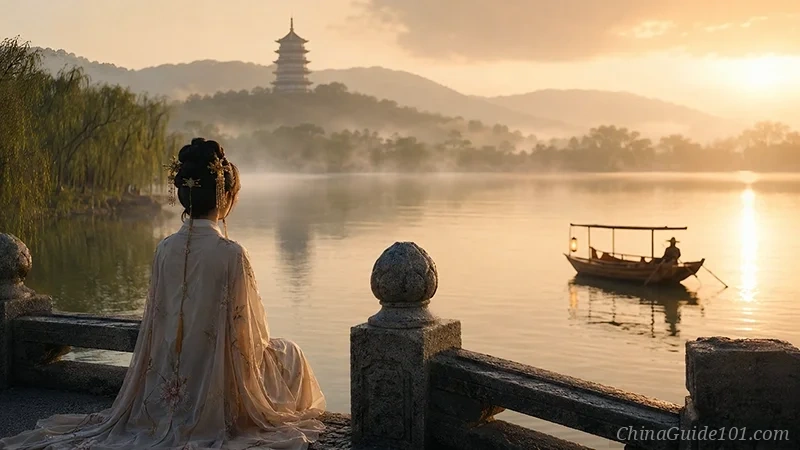
What makes this city so enchanting is that it never forces you to choose between past and present. One moment you're cycling under centuries-old plane trees along West Lake, the morning mist draping the water like silk gauze. An hour later, you're zipping past gleaming skyscrapers on a metro line that didn't exist five years ago, surrounded by young professionals tapping away on the world's most advanced mobile payment systems. Hangzhou is China in microcosm — deeply rooted, relentlessly forward-looking.
The Dual Identity: From Asian Games Legacy to Digital Nomad Paradise
The 2023 Asian Games fundamentally reshaped Hangzhou's urban fabric. Unlike many host cities that see their Olympic or Games-era venues fade into irrelevance, Hangzhou has kept the momentum going. The Hangzhou Olympic Sports Center — that striking lotus-shaped stadium you've likely seen on Instagram — now regularly hosts international competitions.
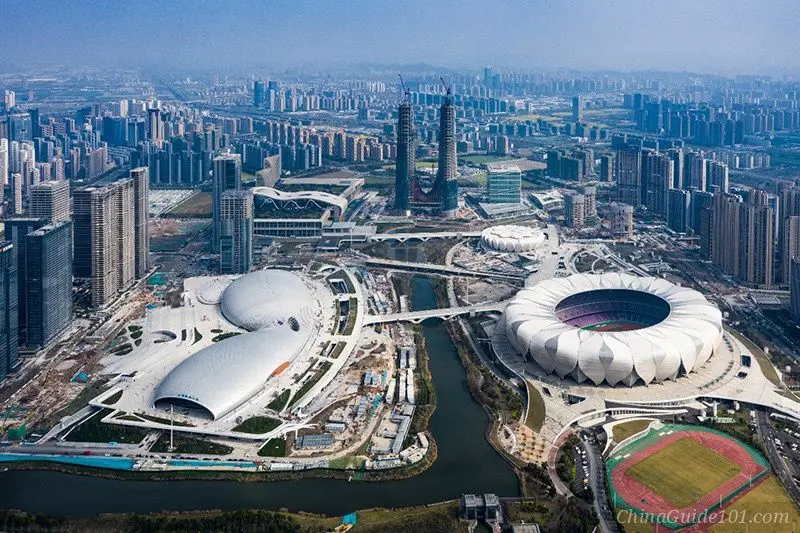
In 2026 alone, the city will stage over 200 events at the district level and above, including more than 40 international and national-level competitions, with the BWF World Tour Finals returning to the Olympic Sports Center Gymnasium for its third consecutive year.
PRO TIP: SOCIAL TRENDS
Hangzhou is currently trending under #ChinaTravel on TikTok and Xiaohongshu. Don't miss the "Hanfu transformation" videos filmed at the Southern Song Imperial Street!
But the Games were just one chapter. Hangzhou is the headquarters of Alibaba and home to a cluster of tech giants that have earned it the nickname "China's Silicon Valley." Ant Group's global headquarters opened in 2025 with a campus designed to blend cutting-edge fintech with traditional Jiangnan garden aesthetics. The city has embraced its role as a magnet for digital nomads, remote workers, and entrepreneurs who come for the innovation ecosystem and stay for the tea fields.
Essential Travel Info
Visa-Free Entry: What You Need to Know
China's visa policies have undergone significant liberalization, and Hangzhou is well-positioned to benefit. Here's the situation as of mid-2026.
Here's a quick overview of your main options — for the full breakdown, including eligible nationalities, step-by-step port guides, and latest updates, read our dedicated China Visa 101 Guide .
Two key policies to know:
30-day unilateral visa-free scheme:Extended through December 31, 2026, this covers a broad range of countries across the EU, Asia, the Americas, and Oceania. If your passport qualifies, simply show up — no paperwork required for stays up to 30 days.
240-hour (10-day) transit visa-free scheme:Available to citizens from 55 countries and covering 65 entry ports nationwide, including all six major ports in Zhejiang Province. The key requirement is a confirmed onward ticket to a third country or region — perfect if you're combining China with stops in Japan, South Korea, or Southeast Asia.
- Best for:Pure China trips or stays longer than 10 days.
- Requirement:Your nationality must be on the unilateral visa-free list.
- Flexibility:No need for a 3rd country ticket; can enter and exit to/from the same place.
- Best for:Multi-country stopovers (e.g., UK -> China -> Japan).
- Requirement:A confirmed ticket to a third country is mandatory.
- Scope:Covers 55 countries (essential if your country lacks the 30-day unilateral privilege).
Which one should you use?If you're flying directly into Hangzhou and staying up to 10 days as part of a larger multi-country trip, the transit visa is perfect. If China is your sole destination and you want up to 30 days, the unilateral visa-free scheme is your best bet.Policies can shift throughout the year, so always double-check the latest eligibility details in our China Visa 101 Guide before booking.Always confirm your eligibility through your nearest Chinese embassy or consulate website before booking, as policies can shift.
Connectivity: Getting to Hangzhou
By Air:Hangzhou Xiaoshan International Airport (HGH) continues to expand, with new international routes added steadily. It's a modern, efficient airport with direct connections to major hubs across Asia, Europe, and Oceania. From the airport, Metro Line 1 and Line 19 connect to the city center in about 50 minutes; a taxi or Didi ride takes roughly 40 minutes depending on traffic.
By High-Speed Rail from Shanghai:This is the route most travelers take, and for good reason. Shanghai Hongqiao to Hangzhou East runs frequently — over 260 departures daily — with the fastest journey clocking in at just 45 mins on the most modern G-series and C-series trains. Even slower trains take just over an hour. Buy tickets through the official 12306 app (now available in English) or at station counters. Book a few days ahead during weekends and holidays, as these trains fill up fast.
PRO TIP: THE SHANGHAI TRANSFER
If you're flying into Shanghai Pudong, budget at least four hours between landing and your Hangzhou train departure. You'll need to clear immigration, take the Metro or Maglev to Hongqiao station (about 1.5 hours), and navigate a large, busy terminal.
Digital Survival: Payments and Connectivity
Since late 2025, the most significant friction point for foreign travelers has been largely resolved: international card binding for mobile payments.
Alipay and WeChat Pay now allow you to link Visa, Mastercard, JCB, Discover, or Diners Club cards directly in-app. After completing a simple passport verification process (takes about five minutes), you can scan QR codes to pay at virtually every merchant in Hangzhou — from street food stalls to luxury malls.
Q: Are there service fees for international card payments?
For single transactions under 200 RMB , there is no additional service fee . For transactions over 200 RMB, a 3% fee usually applies. However, as a bonus in 2026, Alipay has waived the 3% fee until July 10, 2026, while WeChat Pay has extended its waiver through the entire year.
Digital RMB (e-CNY):By 2026, digital yuan coverage in Hangzhou is extensive. The e-CNY app is available in English on international app stores, and during major travel seasons, the city occasionally launches e-CNY "red packet" promotions — essentially free digital cash for foreign visitors. Check within the app or ask at your hotel's front desk whether any active campaigns are running during your stay.
Essential Apps Beyond Payments:
- 高德地图 (Amap):While the interface is primarily in Chinese, Amap is far more accurate than Google Maps within China. It integrates real-time public transit data, Didi ride-hailing, and walking navigation. Paired with a screenshot translation app, it's indispensable.
- 百度地图 (Baidu Maps):A solid alternative to Amap with similar functionality; some travelers find its English-language layer slightly more developed.
PRO TIP: CONNECTIVITY CHECK
VPN reminder:China's internet restrictions remain in place. Download and install a reliable VPN on all your devices before arriving. Test it at home — once you're in China, downloading new VPN software can be nearly impossible.
eSIM and data:If your phone supports eSIM, you can activate a China travel data plan before departure through providers like Airalo, Nomad, or Holafly. This avoids the hassle of finding a physical SIM and often provides uncapped data for a flat fee. Speeds are excellent in Hangzhou's urban core, with widespread 5G coverage.Read our [China Internet 101 Guide ] for everything you need to know.
The "Big Three" Pillars of Hangzhou
Quick Comparison: West Lake vs. Grand Canal vs. Xixi
| Attraction | Time Needed | Vibe | Crowd Level |
|---|---|---|---|
| West Lake | Half to full day | Classical, romantic, iconic | High at Broken Bridge & Su Causeway; quieter on north shore |
| Grand Canal (Water Bus) | Half day | Gritty-authentic, local life | Low on boat; moderate in Xiaohe Block |
| Xixi Wetland | Half day | Serene, wild, bird-rich | Low on weekdays; moderate on weekends |
The Classics: West Lake (Xi Hu) — UNESCO World Heritage
West Lake isn't a single attraction; it's a living cultural landscape that has inspired painters, poets, and garden designers across East Asia for centuries. The lake covers roughly 6.5 square kilometers, ringed by hills on three sides and the city on the fourth. A full loop on foot takes about four to five hours; by shared bike, roughly two.For more details, see our West Lake Travel Guide .
PRO TIP: THE 1 RMB VIEW
Pull out a 1 RMB banknote! The scene on the back is Three Pools Mirroring the Moon . You can visit this exact spot by taking a boat to the island of Lesser Yingzhou.
The Essential Views:
- Broken Bridge (Duanqiao):Despite its name, the bridge isn't broken. The name refers to the visual effect created when snow melts on the bridge's stone surface in winter, creating the illusion of a fractured crossing. Even without snow, this is the classic starting point for a West Lake walk and the setting for one of China's most famous love legends, the Legend of the White Snake .
- Leifeng Pagoda:The current pagoda is a modern reconstruction (completed in 2002), but it sits atop the genuine foundations of the 10th-century original, which collapsed in 1924. Take the escalator or stairs to the top for the definitive panoramic view of West Lake. The pagoda also houses a small museum displaying artifacts excavated from the underground palace.
- Three Pools Mirroring the Moon (Santan Yinyue):This is the view immortalized on the back of the 1 RMB banknote . Three small stone pagodas rise from the water near the island of Lesser Yingzhou. On the night of the Mid-Autumn Festival (August 27 in 2026 ), candles are placed inside the pagodas, and their light reflects on the water alongside the moon — hence the name.
2026 Night Experience:This year sees the launch of the West Lake Song Dynasty Poetry Night Cruise , an immersive cultural experience that combines boat rides, light installations, and live performances inspired by the great poet Su Dongpo, who governed Hangzhou in the 11th century. The cruise follows Su's footsteps around the lake, weaving poetry, music, and illuminated scenery into a dreamlike journey. Bookings can be made through Trip.com or at lakeside kiosks; the experience runs Thursday through Sunday evenings.
Best Sunset Photo Spots:
- Su Causeway in late afternoon:The willow trees catch golden light, and the crowds thin out.
- The lakeside promenade near Hubin Road:Frames the sun setting behind the pagoda on Gushan Island.
- Baoshi Hill:A short but steep climb rewards you with an elevated view of the lake and the sunset.
Spiritual & Cultural: Temples and Tea
Lingyin Temple and Feilai Feng Grottoes
Lingyin (Soul's Retreat) is one of China's most important Chan (Zen) Buddhist temples, with a history stretching back over 1,600 years. The temple complex nestles in a forested valley just west of West Lake. The main halls house magnificent carved figures, including a 24.8-meter camphor wood statue of Sakyamuni in the Grand Hall.Learn more in our comprehensive Lingyin Temple Travel Guide .
【2026 Must-Know – Local Secret】Since December 2025,Feilai Feng Scenic Area (which includes Lingyin Temple) is FREE , but advance reservation is mandatory. Slots open daily at 8:00 AM for the following seven days. Reservations are divided into morning (7:30–12:00) and afternoon (12:00–17:00) sessions. The official channel for booking is the WeChat mini-program "杭州寺院参观预约"(Hangzhou Temple Visit Reservation).
- Book early! If slots are full, join the virtual queue waitlist and check for notifications.
- Bring 30 RMB for the separate incense ticket to enter the temple itself.
- Don't be a "no-show" for your reservation, or your account gets suspended from booking again for 30 days.
- Don't forget to check Trip.com for updated booking links.
The adjacent Feilai Feng Grottoes contain some 340 Buddhist stone carvings dating from the 10th to 14th centuries, scattered along the limestone cliffs. The most famous is the Laughing Buddha, a rotund, cheerful figure carved during the Southern Song Dynasty.
Longjing (Dragon Well) Tea: Meijiawu Village
For a quieter tea experience than the more touristy Longjing Village, head to Meijiawu Tea Village . The approach road winds through terraced hillsides carpeted with tea bushes, and the village itself has retained much of its working character. Several tea houses and cultural centers now offer half-day immersive experiences that include picking fresh leaves (season runs late March through early May), learning the traditional pan-frying technique, and tasting the final product.
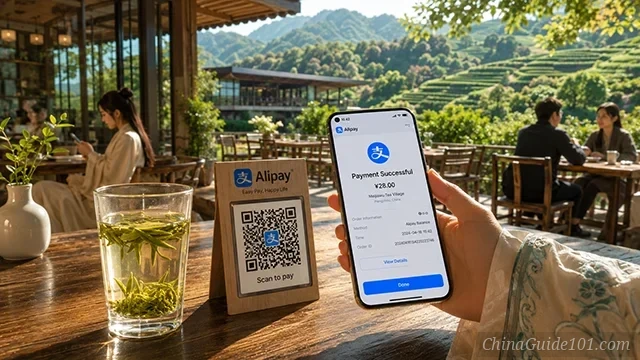
The standout experience for 2026 is Song Dynasty "Tea Whisking" (Dian Cha) workshops . This method, which involves whisking powdered tea with a bamboo tool to create a frothy suspension, was the dominant tea preparation technique in Song China before it was exported to Japan and evolved into matcha . Several operators in Meijiawu offer combined packages: picking, frying, tea whisking, and aerial drone photos of you among the terraces. Expect to pay around 100–200 RMB for a comprehensive session. Klook and Trip.com list bookable experiences with English-speaking guides.
The Water Heritage: Grand Canal & Xixi Wetland
The Beijing-Hangzhou Grand Canal
The Grand Canal is the world's longest and oldest man-made waterway, stretching over 1,700 kilometers from Beijing to Hangzhou. It's a UNESCO World Heritage site and, even in 2026, portions of it remain a working transportation artery.
For visitors, the best way to experience it is aboard Water Bus Line 1 , which runs from Wulinmen Pier near the city center to Gongchen Bridge at the historic canal terminus. The fare is just 3 RMB — payable by Alipay or WeChat Pay like a regular city bus. The boat plies the canal alongside barges loaded with construction materials, giving you a glimpse of a water highway that's been in continuous use since the 5th century BC. The journey takes about 30 minutes. Be warned: this is not a tourist-exclusive service; it's a functional commuter route, and on weekends the queue at Wulinmen can stretch for over an hour. Go early on a weekday if possible.
Once you reach Gongchen Bridge, explore the Xiaohe Historical Block and Dadou Road Historical Block , where old canal-side warehouses have been transformed into independent cafes, craft breweries, and artisanal workshops. This area is far less touristy than Hefang Street and offers a more organic slice of local life. Searching for "best coffee shops in Hangzhou Grand Canal"will lead you to tucked-away pour-over bars and canal-view terraces that make for a perfect afternoon pause.
Xixi National Wetland Park
Less than six kilometers from West Lake, Xixi feels like a different world. Over 70% of this vast wetland is covered by water, crisscrossed by ponds, streams, and reed beds. It's a critical habitat for migratory birds and a peaceful escape from the city.
The park is divided into eastern (free), central, and western sections (80 RMB for the combined ticket). The electric boat (30 RMB ) is the most practical way to explore the interior waterways. Traditional hand-rowed boats are also available for a more atmospheric — and more expensive — journey (around 100 RMB per hour ). For birdwatchers, winter (November through February) is peak season, when Siberian cranes and other migratory species overwinter in the reed marshes. Even outside peak migration, the park is home to over 180 bird species. The plum blossom grove near the main entrance is spectacular in late February and early March.
Hangzhou 2.0: The Tech & Modern Lifestyle
Future Sci-Tech City: Alibaba and the "City Brain"
West of the city center, the Future Sci-Tech City district is where Hangzhou's reputation as a tech powerhouse comes to life. Alibaba's sprawling Xixi campus is here — while not generally open to the public, the surrounding area buzzes with cafes, coworking spaces, and young professionals. The Dream Town (Mengxiang Xiaozhen) entrepreneurial hub offers a glimpse into China's startup culture, with incubators, pitch spaces, and frequent tech events.
Perhaps more tangible for visitors is the "City Brain"traffic management system, visible in the intelligent traffic lights that adapt in real-time to congestion patterns around the city. It's a quiet demonstration of how Hangzhou uses data to improve urban life — traffic delays have been reduced by over 15% since the system's deployment.
Cyberpunk Hangzhou: The Qianjiang New Town Light Show
If West Lake is Hangzhou's soul, Qianjiang New Town is its ambition made visible. This central business district on the north bank of the Qiantang River is home to the "Golden Ball" (the InterContinental Hotel, a golden sphere-shaped building) and the "Silver Moon" (the crescent-shaped Hangzhou Grand Theatre). Together with the surrounding skyscrapers, they form the canvas for one of China's most impressive urban light shows.
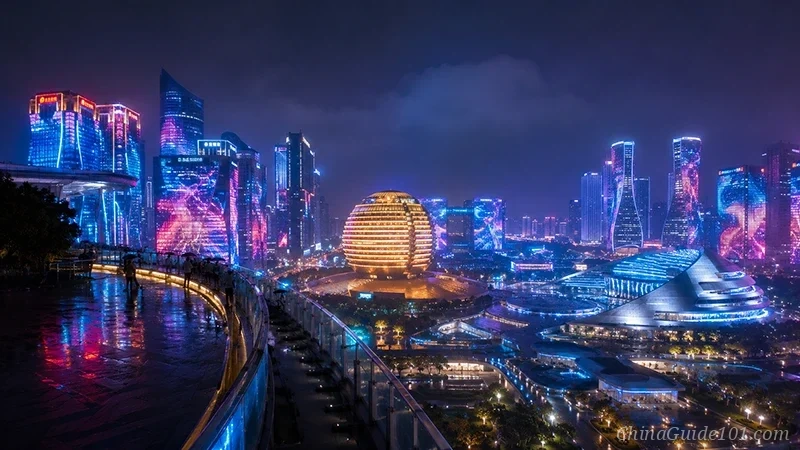
As of the 2026 spring-summer schedule (April 15–September 30), the show runs on Fridays and Saturdays at 19:30 and 20:30, and Sunday through Thursday at 20:30 . The music fountain at the Civic Center shows at 19:15 and 20:15 on weekends, and 20:15 on weeknights. The best viewing spot is from the City Balcony (Chengshi Yangtai), a raised platform along the river. Come on a weekend evening to see both shows, then walk down to Raffles City for a nightcap at one of the rooftop bars.
The "New Chinese Style" (Guochao): Hanfu at Hefang Street
One of the most visible trends in Hangzhou in 2026 is Guochao — literally "national tide" — a cultural movement blending traditional Chinese aesthetics with contemporary fashion. Walking down Hefang Street (also called Qinghefang) on any given evening, you'll see Gen-Z locals and visitors alike dressed in full Song or Ming Dynasty-style robes, complete with elaborate hairpins and embroidered sashes. They're not performers. They're simply expressing identity through fashion.
Hefang Street, a restored pedestrian thoroughfare dating back to the Southern Song Dynasty, is ground zero for this. Several shops along the street offer hanfu rentals with full makeup and styling , typically ranging from 100 to 300 RMB depending on the complexity of the look. The nearby Southern Song Imperial Street segment is quieter and arguably more atmospheric for photos. If you're interested in a more structured experience, some venues along Hefang Street now offer immersive Song Dynasty banquet experiences — a multi-course meal served in period costume in a historically styled hall. Arrive an hour early to get your hair and makeup done.
NAVIGATION TIP
Important distinction:Hefang Street is the commercialized, lively main drag, while the parallel Southern Song Imperial Street is a broader, quieter boulevard that connects to the Drum Tower (Gulou). Both are worth visiting, but for different reasons — Hefang for energy and shopping, Imperial Street for atmosphere and architecture.
Eat Like a Local: Hangzhou Cuisine (Zhe Cuisine)
Hangzhou cooking — the most famous branch of Zhejiang cuisine (Zhe Cai) — is characterized by fresh, subtly sweet flavors, a light touch with oil, and an emphasis on the natural taste of ingredients. It's refined without being fussy, elegant without being intimidating.
The Signature Dishes
Pork belly braised low and slow. It's rich, unctuous, and deeply satisfying. Most restaurants serve it in individual square portions.
West Lake Fish in Vinegar (Xihu Cuyu) is a deeply polarized dish. Some adore the balance others find the earthy taste of grass carp challenging. Calibrate your expectations!
West Lake Fish in Vinegar (Xihu Cuyu):A whole grass carp is poached, then draped in a glossy, sweet-sour vinegar sauce. The fish is presented arched dramatically on the plate. An honest heads-up: this is a deeply polarized dish. Some diners adore the delicate sour-sweet balance; others find the earthy, slightly muddy taste of freshwater carp challenging. If you want to try the most authentic version, order it at a reputable institution like Lou Wai Lou, where the technique has been perfected over generations. It's a cultural experience — just calibrate your expectations.
Dongpo Pork (Dongpo Rou):Named after Su Dongpo, the poet-governor who is said to have invented it, this is pork belly braised low and slow in soy sauce, Shaoxing wine, and rock sugar until the fat nearly collapses at the touch of a chopstick. It's rich, unctuous, and deeply satisfying. Most restaurants serve it in individual square portions.
Beggar's Chicken (Jiaohua Ji):A whole chicken is stuffed with aromatics, wrapped in lotus leaves, encased in clay, and baked until the meat falls off the bone. The theatrical presentation — cracking open the clay shell at the table — is half the fun.
Where to Eat
Lou Wai Lou (楼外楼):The 170-year-old institution on Gushan Island, right on West Lake's shore. The location is unbeatable, and the kitchen turns out textbook versions of all the classics. It's touristy, yes, but it's also a genuine piece of culinary history. Go for lunch rather than dinner to avoid the worst of the crowds.
Zhi Wei Guan (知味观):A century-old brand with multiple locations around the city, from a casual snack hall on Renhe Road (perfect for xiaolongbao and wontons) to the upscale Zhi Wei Guan · Wei Zhuang on Yanggong Causeway, where the lakeside setting and polished cooking justify the 150 RMB per person price tag.
LOCAL STREET FOOD GUIDE
Some of Hangzhou's best bites are found in the morning. Look for congbao hui'er (pan-fried buns),pian'er chuan (noodle soup), and freshly made ding sheng gao (sweet rice cakes).
For a deeper local experience, the restaurants tucked into the Xiaohe Historical Block and along Dadou Road offer contemporary Zhejiang cooking in beautifully converted canal-side buildings. These spots tend to be smaller, chef-driven, and far less touristy than the lakeside institutions.
1-Day Blitz: West Lake and Lingyin
3-Day Deep Dive: Culture, Tea, and Water
Day 1:Same as the 1-day itinerary above. West Lake in the morning and afternoon, Lingyin in between, and the light show or night cruise in the evening.
Day 2 — Grand Canal & Local Life:Take Water Bus Line 1 from Wulinmen to Gongchen Bridge early (before 9:30 AM to avoid queues). Explore the Xiaohe Historical Block and the China Umbrella Museum and China Sword and Scissors Museum (both free, both fascinating). Lunch at a canal-side cafe — refer to your search for "best coffee shops in Hangzhou Grand Canal"and pick one that catches your eye. In the afternoon, browse the boutiques along Dadou Road, then either return to Gongchen Bridge for sunset or walk south along the canal. Evening: Hefang Street for hanfu spotting, street food, and the Drum Tower illuminated at night.
Take the 3 RMB Water Bus Line 1 before 9:30 AM on weekdays to avoid long queues.
Avoid the Wulinmen Pier on weekends if possible; the wait can stretch for over an hour.
Day 3 — Tea Country & Xixi Wetland:Morning at Meijiawu Tea Village. Book a tea experience in advance — the morning session is cooler and the light is better for photos. After lunch in the village (several tea houses serve home-style Hangzhou cooking), drive 30 minutes to Xixi Wetland. Take the electric boat circuit and, if energy allows, explore one or two walking trails. The boat loop takes about an hour. Fly out that evening or stay another night.
Regional Extension: Water Towns
Hangzhou makes an ideal base for exploring the ancient water towns of the Yangtze Delta.Wuzhen , about 1.5 hours by direct bus from Hangzhou East Station, is the most famous — a meticulously preserved canal town with stone bridges, wooden houses, and lantern-lit evening streets. It's touristy but magical after the day-trippers leave. For a quieter experience,Nanxun , about two hours away, is less commercialized and still inhabited by locals going about their daily lives. Both are doable as day trips, though an overnight stay at Wuzhen is recommended if your schedule allows.
Strategic Tips & FAQs
Best Time to Visit
Q: When is the absolute "sweet spot" to visit Hangzhou?
The sweet spots are spring (March through May)and autumn (October through November). Spring brings blooming peach blossoms, fresh Longjing tea (the harvest begins late March), and temperatures between 15–25°C. Autumn delivers crisp skies, golden ginkgo trees, and the intoxicating scent of osmanthus blossoms throughout the city — Hangzhou's official city flower.
For the best combination of weather and manageable crowds, target late March (before Qingming Festival) or mid-to-late October (after the Golden Week rush).
Summer (June through August) is hot, humid, and challenging. The Plum Rain season (mid-June to early July) brings persistent drizzle and near-100% humidity — atmospheric if you're shooting moody lake photos, less fun if you're trying to cycle Su Causeway. August often sees typhoon-driven downpours. If summer is your only window, pack quick-dry clothes, a sturdy umbrella, and mosquito repellent.
Winter (December through February) is cold, grey, and damp, but hotel rates drop significantly and the city feels local again. The famous "Melting Snow on Broken Bridge" scene requires very specific conditions — and a bit of luck — but a dusting of snow transforms West Lake into a classical ink painting. Just don't expect blue skies.
Crowd Management: Avoid the Rush
Chinese public holidays turn Hangzhou into a sea of humanity. The absolute worst times to visit are:
- Chinese New Year / Spring Festival (Jan/Feb)
- Labor Day Holiday (May 1–5)
- National Day "Golden Week"(October 1–7)
During these periods, West Lake promenades become barely passable, Lingyin Temple sees multi-hour wait times, and even the usually reliable high-speed trains sell out days in advance. If you must travel during these windows, book everything early and visit major sights at opening time.
Language: What to Expect
In tech-forward areas — the Future Sci-Tech City, major hotels, and international brand stores — you'll encounter reasonable English. Young professionals in cafes and coworking spaces will often be eager to practice their English with foreign visitors.
In local markets, older neighborhoods, and rural tea villages, English evaporates. This is where translation apps earn their keep.Pleco is essential for reading menus and signs (its optical character recognition camera feature is superb).Google Translate or Baidu Translate for conversation mode. Download offline language packs before your trip — data coverage in the tea hills can be patchy.
USEFUL PHRASES
- Nǐ hǎo (Hello)
- Xiè xie (Thank you)
- Mǎi dān (The bill, please)
- Zhè ge (This one — useful while pointing)
- Bù yào là(Not spicy)
Hangzhou rewards curiosity. The city's magic isn't just in its marquee attractions — it's in the unexpected moments. The elderly calligrapher practicing characters with water on the lakeside stones at dawn. The barista in Xiaohe who spent a decade in Melbourne before opening a pour-over shop overlooking the Grand Canal. The sudden, fragrant breeze carrying osmanthus scent down an otherwise unremarkable alley in October.
Come with a plan, but leave room to wander. That's where the real Hangzhou lives.
🗺️ Traveler's Checklist: Before You Arrive in Hangzhou
- ✅ Download Alipay /WeChat Pay and link your international card
- 📍 Install Amap (高德地图)or Baidu Maps (百度地图)for navigation
- 🛡️ Download and test a reliable VPN on all your devices
- 🚄 Book high-speed rail tickets via the 12306 app if traveling from Shanghai
- ⛩️ Reserve your Lingyin Temple time slot via the official WeChat mini-program or Trip.com
- 🔋 Pack a portable power bank — Hangzhou runs on phones!
- 🗣️ Save offline language packs in Pleco or Google Translate
- 🧧 Check if any e-CNY red packet promotions are active during your dates