
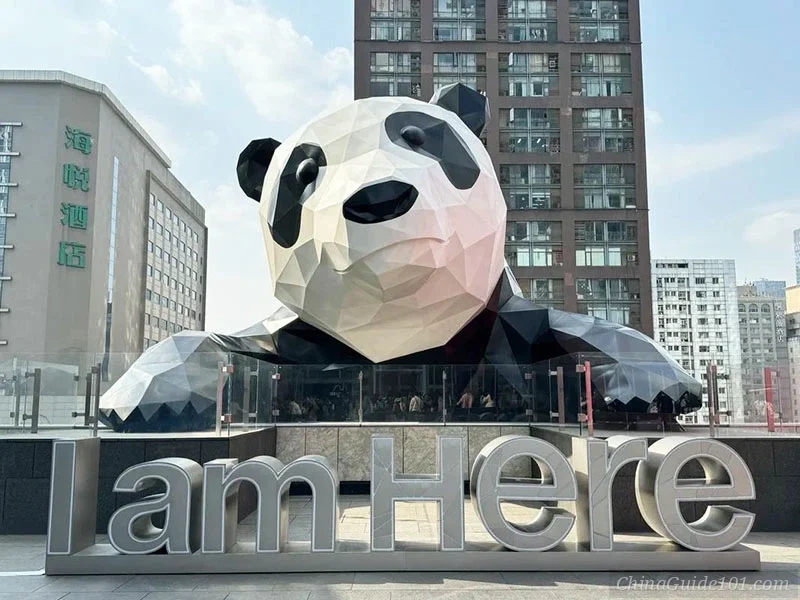
Why Chengdu is Your 2026 Must-Visit
CHENGDU AT A GLANCE
If you had to pick one Chinese city that feels simultaneously timeless and futuristic, laid-back yet endlessly exciting, Chengdu would be the undisputed choice. Nestled in the fertile Sichuan Basin, this capital of Sichuan province has long been celebrated for its an-yi (安逸)philosophy—a way of life that values comfort, ease, and simple pleasures over rush and noise.
In 2026, Chengdu isn't just a "slow city", it's a global hotspot where ancient heritage blends seamlessly with cyberpunk modernity, making it one of China's most welcoming and fascinating destinations for international travelers. For a complete list of visa-eligible countries and step-by-step application tips, check out our [China Visa 101 Guide].
The "Slow Life" (An-Yi) Philosophy
To understand Chengdu, you must first understand an-yi . Locals don't hurry. They start their mornings in teahouses, sipping jasmine tea while watching the world go by. They take long lunches, linger over spicy hotpot dinners, and spend weekends wandering parks or hiking nearby mountains. Unlike the fast-paced energy of Shanghai or Beijing, Chengdu moves at a human rhythm—a quality that feels increasingly rare in our hyper-connected world.
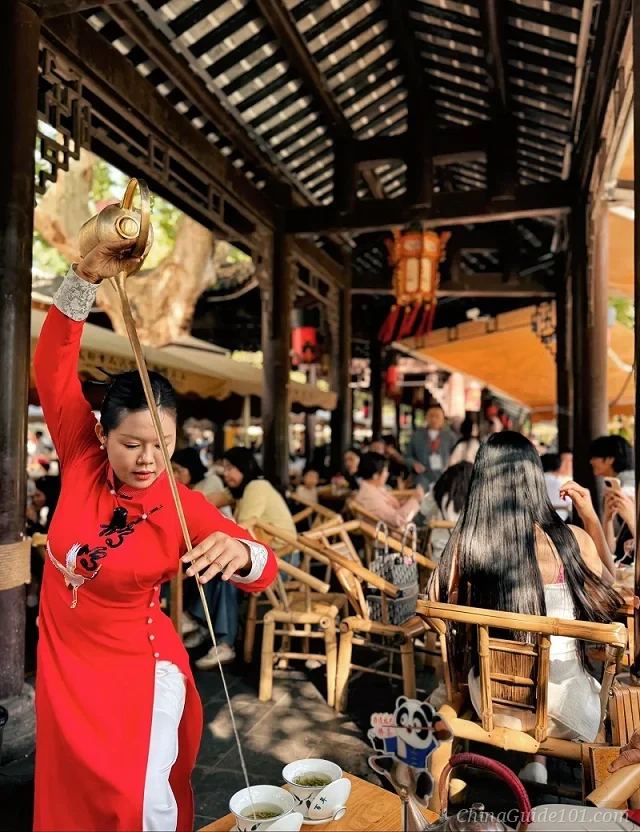
- Embrace the slow pace:Give yourself permission to slow down, breathe, and simply enjoy being alive.
- Rush your itinerary:Avoid the "packed sightseeing" trap common in busier tier-1 cities.
This mindset shapes every part of the city. Streets are lined with old-growth banyan trees, hidden courtyards, and family-run restaurants that have stood for decades. People greet strangers with warmth, and service comes without the rushed politeness common in busier cities. For travelers tired of packed itineraries and rushed sightseeing, Chengdu offers something priceless:permission to slow down, breathe, and simply enjoy being alive .
A Perfect Blend of Ancient Heritage and Cyberpunk Modernity
1,300-year-old Buddhist temples, ancient city walls, and UNESCO-listed sites like the 2,200-year-old Dujiangyan Irrigation System.
Glass-and-steel malls with massive 3D LED screens, futuristic transit stations, and one of China's most dynamic tech hubs.
What makes Chengdu extraordinary in 2026 is how it honors its past while racing into the future. Walk one block and you'll find a 1,300-year-old Buddhist temple beside a glass-and-steel shopping mall with a 3D LED screen that lights up the skyline at night. Ride the metro and you'll pass ancient city walls, traditional wooden houses, and sleek, futuristic transit stations—all within a few stops.
Chengdu's ancient roots run deep. It was the capital of the ancient Shu Kingdom, home to the mysterious Sanxingdui culture, and a major center of Buddhism and Taoism for over a millennium. Today, you can still explore well-preserved historic districts, ancient temples, and UNESCO-listed sites like the Dujiangyan Irrigation System, which has nourished the region for 2,200 years.
At the same time, Chengdu has emerged as one of China's most dynamic tech and innovation hubs. It's home to global tech giants, cutting-edge startups, and a booming creative scene. The city's skyline is dotted with futuristic architecture, and its digital infrastructure—from cashless payments to high-speed rail—is among the most advanced in the world.
In 2026, Chengdu isn't just a place to visit, it's a place to experience the soul of China : ancient, modern, peaceful, and bold—all at once.
Arriving in Chengdu: Entry & Visa Basics
Getting into Chengdu is easier than ever in 2026, thanks to expanded visa-free policies and streamlined immigration procedures. Whether you're transiting through or planning a longer stay, here's what you need to know. For a complete list of eligible countries and step-by-step application tips, check out our [China Visa 101 Guide ].
The 240-Hour Transit Advantage
Chengdu is served by two major international airports :Shuangliu International Airport (CTU)and Tianfu International Airport (TFU). Both are major hubs, with TFU handling most long-haul and international flights, while CTU focuses on domestic and regional routes.
PRO TIP: THE 240-HOUR RULE
One of the biggest perks for travelers in 2026 is China's 240-hour (10-day) transit visa exemption . If you hold a passport from one of the 55 eligible countries , you can enter China visa-free for up to 10 days when transiting through any of the 65 designated ports, including both Chengdu airports.
This means you can fly into Chengdu, stay for up to 10 days, explore Sichuan, and then depart to a third country—no visa required .
- Look for the designated "Transit Visa-Free" counter upon arrival to complete your temporary entry permit.
- Remember the clock starts at midnight on the day after arrival.
- Don't join the regular customs queue —you will be directed back to the specific transit desk.
This policy is a game-changer for travelers. After completing the 240-hour visa-free transit procedures at Chengdu Airport, you can explore Chengdu, visit Leshan, Sanxingdui, Dujiangyan, or even take the high-speed train to Chongqing — all without a visa.
30-Day Visa-Free Entry
In addition to the transit exemption, China has expanded its 30-day unilateral visa-free entry for citizens of several countries, including France, Germany, Italy, Australia, New Zealand, Japan, South Korea, and many others. If your country is on the list, you can enter China for up to 30 days visa-free for tourism, business, or family visits—no transit required.
This is perfect for travelers planning a dedicated Chengdu or Sichuan trip. Just bring your passport (valid for at least six months), proof of accommodation, and onward travel details, and you'll be stamped in at the airport.Important Note: Ensure your passport has at least two blank pages and remains valid for six months from your date of entry.
Q: Where can I find the full list of visa-free countries?
For a complete list of eligible countries and step-by-step application tips, check out our [China Visa 101 Guide ].
Logistics: Navigating the Giant
Chengdu is a big city, but it's incredibly easy to get around—thanks to its world-class public transportation ,cashless payment systems , and centralized layout . Here's how to navigate like a local in 2026.
Airport Transfers: Tianfu (TFU) & Shuangliu (CTU)
Tianfu International Airport (TFU)
TFU is Chengdu's main international airport, located about 50 km south of the city center. The fastest, most affordable, and absolute preferred way to reach downtown is Metro Line 18 , a high-speed express line that runs from TFU to Chengdu South Railway Station in just 37–40 minutes .
Fare:10.00 RMB
Operating hours: 06:00 – 23:30
Frequency: Every 4–11 minutes
PRO TIP: AVOID TAXIS FROM TFU
Taxis and ride-hailing services (Didi) are available but not recommended—they cost around 150–200 RMB and take 60–90 minutes, often longer due to traffic congestion during peak hours.
Shuangliu International Airport (CTU)
CTU is much closer to downtown—only about 15 km away.Metro Line 10 connects CTU to the city center in 25 minutes, with a fare of 6.00 RMB . Taxis from CTU to downtown cost around 50–70 RMB .
The "1-Hour Rail Circle"
One of Chengdu's greatest strengths as a travel base is its high-speed rail network , which connects the city to key destinations in 1 hour or less .
Perfect for a quick escape to Taoist mountains.
Direct access to the mysterious Bronze Age museum.
High-speed trains reaching 300 km/h to the Giant Buddha or the Mountain City.
Payment & Tech: Foreigner-Friendly "Tap & Go"
Cash is rarely used in Chengdu—mobile payment is king . In 2026, both Alipay and WeChat Pay offer foreigner-friendly "Tap & Go" services .
- Download Alipay or WeChat before arrival.
- Link your foreign card (Visa, Mastercard, Amex).
- Notify your bank about your travel plans to avoid ATM blocks.
- Don't rely on cash for street food or small shops.
- Don't worry about needing a Chinese bank account for basic payments.
Q: How does the Tap & Go work?
Simply register with your passport , link your international card, and you can tap your phone to pay at almost every shop, restaurant, market, and attraction in Chengdu.
Must-See Icons: Things to do in Chengdu
Chengdu's top attractions blend nature, culture, and futurism. Here are the icons you shouldn't miss—updated for 2026 with insider tips to avoid crowds and maximize your experience.
Panda Encounters: Beat the Crowds at the Expanded Base
No trip to Chengdu is complete without seeing giant pandas . The Chengdu Research Base of Giant Panda Breeding is the world's premier panda conservation center, home to over 200 pandas of all ages.

2026 UPDATE: THE NEW WEST AREA
In 2026, the base has completed a major expansion , adding a new West Area (New Zone)with spacious, naturalistic enclosures and modern viewing platforms.
- Enter via the West Gate : 30–50% fewer people than the South Gate.
- Visit early (7:30–10:00 AM): This is peak feeding time when pandas are most active.
- Book 1-3 days ahead : Tickets sell out fast in 2026.
- Don't wait in the "Hua" queue : Unless you are a die-hard fan, avoid the celebrity panda lines to save hours.
- Don't arrive late : Pandas sleep most of the afternoon.
Star Nursery : Baby pandas (cubs under 1 year).
Moon Hill : Young pandas playing in trees.
Bamboo Tower : Iconic photo spot with panoramic views.
The Cyber-Center: Taikoo Li 3D Screen & Daci Temple
Taikoo Li Chengdu is where ancient and futuristic Chengdu collide. This open-air shopping complex features luxury brands, trendy cafes, and the famous 3D LED waterfall screen —a 1,200 sqm display that wraps around the building, creating stunning cyberpunk visuals after dark.
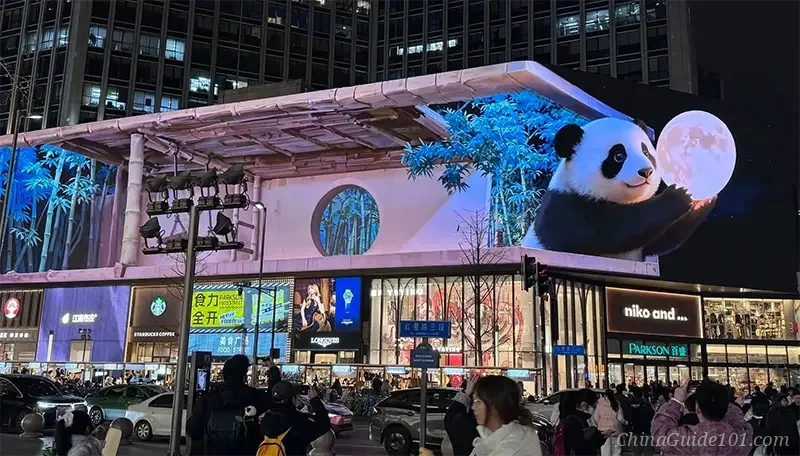
Adjacent to the screen stands Daci Temple , a 1,400-year-old Buddhist temple with golden roofs, ancient Buddha statues, and serene courtyards. The contrast between the glowing 3D screen and the quiet, incense-filled temple is unforgettable.
The Soul of Chengdu: People's Park Teahouse & Ear Cleaning

Locals start their day at Hemming Teahouse . Join them for jasmine tea and mahjong.
Traditional ear cleaning service using feather brushes.
Q: Is the ear cleaning safe?
Yes, it is a highly skilled traditional Sichuan service . Practitioners use specialized tools to provide a relaxing and safe local experience.
Sichuan Gastronomy: A Local's Map
Sichuan cuisine is world-famous for its bold flavors, numbing mala (spicy & tingling)taste, and endless variety. In Chengdu, you can eat like a king—whether you love spicy food or prefer milder options.
Hotpot Etiquette: Eat Like a Local
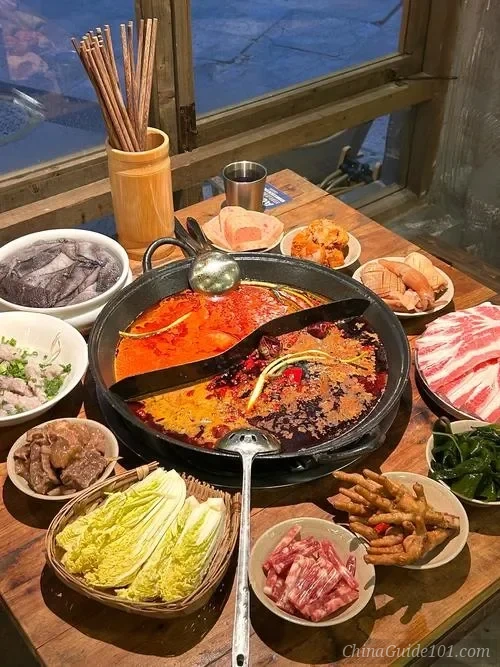
Hotpot is Sichuan's most iconic dish—a simmering pot of spicy broth where you cook raw meat, vegetables, and noodles at your table.
HOW TO ORDER LIKE A LOCAL
Broth : Choose mala (spicy Sichuan peppercorn)or tomato/mushroom (mild). Locals often order a half-and-half pot (spicy + mild).
Beef slices (niu rou pian), Lamb slices (yang rou pian), Mushrooms, Potato slices, and Tofu puffs (dou fu pao).
- Enjoy the oily but less spicy broth focused on numbing Sichuan peppercorn flavor.
- Expect a darker, richer, and extremely spicy experience with heavy chili oil.
The "Fly Restaurant" Culture: Yulin Road & Kuixinglou Street
Chengdu's best food isn't always in fancy restaurants—it's in "fly restaurants" (cāng yíng guǎn ): tiny, unassuming eateries with plastic stools, cheap prices, and incredible flavor.
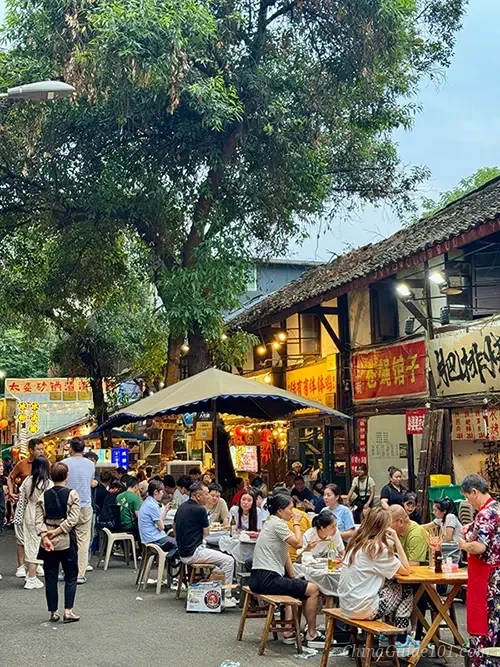
- Bring a pack of tissues and embrace the casual vibe.
- Try Yulin Roast Fish or Dan Dan Noodles .
- Expect air conditioning or luxury decor.
- Don't forget to wait —the best spots always have long queues.
Mild Options: Survival Tips for Non-Spicy Eaters
If you can't handle spice, don't worry—Chengdu has plenty of mild, delicious options :
Q: How do I ask for non-spicy food?
Simply say:“Bu yao la”(no spicy) or “Shao la”(less spicy). Most restaurants are happy to adjust.
- Gong bao chicken : Sweet and sour, with peanuts
- Mapo tofu (mild): Silky tofu in savory sauce
- Sichuan boiled fish (tomato broth)
- Rice porridge (zhou)&Bamboo shoot soup
Chengdu Day Trips: Expanding Your Cluster
Chengdu's greatest advantage as a base is its proximity to world-class day trips —all reachable in 1 hour or less by high-speed train.
Sanxingdui Museum: Ancient Shu Civilization
2026 Highlights:
- Bronze Great Standing Man : 2.6 meters tall, the largest ancient bronze figure in China
- Bronze Sacred Tree : 3.96 meters tall, adorned with golden birds
- Golden Mask : 22 cm wide, made of pure gold
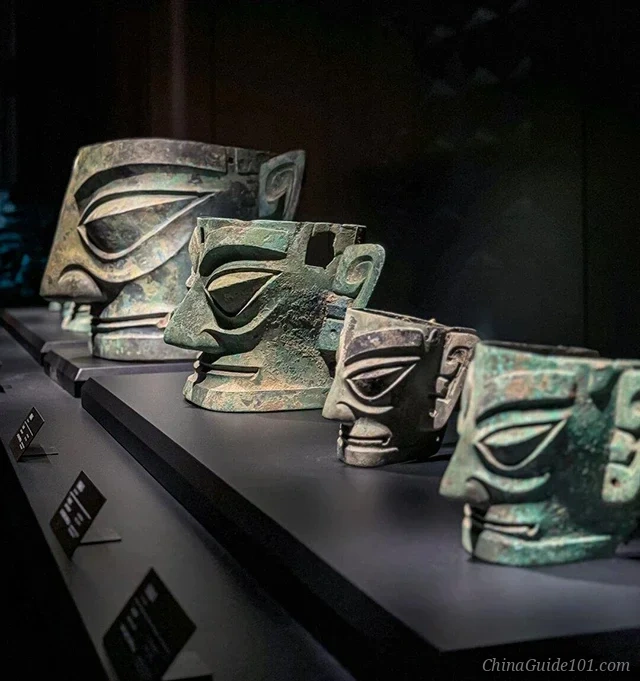
2026 NEW PAVILION
In 2026, the museum's new pavilion is fully open, featuring expanded exhibition spaces, interactive displays, and a stunning collection of newly unearthed relics.
2.6 meters tall, the largest ancient bronze figure in China.
3.96 meters tall, adorned with golden birds.
22 cm wide, made of pure gold.
LIMITED EXHIBITION
Special Exhibition: "Oceania Art Treasures": 171 pieces from France's Musée du Quai Branly (until May 20, 2026).
Leshan Giant Buddha: World's Largest Stone Buddha
How to Visit:
- Take the high-speed train from Chengdu to Leshan (1 hour).
- From Leshan Station, take bus 3 or a taxi to the Buddha site.
- Walk down the Plank Road along the cliff for a close-up view of the Buddha's face and feet.
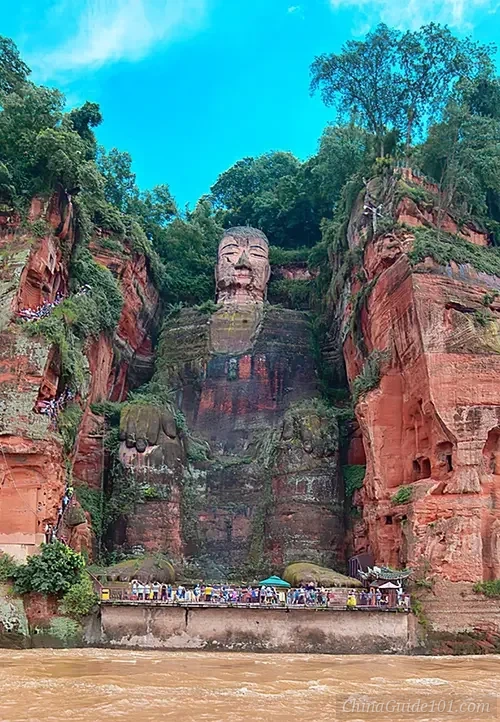
Take the train from Chengdu to Leshan Station (1 hour).
From Leshan Station, take bus 3 or a taxi to the Buddha site.
Walk down the Plank Road along the cliff for a close-up view of the Buddha's face and feet.
Dujiangyan & Mount Qingcheng: Birthplace of Taoism
Itinerary:
- Morning: Explore Dujiangyan Irrigation System.
- Afternoon: Hike Mount Qingcheng (front mountain for temples, back mountain for nature).
- Explore Dujiangyan Irrigation System, a UNESCO site nourishing the Chengdu Plain for millennia.
- Hike Mount Qingcheng: Front mountain for ancient Taoist temples, back mountain for pure nature.
Q: Can I do both in one day?
Yes, due to their proximity and the 30-minute rail connection , it is very common to visit Dujiangyan in the morning and Mount Qingcheng in the afternoon.
Ready to Go?
CHENGDU IS CALLING
Chengdu isn't the kind of city you visit once and forget—it's the kind of place that stays with you long after you leave. You'll find yourself craving the numbing spice of its hotpot, missing the slow rhythm of its teahouses, and daydreaming about the lazy pandas munching bamboo in the morning light.
It's a city that embodies the an-yi philosophy in every corner, inviting you to slow down, savor the moment, and connect with the warmth of its people.
Q: How do I handle the paperwork?
For a complete list of eligible countries and step-by-step visa application tips, check out our [China Visa 101 Guide ].
Whether you're here for 10 days or 30, Chengdu will steal your heart—and leave you planning your next trip before you even depart.Welcome to China's chillest city—your 2026 adventure starts here.