
Many travellers arriving in Beijing quickly realise there is no single "Great Wall" sightseeing spot. Multiple surviving stretches of the Ming Great Wall snake across these northern mountain ridges. Sites differ sharply in restoration work, visitor crowds, hiking terrain and how simple it is to get there from the city centre.
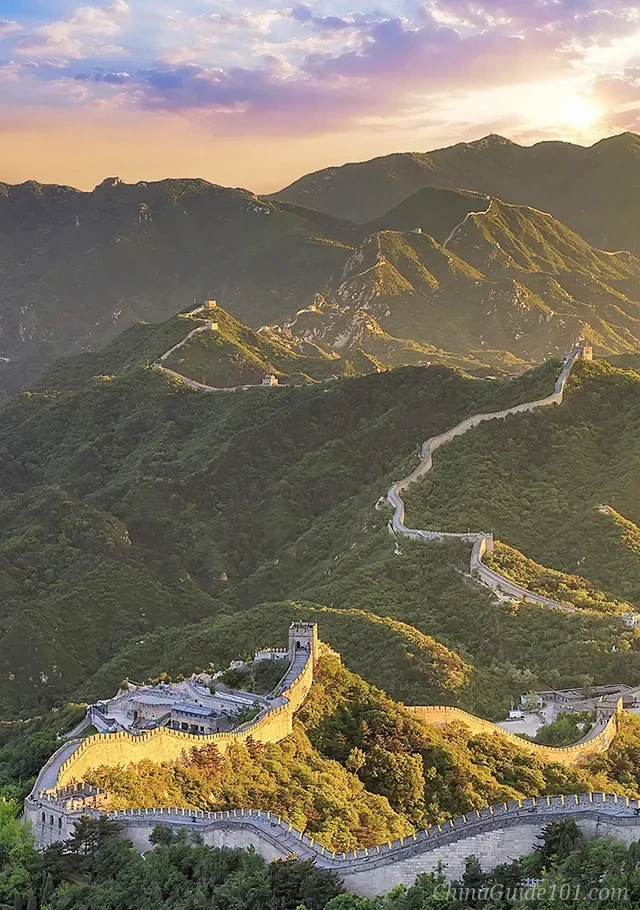
This guide breaks down the key practical details for each accessible section nearby Beijing: ticket rules for overseas passport holders, public transport and private transfer options, seasonal hiking conditions, plus accessibility notes for seniors, children and visitors with limited mobility. Rather than naming one universally best site, it walks you through factors you can weigh up to make your own suitable choice for your day out.
| Information | Details |
|---|---|
| Location | Mountainous northern outskirts of Beijing municipality |
| Available sections covered | Badaling, Mutianyu, Huanghuacheng, Jinshanling, Simatai, Jiankou |
| Visitor note | Individual scenic areas are managed separately; tickets for one section do not grant entry to another |
| Best general window for visits | Late spring through early autumn; winter visits are possible with cold‑weather preparation |
Which Great Wall Section Should You Visit?
| Section | What to Expect | Typical Visitor Levels | Hiking Difficulty | Transport Complexity |
|---|---|---|---|---|
| Mutianyu | Restored wall, mountain scenery and lift options (cable car, chairlift) | Moderate‑High | Low‑Moderate | Medium |
| Badaling | Extensive facilities and easy access by suburban rail | Very High | Low‑Moderate | Low |
| Jinshanling | Longer hikes and mixed restored / older wall segments | Moderate | Moderate‑High | High |
| Simatai | Restored and less‑restored stretches; organised night‑time visiting sessions | Moderate | Moderate‑High | High |
| Huanghuacheng | Wall running beside a reservoir; mix of flat and steeper paths | Moderate | Low‑Moderate | Medium |
| Jiankou | Unrestored wild wall; rugged, uneven mountain terrain | Low | Very High | High |
Great Wall Sections: What to Expect
Badaling
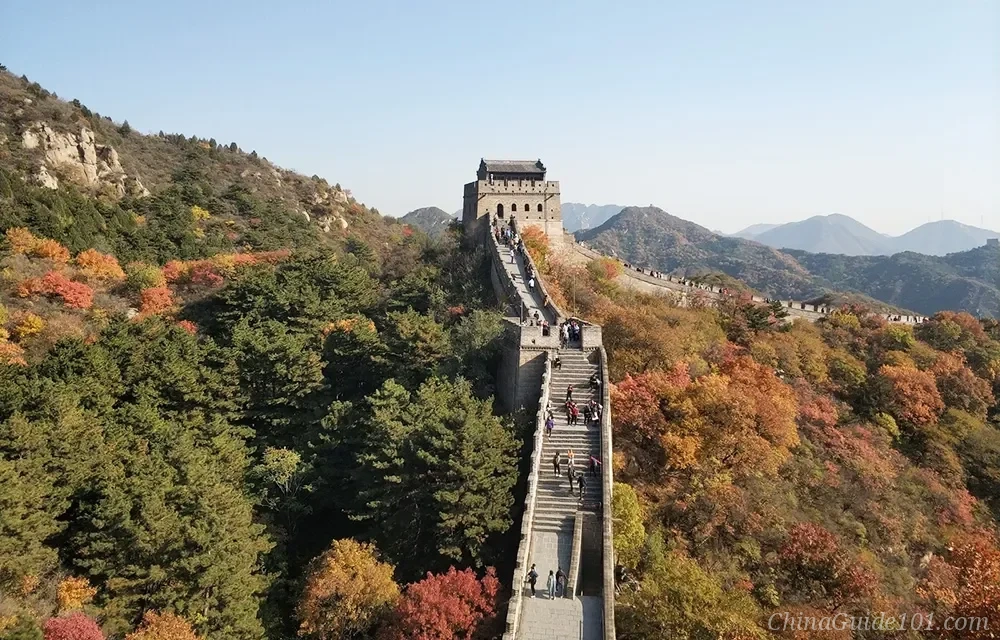
Badaling remains the most heavily visited Great Wall site. Large parts were restored early for tourism, with wide walkable wall tops and substantial visitor infrastructure. Because Badaling is served by the S2 suburban railway and the Beijing–Zhangjiakou high‑speed railway, it is one of the easier Great Wall sections to reach by public transport from Beijing. It draws huge numbers of day‑trippers, especially on weekends and national holidays.
The developed section is divided into northern and southern walking routes, with some stretches involving repeated uphill and downhill sections. Visitors who do not want a long hike can explore part of the wall and turn back rather than attempting to cover the entire restored section. Shorter walks are possible, while longer routes continue along the ridge for more strenuous hiking. If you want to reduce the chance of heavy crowds, arriving early in the morning is a practical option.
PRO TIP: AVOIDING CROWDS
Short easy walks are possible, but you can also follow the wall further along the ridge for more strenuous hiking. If you want to avoid peak crowds, aim to arrive as early in the morning as you can.
Mutianyu
Mutianyu also features substantial restored fortifications sitting high along forested mountain ridges. It offers both cable‑car gondolas and open‑air chairlifts to carry visitors uphill toward the wall, alongside stair‑only walking ascent routes.
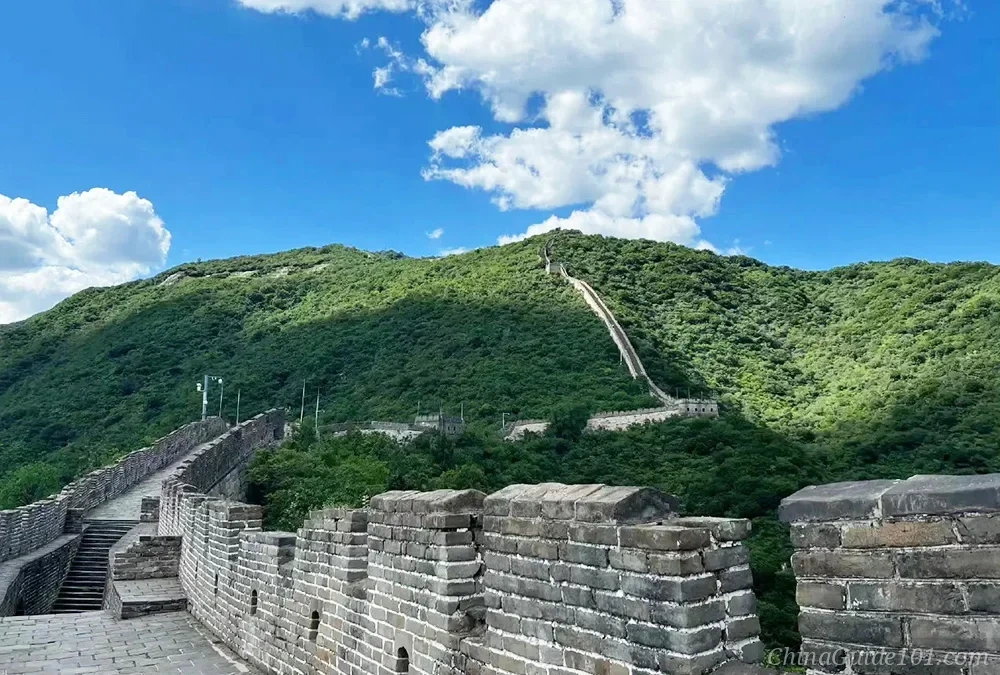
Mutianyu also operates occasional night‑tour sessions during selected periods. These are not a year‑round service, so visitors planning an evening visit should check the current operating schedule before travelling. Standard daytime admission can be purchased on‑site, while special night‑tour sessions require advance real‑name reservations.
The surrounding hills are covered with trees, so colours shift noticeably between green summer foliage and autumn fall colours. It is common for groups to combine the chairlift ride up with a downhill luge track ride back to the visitor plaza.
Huanghuacheng (Yellow Flower City)
Huanghuacheng is sometimes known as the "water Great Wall". Parts of the fortification run down to the edge of a large mountain reservoir. Some wall segments sit right beside the water, creating a distinctive visual setting.
Sections here include both restored and somewhat worn older stretches. Compared with Badaling it generally sees fewer visitors. There are flatter walking paths near the reservoir shore, though many wall sections still involve climbing stone steps.
Jinshanling
Jinshanling is favoured by hikers wanting longer ridge-top walks. Restoration is partial; you move between well-repaired parapets and older, weathered wall sections. There are many watchtowers along the ridgeline.
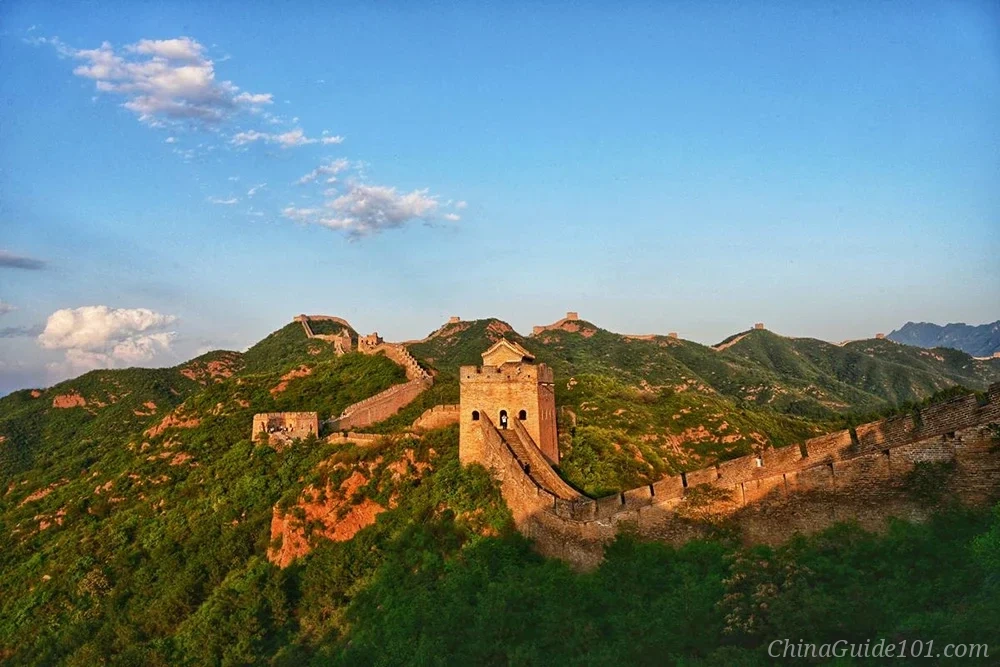
The watchtowers themselves vary in condition. Some retain original vaulted interior spaces, while others are heavily ruined and open-air. Because longer routes can keep you on the ridge for several hours, carry enough drinking water and snacks for the hike. The popular long-distance hiking route continues east toward Simatai, though the full trek requires advance planning. Public transport connections are limited, so many visitors use an organised tour or private vehicle.
Simatai
Simatai offers a mix of restored and crumbling original wall built along sharply sloping mountain ridges. This site is also the location for scheduled organised night‑time Great‑Wall visits. Night opening is not permanent; these special events run only on selected dates throughout the year.
Much of the wall here follows a sharp, narrow ridgeline. In several spots the stair gradient becomes extremely steep, so careful footwork is needed even for reasonably fit walkers. Night-time visits operate under separate arrangements and may have limited operating areas and entry times, so check the current schedule and booking requirements before travelling. You should confirm opening status before you travel, as operational arrangements change more frequently than at the better‑known sites.
Jiankou
Jiankou is the famous "wild", largely unrestored Great Wall. Stone surfaces are uneven, eroded and broken in many places. Some sections have steep slopes, exposed terrain and loose or uneven stone surfaces.
Unlike the fully developed scenic areas at Mutianyu and Badaling, Jiankou consists largely of rugged mountain trails and unrestored wall sections. Hiking here requires suitable footwear, route planning and experience with rugged mountain terrain. Note that certain trail segments may be closed periodically for conservation or safety reasons.
Great Wall Hiking Routes & Difficulty
Easy & Short Walks
Mutianyu East Route (Tower 6 to Tower 1)
Take the chairlift uphill to Tower 6, then walk downhill toward Tower 1. This segment is relatively short with a predominantly downward gradient. Once you finish, a gentle path leads back to the toboggan and chairlift station. This route works well for families travelling with young children or casual visitors who want a brief first-hand experience of the Great Wall without strenuous physical effort.
Moderate Hikes
Mutianyu West Route (Tower 14 to Tower 20 and back)
Ride the cable car up to Tower 14 and head west to Tower 20, Mutianyu's highest point. The final ascent includes more than 400 steep stone steps, though you are rewarded with wide panoramic views across forest-covered mountain ridges. Plan for 2–2.5 hours for the complete round trip.
Badaling North Route
Begin from the northern entrance and hike up toward Tower 8, the highest point on the Badaling restored section. The steps are relatively even, and handrails are available along much of this path. This route still involves steady physical exertion, yet visitors, including seniors, may turn back whenever they wish. Budget roughly 1.5–2 hours for the round trip.
Longer & More Demanding Hikes
Jinshanling Full Trail
Start from the main entrance and hike east in the direction of Simatai. This 10-kilometre trail passes 67 watchtowers over continuously undulating ridge terrain. Portions feature loose stone surfaces and lack safety guardrails. Set aside 3.5–5 hours for your hike. Carry a minimum of 2 litres of drinking water, snacks, and sun protection. Hikers can exit at Simatai West or loop back toward Jinshanling.
Jinshanling to Simatai West Traverse
This well-known through-hike is frequently on travellers' bucket lists. The trek takes 3–4 hours, taking you past a mixture of restored, weathered, and overgrown wall segments, with stretches that require careful scrambling over old stonework. Valid admission tickets are required for both scenic zones. Note that the connecting trail may be closed at times for safety or conservation reasons. For this reason, most visitors complete this hike as part of an organised hiking group. Hikers should always verify real-time access restrictions before setting out, since trail status can shift due to weather or ongoing restoration work.
Great Wall Tickets & Booking Guide
General Ticket & Booking Information
All developed Great Wall scenic areas covered in this guide require their own admission arrangements. A ticket for one section does not normally provide access to another section, even when the two sections are connected by a hiking route.
For international visitors, ticketing and identity-verification procedures vary between scenic areas. Carry your original physical passport when visiting the Great Wall, particularly if you have booked online or are visiting a section with real-name entry arrangements. Badaling and Mutianyu currently allow on-site purchase for standard daytime admission, while other sections may have different booking procedures.
Admission tickets generally cover access to the wall itself. Cable cars, chairlifts, shuttle buses, toboggan rides and other visitor transport are usually charged separately where available. Check whether these services are included when comparing ticket or tour prices.
Advance booking is more important for special events, night-time visits and periods of heavy demand. During major Chinese public holidays, check the latest ticket availability and booking requirements before travelling rather than relying on normal weekday arrangements.
Badaling Tickets
Standard adult admission:CNY 40 . Concessions for children and seniors are available. Day‑time tickets may be bought on‑site, though online advance booking is also an option. Opening hours shift between seasons; broadly 06:30‑16:30 in warmer months and 07:30‑16:00 for winter.
Mutianyu Tickets
Mutianyu's standard adult admission is currently CNY 45 . No advance reservation is required for normal daytime admission, and tickets can be purchased on‑site. Opening hours vary by season and by weekday or public holiday, so check the current schedule before travelling. Cable car, chairlift and the downhill luge are all separate paid extras and not included within the base wall entry ticket. Night‑tour events have separate ticketing rules as noted above.
Huanghuacheng Tickets
Adult entry ticket CNY 60 . On‑site ticket sales are available, advance online booking is also possible. The wall sits beside reservoir water, and some lakeside walking paths fall within the scenic zone boundary.
Jinshanling Tickets
Adult admission CNY 65 . There is an on‑site cable car as an optional paid upgrade. Online pre‑booking is common for this site, but on‑site window sales also exist.
Simatai Tickets
Base admission CNY 40 . Night‑visit sessions have special separate tickets; these cannot be purchased on the spot on the evening itself and must be booked ahead.
Jiankou Access and Tickets
There is no formal scenic‑area ticket office for wild Jiankou. Access points are local mountain trailheads. Note that certain trail segments may be closed periodically for conservation or safety reasons.
Cable Cars, Shuttles & Other Extra Costs
Admission tickets are not always the full cost of a Great Wall visit. Depending on the section, you may also need to pay separately for cable cars, chairlifts, internal shuttle buses, sightseeing vehicles or other uphill transport. Private transfers and organised guided tours represent further major expenses for your trip.
Before confirming any plan, always check whether uphill rides, shuttle services, or guide fees are already included in your ticket or tour price. It is quite common for visitors to budget only for the base entry fee and then discover unexpected additional charges once they arrive at the scenic area.
Common extra expenses to anticipate:
- base scenic‑zone admission ticket
- cable‑car or chairlift one‑way / return fare
- internal site shuttle bus
- private car or driver transfer from Beijing
- guided tour services
How to Get to the Great Wall from Beijing
Transport Options at a Glance
| Section | Practical transport options |
|---|---|
| Badaling | S2 suburban railway or high‑speed rail |
| Mutianyu | Bus with transfer in Huairou, or private transfer |
| Jinshanling | Private transfer / organised hiking tour |
| Simatai | Private transfer / organised tour |
| Huanghuacheng | Public transport with transfer / private car |
| Jiankou | Private vehicle then mountain hiking |
PRO TIP: RETURN TRAVEL PLANNING
When evaluating transport, bear in mind return travel back to central Beijing. Public bus schedules for these mountain locations often finish early in the afternoon, so missing your return service can create serious difficulties. Private car or guided tour gives you greater flexibility with your departure time, but comes at extra cost.
Public Transport vs Private Transfer
Travellers planning a day trip need to weigh up public transit against private transfer, and understand how each option works for different Great Wall sections.
For Badaling, there are two distinct rail choices. The S2 suburban railway departs from stations north of central Beijing, while the Beijing‑Zhangjiakou high‑speed rail is a separate intercity service. Neither starts right in the heart of downtown, so you will first take city metro to reach the relevant railway station.
Mutianyu has no direct long‑distance train service. Independent visitors taking public transit generally take a city bus out to Huairou town first, then change onto a local bus or short local taxi toward the scenic‑area gate. This extra transfer adds considerable total journey time.
The more remote sites‑‑Jinshanling, Simatai and Jiankou‑‑have very limited public bus connections. Most independent hikers opt for a private car hire or a pre‑booked organised hiking tour.
One very common mistake among visitors is to only research the outbound journey time. Return transport is equally critical. Mountain‑area public services often stop running early in the afternoon. If you miss your last bus or train back toward Beijing, you will face major logistical difficulties. Private transfer gives you much greater control over your departure time at the end of your visit, at the cost of a higher cash outlay.
When evaluating transport, bear in mind return travel back to central Beijing. Public bus schedules for these mountain locations often finish early in the afternoon, so missing your return service can create serious difficulties. Private car or guided tour gives you greater flexibility with your departure time, but comes at extra cost.
Great Wall Accessibility, Seniors & Families
The section you choose should match the least mobile person in your group rather than the strongest hiker. Even sites that have an uphill cable‑car lift still feature historic stone wall pathways. Do not assume that a wheelchair‑accessible cable‑car station means that a wheelchair user can travel freely along the entire wall. The wall surface itself consists of old, uneven stone steps with steep gradients in most places.
If your group includes people with reduced mobility, the lift systems at Badaling or Mutianyu can reduce the initial climb, but they do not provide step‑free access along the historic wall itself.
- For families with younger children: keep daily walking distance moderate. Many sites have very long continuous stair climbs that quickly tire small kids.
- Seniors with limited knee mobility will want to minimise repeated steep stair ascent and descent wherever possible.
Best Time to Visit the Great Wall
Spring (March‑May)
Mountain temperatures stay cooler than central Beijing well into spring. Strong winds can persist on exposed ridge tops. Trees slowly come into leaf across the hills. Weekday visits will help you avoid the surge of domestic tourist traffic around Chinese public holidays.
Summer (June‑August)
Hot sun on exposed stone surfaces can make hiking uncomfortable at midday. If you travel in summer, try to start your outing early. Carry drinking water, sun protection. On the wild un‑restored segments like Jiankou, summer thunderstorms can roll in quickly over the mountains, bringing slippery rock conditions.
Autumn (September‑early November)
Autumn generally brings mild temperatures and clear conditions for hiking. Forested hills around Mutianyu and Jinshanling also develop noticeable fall colours. This is also peak tourist season on weekends, so expect busier conditions.
Winter (December‑February)
Temperatures drop sharply on the exposed mountain ridges. Snow and ice may lie on the stone steps of the wall itself. Many main scenic areas remain open, yet opening hours become shorter. Thick warm outerwear and footwear with good anti‑slip soles are essential. Wild‑wall hiking in winter carries extra slipping hazards.
Holidays & Peak Crowds
PRO TIP: AVOIDING HOLIDAY CROWDS
Weekends are consistently busier than weekdays across all the restored scenic sites. Major national holiday periods such as the October Golden Week bring extremely large visitor numbers. Whenever you can, arrange your trip on a weekday to reduce crowd pressure. If your travel falls on a public holiday, aim for the earliest possible morning arrival.
How to Plan Your Great Wall Visit
The Great Wall sections around Beijing offer very different experiences, so the practical choice depends on how much time you have, how much walking you want to do, and how easily you need to reach the site.
PRO TIP: ESSENTIAL CHECKLIST BEFORE BOOKING
Before booking, check four things: the section's current ticket and opening arrangements, the transport time from central Beijing, the amount of walking involved, and your return transport.
- For international visitors, carrying your physical passport and checking the latest official information shortly before the visit can also prevent avoidable problems, particularly during public holidays, night‑tour periods and changing hiking conditions.
- Do not rely solely on digital copies of your passport or outdated schedule information when visiting managed or night-tour Great Wall sections.
FAQ
Q: How far is the Great Wall from central Beijing?
Travel time varies significantly by section and by traffic. Badaling is generally easier to reach by rail, while Mutianyu involves a road journey and a transfer if using public transport. More remote hiking areas such as Jinshanling, Simatai and Jiankou require more time and planning. For a day trip, allow enough time for both the outbound and return journey rather than planning only around the hours spent on the wall.
Q: Can I visit the Great Wall without a tour?
Yes. Several major sections can be visited independently using public transport or private transfer. Badaling and Mutianyu are particularly suitable for independent day trips because they have established visitor facilities and regular transport options. More remote or rugged sections such as Jiankou require considerably more route planning and are less suitable for visitors unfamiliar with the area.
Q: Can I hike from Jinshanling to Simatai?
This long eastbound ridge hike follows the wall across multiple watchtowers. It is a popular longer‑distance trek. Be aware this route requires advance planning: confirm that connecting trail access is open on the day of your visit, and arrange transport pickup at the Simatai end in advance. It is a physically demanding hike over several hours.
Q: Can foreign visitors buy Great Wall tickets on‑site?
Ticket and identity‑verification procedures vary by section. Badaling's current official information confirms that standard admission can be purchased on‑site, while Mutianyu also allows on‑site purchase for normal daytime admission. Foreign visitors should carry their physical passport regardless of whether they book online or on‑site.
Q: Which Great Wall section is easiest to reach from Beijing?
Badaling is generally the most straightforward section to reach by public transportation, with both the S2 suburban railway and high‑speed rail services available. Mutianyu is also accessible from Beijing, but public‑bus routes normally require a transfer in Huairou. Jinshanling, Simatai and Jiankou require more planning because they are farther away or have more limited public transport.
Q: How many hours should I plan for my Great Wall excursion?
For Mutianyu or Badaling, many visitors spend around 3‑4 hours at the scenic area, but the total day can be much longer once travel time from central Beijing is included. Jinshanling, Simatai and Jiankou may require a longer day depending on your route and transport arrangements.
Q: Can I visit the Great Wall in winter?
Yes. Major sections remain open in winter, although opening hours may be shorter and snow or ice can make the wall more difficult to walk. Wear warm clothing and shoes with good traction, and check the current opening status before travelling.
Q: Do I need a passport to visit the Great Wall?
Foreign visitors should carry their physical passport when visiting the Great Wall. Ticketing and identity‑verification requirements vary by scenic area, and the passport may be required for booking, ticket collection or entry verification.
Q: Are cable cars available at the Great Wall?
Cable cars, chairlifts or other uphill transport are available at some developed sections, including Mutianyu and Badaling. These services are usually optional and may require separate payment. They can reduce the initial climb, but they do not make the wall itself flat or fully accessible.