
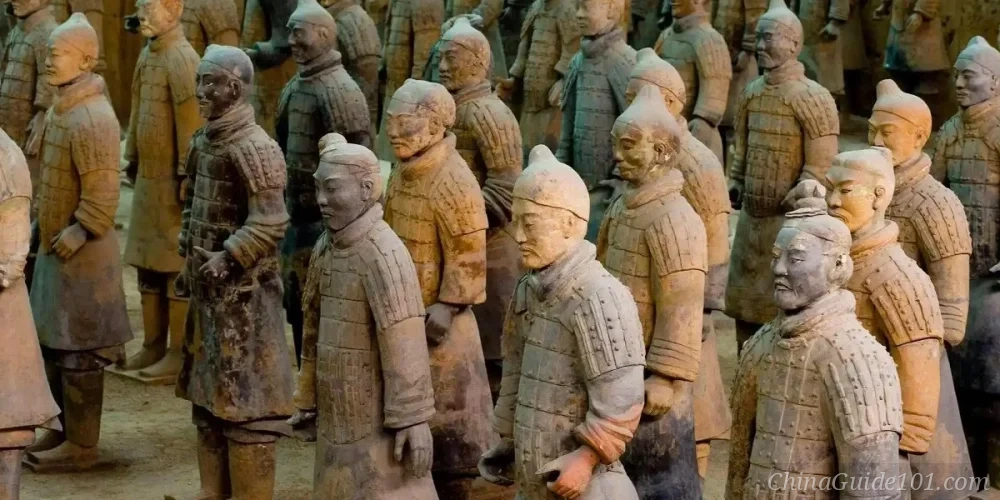
If you're planning a trip to China, you've almost certainly seen the photos — thousands of life-sized clay soldiers standing in silent, battle-ready formation, buried for over two millennia. This is the Terracotta Army, and for many travelers, it's the absolute highlight of a China itinerary.
So, what exactly are they? They are an underground legion created to guard China's first emperor, Qin Shi Huang, in the afterlife. And is it really worth the trip? Unequivocally, yes. Even if you've seen countless pictures, the moment you first walk into the vast hangar of Pit 1 and see over a thousand restored warriors standing in formation is genuinely breathtaking. The Terracotta Warriors are actually part of the Mausoleum of the First Qin Emperor, which was designated a UNESCO World Heritage Site in 1987. Today, it remains one of the greatest archaeological discoveries of the 20th century.
This guide is built specifically for foreign travelers, covering not just the history but the modern, practical realities of visiting — from booking tickets without a Chinese ID to using ride-hailing apps and staying connected. Let's dive in.
Where Are the Terracotta Warriors?
Quick Answer
Lintong District, Xi'an
About 40 km (25 miles)
45–75 minutes
3–4 hours
Didi, guided tour, or tourist bus
The Terracotta Warriors are located in Lintong District, approximately 40 km (25 miles) east of downtown Xi'an, Shaanxi Province, China. For most travelers, visiting the site is an easy half-day trip from Xi'an, with the journey taking 45 to 75 minutes depending on your mode of transport. Xi'an itself is well-connected by air and high-speed rail, making the warriors an accessible add-on to almost any China itinerary.
Before You Visit: At a Glance
This quick-reference checklist is designed to help you orient your trip before getting into the details.
- Location:Lintong District, Xi'an, Shaanxi Province
- Time Needed:3–4 hours (minimum)
- History lovers and culture enthusiasts
- First-time visitors to Xi'an
- Families and solo travelers
- A half-day or full-day trip from Xi'an city center
- Travelers with extremely limited time (a rushed 1-hour visit isn't worth the commute)
Are the Terracotta Warriors Worth Visiting?
Q: This is one of the most common questions travelers type into Google, and the short answer is yes, absolutely. But let me give you the context.
The Terracotta Warriors offer a scale and a level of craftsmanship that you simply cannot grasp through photos. Pit 1 is the size of an aircraft hangar and contains thousands of figures, each with unique facial features and expressions. It's also a live archaeological site; depending on when you visit, you may witness ongoing excavations.
PRO TIP: HISTORICAL SIGNIFICANCE
Beyond the visual spectacle, the site connects you directly to the story of the first emperor of a unified China — a story of immense ambition, meticulous planning, and a profound belief in the afterlife. Compared to other famous Chinese landmarks, the Terracotta Warriors feel more intimate and mysterious than the sprawling Great Wall, and far older and more visceral than the Ming-Qing grandeur of the Forbidden City. For many, it is the single most impressive historical site in China.
Terracotta Warriors vs Other Attractions in Xi'an
If you're weighing your options, here's a quick comparison to help you prioritize.
- Terracotta Warriors vs. Xi'an City Wall:The City Wall is beautiful and offers a fantastic cycling experience, but the Warriors are a once-in-a-lifetime archaeological wonder. If you can do only one, choose the Warriors. If you have two days, do both.
- Terracotta Warriors vs. Giant Wild Goose Pagoda:The Pagoda is a serene Tang Dynasty landmark within Xi'an. It's perfect for a relaxed evening, but it does not rival the global significance of the Terracotta Army.
- Terracotta Warriors vs. Mount Hua (Huashan):This is a trade-off between a cultural-historical experience and a physically demanding nature adventure. Mount Hua's plank walk is iconic, but it requires a full, exhausting day. The Warriors are far more accessible and require no physical conditioning.
PRO TIP: MY RECOMMENDATION
If Xi'an is on your list, the Terracotta Warriors are the unskippable anchor. Plan your trip around them, then add other attractions as time allows.
What Are the Terracotta Warriors?
The Terracotta Army is a massive collection of life-sized clay figures — soldiers, horses, and chariots — buried with China's first emperor, Qin Shi Huang. It is part of a much larger mausoleum complex that archaeologists are still uncovering today.
Qin Shi Huang unified China in 221 BCE and set about standardizing everything from currency to written script. Convinced that his empire would continue beyond death, he commissioned an entire army of clay to protect his tomb and project his power into the afterlife. Every figure was positioned with strategic military purpose, facing east towards the conquered kingdoms that might pose a threat in the spirit world.
In March 1974, a group of farmers in Lintong County were drilling a well when they struck fragments of terracotta. What emerged from the dry earth was a vast underground vault, hidden for more than 2,000 years. The find shocked the archaeological world and fundamentally rewrote our understanding of early Chinese funerary art and military organization.
In 1987, the Mausoleum of the First Qin Emperor (including the Terracotta Army pits) was inscribed on the UNESCO World Heritage List, a recognition of its unparalleled cultural value. This status ensures international conservation standards, meaning the climate-controlled exhibition halls and careful restoration work you see today are part of a global effort to preserve this terracotta warriors history for future generations.
Emperor Qin Shi Huang's Tomb
The warriors are only a satellite component of a massive necropolis. The central tomb of the emperor, covered by a large earthen mound, remains unexcavated about 1.5 km from the museum pits, forming the heart of the complete Mausoleum of the First Qin Emperor.
PRO TIP: THE MERCURY MYSTERY
Ancient texts describe a subterranean palace with rivers of mercury, and non-invasive soil tests have revealed dangerously high mercury levels, suggesting those poetic descriptions hold truth. For now, the emperor's burial chamber remains one of history's great sealed mysteries.
How to Visit the Terracotta Warriors (Practical Planning)
This section covers the logistics that matter most for a smooth, stress-free day.
Location & Getting Your Bearings
The museum is in Lintong District, roughly 40 kilometers east of downtown Xi'an. The journey takes 45–75 minutes depending on traffic and your mode of transport. If you're spending several days in the city, our complete Xi'an itinerary guide covers the best attractions, hotels, and local food experiences to help you plan.
Opening hours vary by season and may be adjusted during public holidays. As a general guide, the museum opens around 8:30 AM and closes between 4:30 PM and 5:00 PM, with last entry typically an hour before closing. Opening hours during major holidays are subject to the latest announcements.Visitors should always check the official museum website before traveling , as changes to the schedule can and do happen.
Ticket prices are subject to change. In the past, a peak-season adult ticket has cost around 120 CNY , with discounts available for students and seniors. However, I strongly advise against planning your budget around any one static figure.Please verify current pricing through the official museum website or authorized booking platforms before your visit.For a complete breakdown of payment methods, see our guide on how to pay for everything in China as a foreign traveler .
How to Buy Tickets (For Foreign Visitors)
This is where the process differs significantly from domestic tourist visits. Here is the current best practice for non-Chinese passport holders:
- Online Booking (Recommended):The most reliable route is to use a major international booking platform like Trip.com . They have an English interface, will manage the passport registration, and issue a QR-code ticket. The official museum website and its WeChat mini-program also work, but often require a Chinese phone number for verification, which can be a hurdle.
- On-Site Ticket Office:You can still buy tickets in person at the east entrance. You must bring your physical passport — photocopies or phone photos are generally not accepted for ticket purchase. While possible, I don't advise this for peak periods, as time-slot availability may be sold out.
PRO TIP: PASSPORT REQUIREMENT
Your passport is your ticket. You will need it at the gate, and your name on the ticket must match your passport exactly. Foreign visitors should carry their passport throughout their China trip, and this visit is no exception.
Recommended Tours for First-Time Visitors
If you'd rather not piece the logistics together yourself, here are the most popular pre-arranged options, each catering to a different travel style:
- Best for Convenience:Terracotta Warriors Half-Day Tour. Round-trip transport from your Xi'an hotel, pre-booked tickets, and an English-speaking guide. Perfect if you're short on time but want a complete experience.
- Best Value:Terracotta Warriors + Huaqing Palace Combo. These two sites sit practically next door to each other. Booking them together saves money and makes for a full, culturally rich day without wasting time in transit.
- Best Private Experience:Private Guide + Hotel Pickup. A dedicated vehicle, flexible timing, and a guide who can tailor the commentary to your interests. Ideal for families, photographers, or anyone who wants to linger in Pit 1 without being rushed.
You can compare availability and prices on platforms like GetYourGuide ,Viator , and Trip.com . Booking in advance is strongly recommended during peak travel seasons.
How to Get to the Terracotta Warriors
For foreign travelers, the practical options largely come down to three main methods. Here's how they compare.
- Taxi / Didi:This is, for most visitors, the easiest and most comfortable choice. The ride-hailing app Didi (China's Uber equivalent) allows you to input the destination in English and pay electronically. A one-way trip from central Xi'an will cost roughly 120–180 CNY and takes about an hour.Most foreign travelers find Didi far easier than navigating local buses.You can find a full walkthrough in our guide to setting up ride-hailing and payment apps before your China trip .
- Guided Tour with Transport:A very popular and stress-free option. Small-group or private tours typically include hotel pickup, tickets, and a guide. This bundles the logistics into one seamless package and is ideal for first-time China visitors who might feel uncertain about language barriers. You can compare options on platforms like GetYourGuide and Viator .
- Tourist Bus:Dedicated tourist buses (such as Bus 306 or "Tour Bus 5") run from locations like the Xi'an Railway Station and the Giant Wild Goose Pagoda area. The fare is minimal (around 7–10 CNY ). The challenge for foreign visitors is identifying the correct, official bus and handling the cash or QR-code payment required. It's a worthwhile, budget-friendly adventure if you're prepared, but not always the most straightforward first choice.
- A note on the Metro:While Metro Line 9 does extend to Lintong, and you can connect to a local bus, this multi-step journey can be confusing for a first-time visitor. It's fine for budget backpackers, but for the majority of visitors on a limited schedule, a direct ride-hail car or tour bus is more practical.
Exploring the Terracotta Warriors Museum
The museum complex is immense. A strategic route will maximize your experience.
This is the cathedral of the Terracotta Army. A cavernous hall protects thousands of infantrymen arrayed in battle formation. The restored warriors stand proudly in the front rows, while towards the rear, shattered remains await painstaking reconstruction. Walk the viewing platforms slowly. The scale is overwhelming, and the atmosphere is reverent.

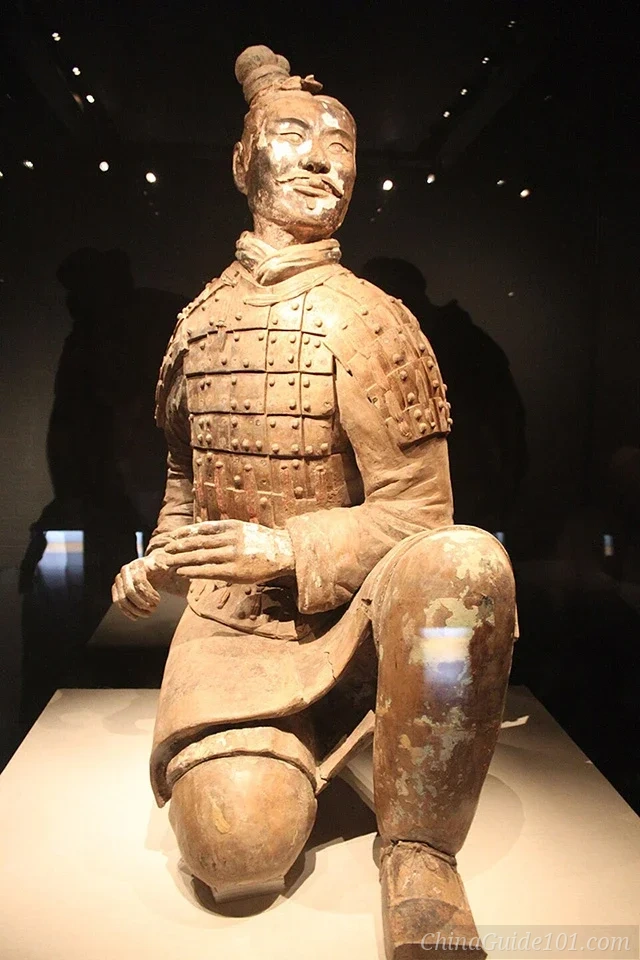
Smaller, darker, and more atmospheric, Pit 2 reveals the tactical complexity of the Qin military. Here you'll find a mixed force of cavalry, crossbowmen, and charioteers. The famous kneeling archer — a stunningly detailed figure, right down to the tread on his shoe — was discovered here. The lighting lets you get close and observe the intricate armor and serene expressions.
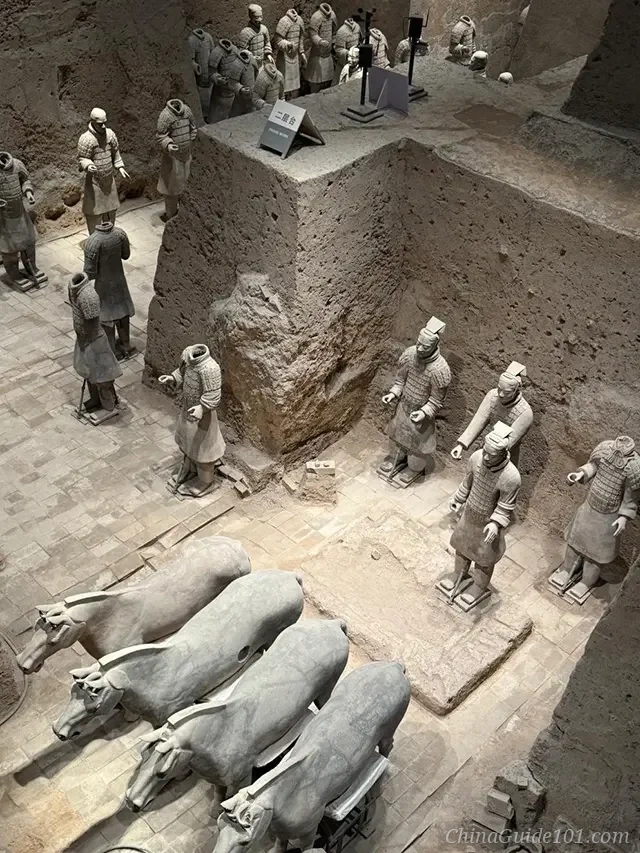
The army's command center. A small, intimate pit containing officers in conference, surrounding a central chariot. The figures are arranged without shields, suggesting a space for strategic deliberation rather than frontline combat. It's a quick but essential stop.
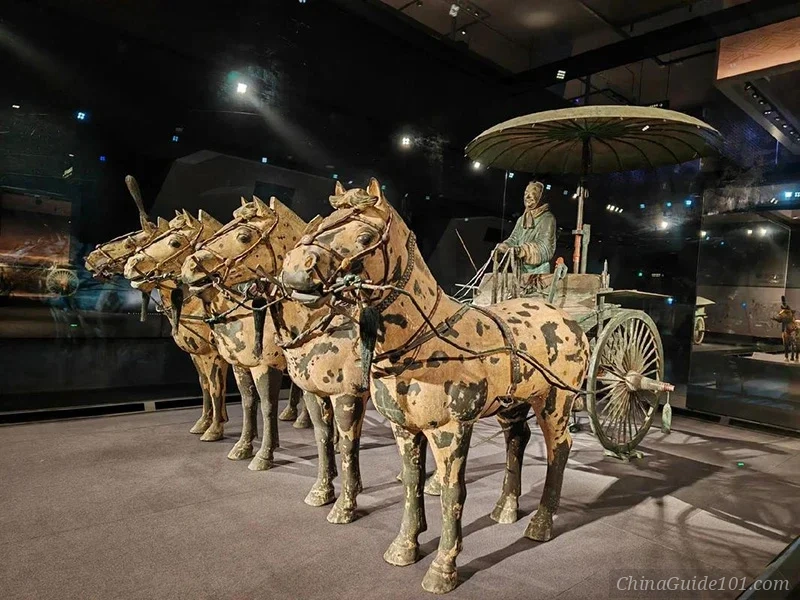
Do not skip this. In a separate, dimly lit hall, two exquisitely reconstructed bronze chariot models (half-scale) gleam under spotlights. Every rein, bridle, and mechanical detail — including an intricate umbrella mechanism — is a testament to Qin artistry. These pieces were found in thousands of fragments and took eight years to reconstruct.
PRO TIP: NEWLY EXCAVATED WARRIORS
This is a working archaeological site. In 2026, you are virtually guaranteed to see active conservation zones, particularly in Pits 1 and 2. Look for tarpaulin-covered areas and archaeologists at work. We avoid quoting a specific number of newly found figures, as it is constantly changing. The takeaway is that the museum is not a static monument but a living, evolving dig.
Should You Hire a Guide?
Choosing the right approach transforms your visit from a walk through old pottery into an encounter with living history.
- Self-Guided Visit:Entirely possible. Museum signage is bilingual. However, you risk missing the rich narratives and subtle details hidden in each corner.
- Audio Guide:A solid middle ground. Rent a device for around 40 CNY at the entrance. It uses GPS to trigger commentary in English and other languages as you move through the pits.
- Private Licensed Guide:This is the gold standard. A dedicated guide, hired from the official desk inside the museum, can weave the story of the first emperor, explain the ongoing conservation, and deftly navigate you through the morning crowds. This is a highlight of any terracotta warriors guided tour experience.
- Group Tour:Included in your package price. Quality varies, but most cover the essential highlights efficiently.
PRO TIP: A WARNING ABOUT TOUTS
Outside the entrance, you'll be approached by individuals offering "official" guiding services at low prices. These are very often unlicensed. Only hire guides from the official desk within the museum compound.
Best Time to Visit
Mild weather, moderate crowds. The Qingming Festival in early April will bring a domestic travel spike.
Hot, humid, and crowded. If summer is your only option, arrive at 8:30 AM sharp.
The ideal sweet spot. Comfortable temperatures and beautiful light. However, absolutely avoid the first week of October (National Day Golden Week). The site becomes an ocean of people.
Bitterly cold but blissfully uncrowded. You'll have a more solitary experience. The major exception is the week of Chinese New Year , which can be almost as busy as Golden Week.
- Aim for Autumn (September–November) for the best balance of comfortable temperatures and beautiful photography light.
- Arrive at 8:30 AM sharp if you must visit during the hot and crowded summer months.
- Absolutely avoid the first week of October (National Day Golden Week)when the site becomes an ocean of people.
- Avoid the week of Chinese New Year in winter, as it can be almost as busy as Golden Week.
Practical Visitor Tips for Foreign Travelers
These are the details your competitors rarely mention, but they're what will make your visit seamless.
- Arrive Early:Be at the gate when it opens. You'll get 30–60 minutes of relative quiet in Pit 1 before the tour groups arrive en masse.
- Bring Your Passport:No exceptions. You cannot enter without the physical passport used to buy your ticket.
- Wear Comfortable Shoes:You'll walk several kilometers over concrete floors and uneven ground.
- Allow Enough Time:Three hours is the absolute minimum. Four hours lets you see everything without racing.
- Stay Hydrated:Summers are punishing. Bring a water bottle.
- Digital Payments:The ticket office and most vendors inside the complex accept WeChat Pay and Alipay. Foreign credit cards are often not accepted for walk-up purchases. You can use cash (Chinese Yuan), but having a digital payment method set up before you travel is a game-changer. Our China payment setup guide for foreign travelers walks you through the process step by step.
PRO TIP: INTERNET ACCESS & CONNECTIVITY
Remember,Google, WhatsApp, Instagram, and Facebook are unavailable without a VPN in China . You'll need an eSIM or a VPN installed on your phone before you depart to use mapping, ride-hailing, and translation apps smoothly. Set this up in advance; our VPN and internet guide for China travelers explains the most reliable options.
Nearby Attractions
Make the most of your time in the area by combining your visit with these close-by sites.
Just a 10-minute drive from the warriors, this Tang Dynasty hot spring palace is famed as the romantic retreat of Emperor Xuanzong and his consort Yang Guifei. The backdrop of Mount Li is stunning, and it's a perfect, compact cultural addition to your day. See our complete Huaqing Palace visitor guide for opening hours, ticket details, and what to see inside.
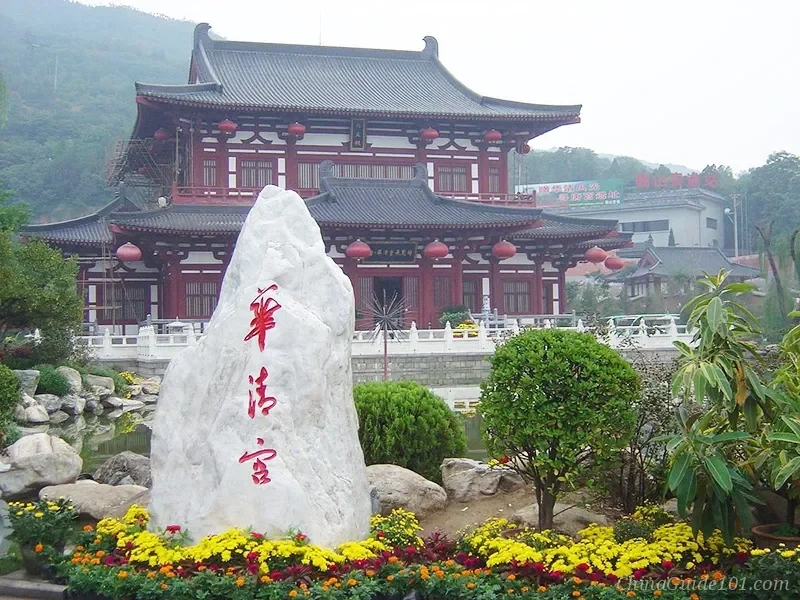
The mountain behind Huaqing Palace offers wooded trails, a cable car, and panoramic views. Historically significant for the 1936 Xi'an Incident.
Back in the city, this is the best-preserved ancient city wall in China. Renting a bike and cycling atop the 14-kilometer loop at dusk is a quintessential Xi'an experience. Our Xi'an itinerary guide has the full rundown on tickets, best entry gates, and sunset timing.
A serene, elegant Tang Dynasty pagoda that houses Buddhist texts brought from India. The evening musical fountain show in the square is a beloved local tradition.
PRO TIP: MUSLIM QUARTER (POST-WARRIORS FEAST)
Not a single street, but a vibrant neighborhood filled with sizzling food stalls and spice-scented alleys. Come hungry for hand-pulled biangbiang noodles, lamb skewers, and persimmon cakes. It's the perfect post-Warriors feast stop.
Terracotta Warriors FAQ
Q: What is the difference between the Terracotta Warriors and the Mausoleum of the First Qin Emperor?
The Terracotta Warriors are not a standalone site; they are a subterranean satellite component of the much larger Mausoleum of the First Qin Emperor. While the Warriors represent the Emperor's afterlife army, the main imperial tomb itself lies about 1.5 km away and remains unexcavated. Your entry ticket covers access to both areas.
Q: Where are the Terracotta Warriors located?
The Terracotta Warriors are located inside the Mausoleum of the First Qin Emperor complex in Lintong District, approximately 40 km (25 miles) east of downtown Xi'an, Shaanxi Province, China.
Q: Are the Terracotta Warriors worth visiting?
Yes. It's one of the few global landmarks that exceeds expectations even in the age of over-tourism.
Q: How long do I need at the Terracotta Warriors?
Plan for 3 to 4 hours. You can do a rushed visit in two, but it's not recommended.
Q: Can foreigners buy tickets online?
Yes. Use international platforms like Trip.com , which handle passport registration smoothly. The official site often requires a Chinese phone number.
Q: Can I visit without a tour?
Yes. English signage is good, and an audio guide can fill the gaps. It's very doable independently.
Q: Are the warriors original?
Yes, the vast majority of what you see are the original terracotta figures, often reassembled from fragments. Restored areas are identifiable.
Q: Is photography allowed?
Yes, in all pits. Tripods and flash are generally discouraged.Drones are strictly banned .
Q: What is the difference between Pit 1, 2 and 3?
Pit 1 is the massive main infantry formation. Pit 2 holds a mixed force of cavalry and archers. Pit 3 is the compact command center.
Q: Is there a student discount?
Yes, with a valid international student ID card, presented alongside your passport.
Q: Can I visit the Terracotta Warriors and Huaqing Palace in one day?
Yes, easily. They are located very close to each other, making for a popular combined half-day or full-day trip.
Q: Are the warriors accessible by wheelchair?
There are ramps and elevators in parts of the museum, but assistance may be required in some areas.
Final Thoughts
The Terracotta Warriors represent far more than just a remarkable archaeological find; they are a profound portal into the very foundations of imperial China. Seeing them in person is one of travel's genuinely moving experiences, and it anchors any trip to Xi'an. Whether you choose a streamlined half-day tour or a deep-dive full-day private visit, this is a destination that richly rewards your time.
PRO TIP: PLANNING THE REST OF YOUR TRIP
To build out the rest of your journey, lean on our practical, foreigner-focused guides. Our Xi'an itinerary guide helps you plan your days in the city efficiently, our China high-speed rail booking guide takes the stress out of intercity travel, the payment guide for foreign travelers demystifies paying for everything from street food to train tickets, and the China internet guide ensures you stay connected from the moment you land. Enjoy every moment on the ancient Silk Road's most famous starting point.