
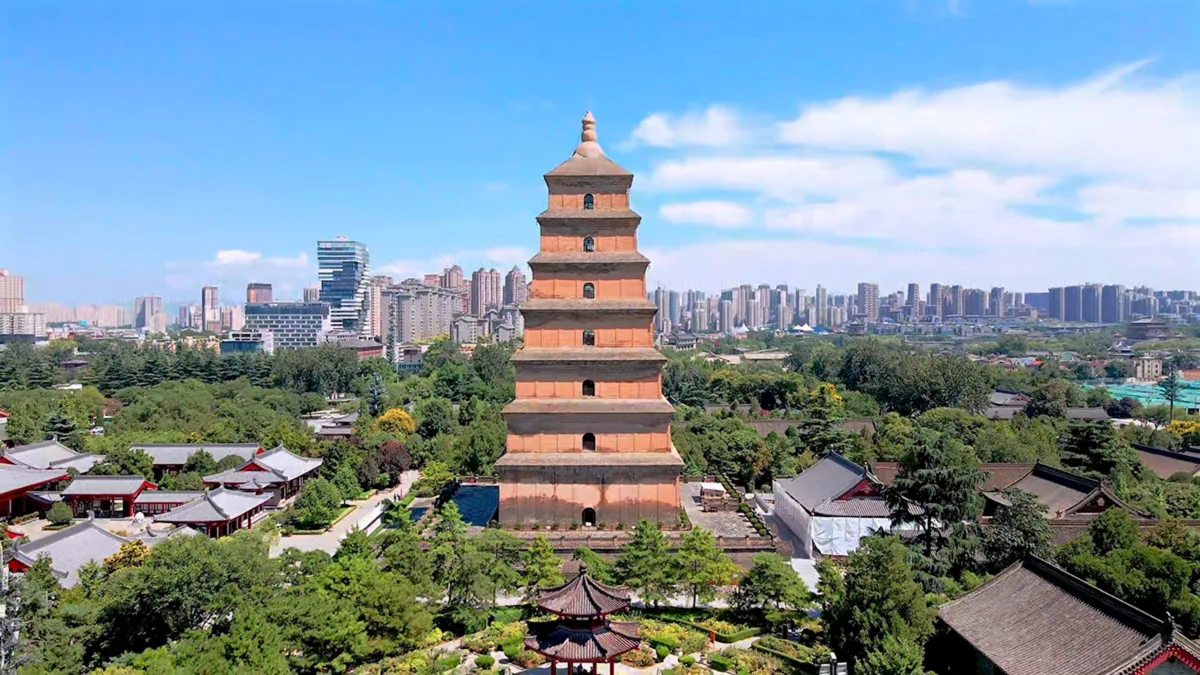
The Giant Wild Goose Pagoda is one of Xi'an's most recognisable landmarks, a brick Buddhist tower built during China's Tang Dynasty and inscribed as part of the Silk Roads UNESCO World Heritage site . Many first-time visitors mistakenly treat it as a single isolated attraction, but the attraction is best understood as several connected areas: Da Ci'en Temple, where the pagoda stands, and the large public North and South Squares outside the temple.
Xuanzang, the monk who journeyed overland to India to collect sacred Buddhist scriptures, is central to the history of the site. After Xuanzang returned from his long pilgrimage to India, the Tang court supported his work translating Buddhist texts at Da Ci'en Temple. The pagoda was built in 652 to house the Buddhist scriptures, statues and relics Xuanzang brought back from India. The temple became a major centre for translating Sanskrit scriptures, turning the tower into a physical marker of ancient cross-continental cultural exchange.
The pagoda reflects Chang'an's importance as a centre of Buddhist learning and cultural exchange during the Tang Dynasty.
The most important decisions you will make before arrival are simple: is it worth paying to enter the temple grounds? Should you climb the pagoda itself? How much time should you reserve, and can you pair it with nearby sights?
PRO TIP: VISITING VALUE
For most first-time visitors to Xi'an, the Giant Wild Goose Pagoda is worth visiting, especially if you combine the pagoda with the surrounding Da Ci'en Temple area and the evening atmosphere around the square. Even budget travellers who skip the paid temple entry can still view and photograph the pagoda from the public squares outside.
What Is the Giant Wild Goose Pagoda?
The Giant Wild Goose Pagoda is a historic Tang Dynasty Buddhist pagoda in Xi'an, built in 652 AD inside Da Ci'en Temple. Originally constructed to house Buddhist scriptures, statues and sacred relics brought back by the monk Xuanzang from his pilgrimage to India, it became an important centre for Buddhist translation and scholarship in Tang-era Chang'an.
Today, the seven-storey brick pagoda is one of Xi'an's best-known landmarks and a major surviving monument associated with the city's Tang Dynasty heritage and the ancient Silk Road. The pagoda itself stands inside the ticketed Da Ci'en Temple complex, while the large public squares around the temple are free to enter.
Where Is the Giant Wild Goose Pagoda?
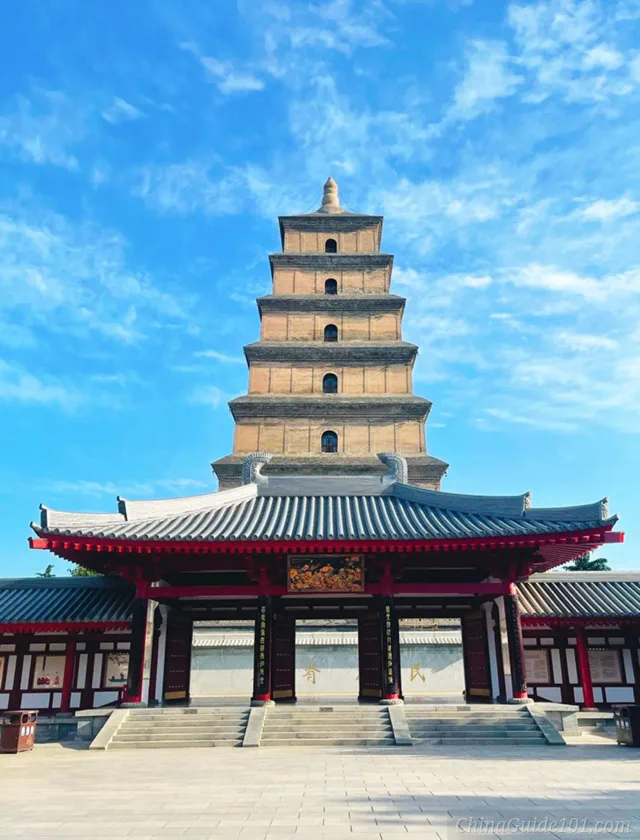
The Giant Wild Goose Pagoda sits inside Da Ci'en Temple, located in the Qujiang district of southern Xi'an, at Ci'en Road, Yanta District. This is a sprawling tourist zone, and it is critical to separate the different spaces, as many foreign travellers mix them up.
Da Ci'en Temple is the walled, ticketed historic precinct that contains the pagoda building. Outside its gates lie two fully public, free-to-enter plazas: South Square directly in front of the temple main gate, and North Square, famous for its large musical fountain. These squares are not part of the temple ticketed area. The wider Qujiang area also connects to Tang Paradise and the pedestrian streets of Datang Everbright City, creating a big evening leisure district.
Why Is the Giant Wild Goose Pagoda Famous?
The pagoda's reputation comes not just from its striking silhouette, but from its role in Tang Dynasty religion and the Silk Road. After Xuanzang returned from his pilgrimage across Central Asia and India, the imperial court supported his work translating Buddhist texts. Da Ci'en Temple was founded as a royal monastery for this work, and the Giant Wild Goose Pagoda was built to store the scriptures, statues and sacred relics Xuanzang had transported home.
For centuries, this tower stood as a landmark of Chang'an's cross-cultural religious exchange. Today it remains one of the most recognizable symbols of Xi'an, featured widely on city signage and artwork, and it is one of the core World Heritage monuments along the ancient Silk Road route.
How Old Is the Giant Wild Goose Pagoda?
Construction first began in 652 AD during the Tang Dynasty. The original tower was much smaller, and it was damaged multiple times by earthquakes over hundreds of years. The pagoda has been repaired and rebuilt several times over the centuries, and the seven-storey structure seen today reflects later reconstruction and restoration. It rises roughly 64.5 metres high, built with solid brick layers without wooden internal framing. It has survived more than a millennium of earthquakes, repairs and reconstruction.
Giant Wild Goose Pagoda Tickets
The most common mistake travellers make here is assuming one ticket covers everything. There are two separate charges: entry to Da Ci'en Temple, and an extra ticket if you want to climb up inside the pagoda. The surrounding North and South Squares require no ticket at all.
How Much Does It Cost?
The standard reference price for adult admission to Da Ci'en Temple is CNY 40 . A separate current promotional rate starting at CNY 10 may also be available via booking platforms. Confirm the actual price at the time you make your reservation. Eligible visitors including 6–18 year olds and full-time students at undergraduate level or below qualify for concessionary admission at CNY 20 (or CNY 5 at the promotional rate) with valid ID.
Pagoda climbing ticket:CNY 25 for adults, with discounted admission available to eligible students. This ticket is sold only on site inside the temple grounds, and cannot be booked in advance online. This ticket is separate from the temple entry fee.
Free entry to Da Ci'en Temple: Visitors aged 65 and over, children under 1.2 metres tall, active-duty military personnel and visitors with disabilities can enter the temple free with valid official identification. The free temple entry exemption does not cover pagoda climbing; anyone wishing to climb must still purchase the separate tower ticket.
The public North Square, South Square, Xuanzang statue plaza and musical fountain viewing area are completely free, no tickets or reservations required. If you only want to take photos of the pagoda exterior, you can stay in these public zones without buying the temple ticket.
Do You Need to Book in Advance?
Advance real-name booking is recommended during weekends and holidays, but same-day admission may also be available at the on-site ticket windows, subject to availability. Tickets can be purchased via the official WeChat mini-program for Da Ci'en Temple, or through platforms including Trip.com . Foreign visitors must use their passport for real-name registration; the name entered during booking must exactly match the name printed on your passport to avoid entry refusal.
PRO TIP: ON-SITE TICKETING
If online booking proves difficult without a mainland Chinese mobile number, you can buy same-day tickets in person at the on-site service windows with your physical passport. Be aware that ticket lines may lengthen on busy days. The pagoda climbing ticket can only be bought once you are already inside Da Ci'en Temple.
Can You Visit the Area Without Paying?
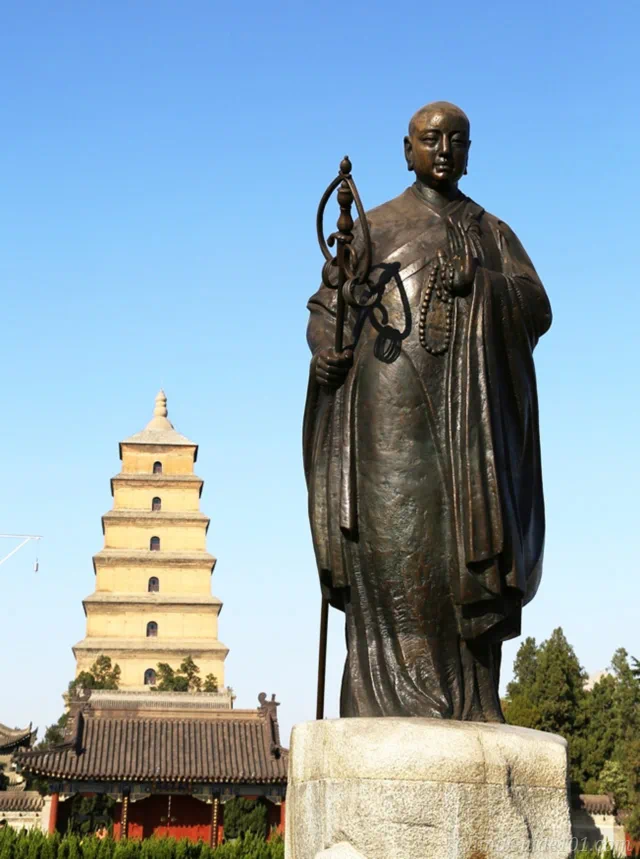
Yes. You do not necessarily need to enter the paid temple/pagoda area simply to see the Giant Wild Goose Pagoda from outside. The South Square has the large standing bronze statue of Xuanzang and unobstructed views toward the temple gate and pagoda. The North Square offers the classic wide-angle view with the pagoda as a backdrop for the fountain show. Many casual visitors, photographers and budget travellers spend their whole time in these free public spaces and skip entering Da Ci'en Temple entirely.
- South Square: Large standing bronze statue of Xuanzang with unobstructed views toward the temple gate and pagoda.
- North Square: Classic wide-angle view with the pagoda as a backdrop for the musical fountain show.
Giant Wild Goose Pagoda Opening Hours
Temple and Pagoda Opening Hours
Da Ci'en Temple operates seasonal opening hours:
- Peak season (March 1 – October 14): 08:30–18:00; last admission 17:00.
- Off season (October 15 – end of February): 08:30–17:30; last admission 16:30.
PRO TIP: PAGODA CLIMBING HOURS
Pagoda climbing follows a slightly shorter schedule. The tower is open for climbing from 09:00 until 17:00. The pagoda is closed for climbing every Monday for routine maintenance, except when Monday falls on a national public holiday. If climbing the tower is a priority for your itinerary, avoid scheduling your visit on a regular Monday.
North Square and South Square
The public squares are outside the ticketed temple compound and can be visited separately, including in the evening after the temple closes. Keep in mind that while the squares stay accessible after temple closing time, the fountain performances run on their own separate schedule.
What to See at the Giant Wild Goose Pagoda
The Giant Wild Goose Pagoda
The seven-storey square brick tower is the main draw. Unlike many multi-tiered Chinese pagodas built with timber balconies, this structure uses thick solid brick walls, giving it a heavy, imposing silhouette. From the temple courtyard, you can examine the carved stone door panels and historic inscriptions at its base without climbing. The tower itself stands as a physical monument to Tang-era religious scholarship and Silk Road exchange.
Da Ci'en Temple
Da Ci'en Temple was once a sprawling royal monastery, though most original Tang-era buildings did not survive. The current halls and courtyards are later reconstructions, set within quiet gardens with ancient cypress trees. Walk through the main halls and the Xuanzang Sanzang Courtyard to learn more about the monk's life and scripture translation work. The temple has a calm, meditative atmosphere that contrasts sharply with the busy public squares outside the walls.
Xuanzang and the Tang Dynasty Connection
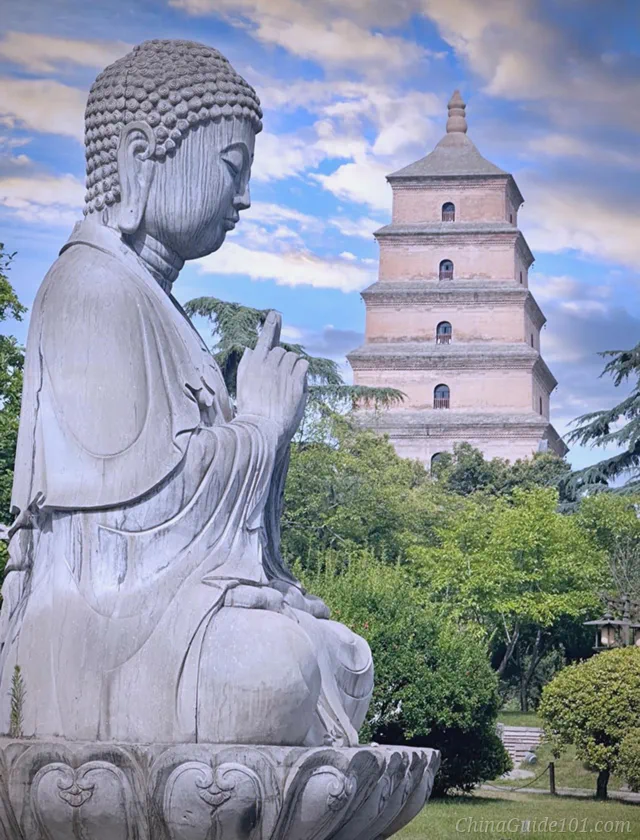
Xuanzang is central to the history of the site. Xuanzang travelled overland from Chang'an to India, crossing mountain passes and desert terrain, to retrieve Buddhist scriptures that were unavailable in China. After returning, the Tang emperor supported his translation project at Da Ci'en Temple. The Giant Wild Goose Pagoda was purpose-built to safely store the scriptures, statues and relics he brought home. Every year, visitors come here to understand how ideas and religion moved along the Silk Road, not just goods.
North Square
North Square is the wide, open public plaza facing the pagoda's north side. It is famous for the musical fountain and unobstructed panoramic views of the tower. During the daytime, it is a space for local families and casual sightseers. In the evening, it fills with visitors waiting for fountain performances. This is where most people shoot the iconic postcard shots of the pagoda lit up at night.
South Square and Surrounding Area
South Square sits directly outside Da Ci'en Temple's main southern gate, anchored by the large bronze standing statue of Xuanzang. Compared with the noisy fountain area on the north side, this plaza feels quieter and more contemplative. It has landscaped ponds and stone paving, and it is the most popular spot for portrait photos with the pagoda in the background. From South Square you can easily walk south toward Datang Everbright City for evening dining and strolling.
- North Square: Ideal for wide-angle postcard shots and capturing the pagoda lit up at night behind the musical fountain.
- South Square: Features the large bronze standing statue of Xuanzang and is the best spot for close-up portrait photos with the pagoda.
Should You Climb the Giant Wild Goose Pagoda?
Whether to climb the pagoda depends largely on how much you value the interior and the views from above.
What Is the View Like?
There is no elevator. The climb involves narrow, steep stone stairs inside the tower. Each level has small windows, and the top floor opens to panoramic views across southern Xi'an. On clear days, you can see the Qujiang district stretching out, with tree-lined avenues and the surrounding Tang-style buildings. The interior space is simple; there are no elaborate exhibits inside the tower itself, just the ancient brick structure. The climb requires steady footing, and those with knee trouble, claustrophobia or fear of heights will likely find it uncomfortable.
Is It Worth Paying Extra to Go Up?
| If you... | Climbing is... |
|---|---|
| Love historical architecture | Worth considering |
| Want panoramic views | Worth considering |
| Have limited time | Optional |
| Have difficulty with stairs | Probably skip |
| Mainly want photos of the pagoda | Not necessary |
PRO TIP: CLIMBING DECISION
If your main goal is simply to photograph the pagoda, you can get better full-frame shots from the public squares outside, no climb required. If you enjoy experiencing ancient buildings from within and want elevated city views, the climb adds a memorable dimension to your visit.
Giant Wild Goose Pagoda Fountain Show
What Is the Fountain Show?
The musical fountain sits in Giant Wild Goose Pagoda North Square, a large choreographed water display set to music, with the illuminated pagoda as its backdrop. It is one of Xi'an's most popular free evening attractions, drawing huge crowds in peak season. The fountain's jets rise and fall in time with the music, and evening performances include lighting effects.
When Is the Fountain Show?
The regular schedule currently lists four performances daily: 12:00, 16:00, 19:00 and 21:00.
PRO TIP: TUESDAY MAINTENANCE & CANCELLATIONS
Important operational note: every Tuesday, the 12:00 and 16:00 daytime shows are cancelled for equipment maintenance, leaving only the two evening performances. The performances are relatively short, so check the schedule before planning your evening around one. Shows may also be cancelled at short notice during heavy rain, strong wind or technical issues. Always check updates on the official social media account for Datang Everbright City on the day of your planned visit.
Is the Fountain Show Worth Staying For?
If you are already visiting the pagoda area in the late afternoon, staying for an evening fountain performance is a natural add-on and well worth your time. If you are staying in central Xi'an and planning a separate trip just for the fountain, weigh the travel time against the short length of the performance. Weekends and holidays bring massive crowds; arrive early to claim a viewing spot if you want a clear view. Do not build your whole Xi'an itinerary solely around the fountain, as last-minute cancellations do happen.
- Stay for an evening performance if you are already visiting the pagoda area in the late afternoon.
- Arrive early on weekends and holidays to claim a viewing spot for a clear view.
- Do not build your whole Xi'an itinerary solely around the fountain, as last-minute cancellations do happen.
How Long Do You Need at the Giant Wild Goose Pagoda?
This is enough time if you only plan to explore the exterior, walk the public squares, take photos of the pagoda from outside and skip entering Da Ci'en Temple. This works well for travellers with a packed schedule.
Recommended for most first-time visitors. This gives you time to enter Da Ci'en Temple, wander the courtyards, view the pagoda up close, explore the South and North Squares and take photos at a relaxed pace. Add extra time if you choose to climb the pagoda tower.
For an afternoon-to-evening itinerary, arrive late in the afternoon to tour the temple while daylight lasts, catch the sunset over the pagoda, explore the lit squares, and wait for the fountain performance. Plan for 3–4 hours total, plus extra time if you want to continue walking into Datang Everbright City for dinner and strolling after the fountain ends.
How to Get to the Giant Wild Goose Pagoda
By Metro
Metro is the most reliable choice for foreign visitors, avoiding traffic jams. Take Xi'an Metro Line 3 or Line 4 to Giant Wild Goose Pagoda Station. Follow station signs marked for North Square; the walk takes roughly 3–5 minutes. The underground pedestrian passage lets you cross the main road safely without navigating busy surface traffic.
By Taxi or Ride-Hailing
Didi is the main ride-hailing app used across Xi'an. Set your destination as Giant Wild Goose Pagoda North Square or Da Ci'en Temple South Gate. Evening rush hour and holiday periods bring heavy congestion around Qujiang, so build extra buffer time if you are coming for the fountain show. Taxis are widely available, but traffic delays are common after sunset.
PRO TIP: TRAFFIC BUFFER
Evening rush hour and holiday periods bring heavy congestion around Qujiang, so build extra buffer time if you are coming for the fountain show. Taxis are widely available, but traffic delays are common after sunset.
From Xi'an Railway Station
From Xi'an Railway Station, take Metro Line 4 directly to Giant Wild Goose Pagoda Station, with no transfers needed. The journey takes about 30 minutes. Buses including route 5 and 41 also run from the railway station to the pagoda area, but buses can be slower in heavy traffic.
From Xi'an North Railway Station
Xi'an North Railway Station is the high-speed rail hub. Take Metro Line 2 south and transfer to Line 3 to reach Giant Wild Goose Pagoda Station. The full metro ride will take around 40 minutes. Taxis from the North Station are faster in light traffic but much more expensive and prone to highway congestion.
- Take Metro Line 4 directly from Xi'an Railway Station (approx. 30 minutes, no transfers).
- Take Metro Line 2 south and transfer to Line 3 from Xi'an North Railway Station (approx. 40 minutes).
Best Time to Visit the Giant Wild Goose Pagoda
Morning visits mean thinner crowds and soft, gentle sunlight on the temple architecture. This is ideal for quiet sightseeing if your main goal is exploring Da Ci'en Temple without crowds.
Late afternoon is the best all-around time to visit. You get several hours of daylight to explore the temple and pagoda, catch golden-hour light for photography, then stay to watch the square transition into evening lighting. You can easily remain for the fountain show afterward and find dinner nearby.
Evening visits focus on atmosphere rather than temple exploration, since Da Ci'en Temple itself closes before sunset. The pagoda is lit against the dark sky, the squares feel lively, and the fountain draws large crowds. The tradeoff is fewer opportunities to explore the temple's interior courtyards.
PRO TIP: RECOMMENDED TIMING
For most visitors, late afternoon is the best all-around time to visit.
- Morning:Thinner crowds and soft, gentle sunlight on temple architecture for quiet sightseeing.
- Late Afternoon (Best Option):Daylight for temple exploration and golden-hour photos, leading seamlessly into evening lights and the fountain show.
- Evening:Vibrant atmosphere with illuminated pagoda views and fountain shows (note: temple interior closes before sunset).
Giant Wild Goose Pagoda vs. Small Wild Goose Pagoda
| Giant Wild Goose Pagoda | Small Wild Goose Pagoda | |
|---|---|---|
| Location | Qujiang District, southern Xi'an, near Tang Paradise and Datang Everbright City | Beilin District, close to Xi'an Museum |
| Historical period | Built during the Tang Dynasty, linked to Xuanzang's pilgrimage to India | Built during the Tang Dynasty and associated with the monk Yijing |
| Main appeal | Iconic Xi'an landmark, large public squares, evening fountain show, busy nightlife nearby | Quiet, less crowded ancient pagoda, paired with Xi'an Museum, historic bell, peaceful temple grounds |
| Visitor experience | Busy, lively, lots of other tourists; separate paid temple entry | Calm, fewer crowds; entry requires advance reservation, slower pace |
| Time needed | 2–3 hours, longer if staying for fountain | 1–2 hours, plus extra time if exploring Xi'an Museum |
PRO TIP: WHICH PAGODA TO CHOOSE?
If you have limited time in Xi'an and this is your first trip, choose the Giant Wild Goose Pagoda. It delivers the iconic city landmark plus the surrounding evening atmosphere. If you are already familiar with Xi'an's main sights, prefer quiet historic sites, and enjoy museum collections, the Small Wild Goose Pagoda and attached Xi'an Museum make an excellent alternative.
What to Combine With the Giant Wild Goose Pagoda
Giant Wild Goose Pagoda + Tang Paradise
Tang Paradise is a large Tang-themed cultural park a short walk away from the pagoda complex. This pair works well for a full afternoon and evening itinerary: visit Da Ci'en Temple and the pagoda first, then move to Tang Paradise for gardens and evening performances, before circling back past the North Square fountain. Be mindful that Tang Paradise is a large park and will add several hours to your day.
Giant Wild Goose Pagoda + Shaanxi History Museum
This is one of the most popular Xi'an day combinations, but plan carefully. Shaanxi History Museum requires advance reservation and can easily occupy half a day. A sensible route is to visit the museum first in the morning, then travel south to the Giant Wild Goose Pagoda area for late afternoon temple sightseeing, sunset photos and the fountain show. Do not overpack your schedule; both sites reward slow exploration, and rushing through both will weaken the experience.
Giant Wild Goose Pagoda + Datang Everbright City
For a relaxed half-day to evening route: Shaanxi History Museum → Giant Wild Goose Pagoda South Square → Da Ci'en Temple → North Square fountain → dinner and casual strolling through Datang Everbright City. This route flows geographically southward across Qujiang and avoids backtracking across the city.
Start with a morning visit to explore the historical exhibits.
Travel south to the South Square and enter Da Ci'en Temple for late afternoon sightseeing.
Catch sunset photos and watch the evening musical fountain show.
Finish with dinner and casual strolling through the illuminated pedestrian streets.
Practical Tips
- Wear comfortable walking shoes. The temple grounds and plazas involve lots of flat walking, and pagoda climbing uses steep stone stairs.
- Confirm ticket requirements and fountain schedules before leaving your accommodation, as changes can happen without much advance warning.
- Bring the same physical passport you used for any online reservation; ticket information must match your passport details.
- Double-check the fountain schedule on the day of your trip, especially on Tuesdays and during poor weather.
- Expect far larger crowds after sunset around North Square and the fountain viewing areas.
- Reserve extra time in your itinerary if you plan to climb the pagoda tower, especially on busy days.
- Keep clear on the difference between the paid Da Ci'en Temple grounds and the surrounding public squares. Many visitors mistakenly believe the squares are part of the ticketed temple site.
- Watch for temporary closures or schedule adjustments during national holidays or maintenance work.
Frequently Asked Questions
Is the Giant Wild Goose Pagoda worth visiting?
For most first-time visitors to Xi'an, yes. It combines genuine Tang Dynasty heritage, striking architecture, and a lively evening atmosphere. Even if you skip entering the temple, the public squares still offer iconic pagoda views.
How much does it cost to visit the Giant Wild Goose Pagoda in 2026?
The standard reference price for Da Ci’en Temple adult admission is CNY 40 , while the current promotional rate may be CNY 10 . Eligible students may qualify for a discounted rate. Pagoda climbing costs CNY 25 for adults, with student discounts available. The North and South Squares and fountain viewing areas are free. Always verify current pricing before arrival.
Can you go inside the Giant Wild Goose Pagoda?
Yes, but entry inside the tower is only via the separate climbing ticket purchased within Da Ci'en Temple. The tower interior is simple brickwork with narrow staircases.
Can you climb the Giant Wild Goose Pagoda?
The pagoda is closed for climbing every Monday for routine maintenance, except when Monday falls on a national public holiday. There is no elevator; the climb uses steep stone stairs.
How long do you need at the Giant Wild Goose Pagoda?
Plan for 2–3 hours for a full visit including Da Ci'en Temple. If you only explore the free outer squares, 1–1.5 hours is enough. Add extra time if you stay for the evening fountain show.
When is the Giant Wild Goose Pagoda fountain show?
The regular schedule currently lists four performances daily: 12:00, 16:00, 19:00 and 21:00. Tuesday daytime shows are cancelled for maintenance. Performances may also stop due to rain or wind; verify the latest notice on the day of your visit.
How do you get to the Giant Wild Goose Pagoda from central Xi'an?
Metro Line 3 or Line 4 to Giant Wild Goose Pagoda Station is the simplest and most reliable option. Follow signs for North Square once you exit the station. Didi ride-hailing and buses are also available, though evening traffic can slow road transport.
What attractions can you visit with the Giant Wild Goose Pagoda?
The most common pairings are Shaanxi History Museum, Tang Paradise, and Datang Everbright City, all within the wider Qujiang district. You can build a smooth afternoon-to-evening route connecting these sites without long travel between stops.
The Giant Wild Goose Pagoda is worth visiting for most first-time visitors to Xi'an, particularly if you combine the historic site with the surrounding squares and nearby attractions. For the best overall experience, arrive in the late afternoon and allow around 2–3 hours, with extra time if you want to climb the pagoda or stay for an evening fountain show.
PRO TIP: SUMMARY TAKEAWAY
Climbing the tower is optional, best suited for travellers who enjoy historic architecture and elevated city views. If your priority is photography, you can capture excellent shots from the free public plazas without buying a temple ticket. The fountain is a nice evening bonus, but always treat it as a flexible add-on rather than the centrepiece of your visit, given the risk of last-minute cancellations.