
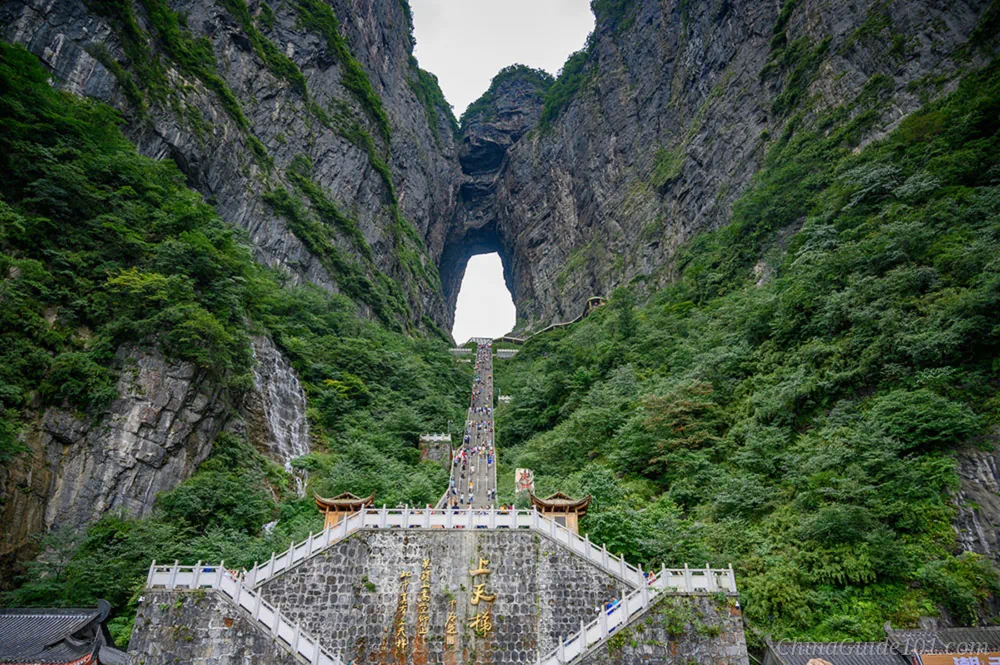
Imagine this: you're standing on a narrow walkway made of clear glass, a cliff towering above you and nothing but 1,430 meters of mountain air between your feet and the forests of Hunan. Below you, clouds drift like slow-moving rivers, and the wind hums through the valley. This is Tianmen Mountain — a place where the natural world and sheer human ambition collide, and one of the most talked-about stops in any China itinerary.
So, is Tianmen Mountain worth visiting? Absolutely. Even if you've seen a hundred photos of the famous hole in the mountain, they barely capture the scale and the atmosphere of standing there in person. The moment you step out of the cable car and feel that cool mountain air, you'll know you made the right call.
Here's something many visitors don't realize before they arrive: Tianmen Mountain is not part of Zhangjiajie National Forest Park. They're completely separate scenic areas, with separate tickets, distinct landscapes, and vastly different experiences. The national park — home to the Avatar-like sandstone pillars — sits about 40 kilometers away in Wulingyuan. Tianmen Mountain, by contrast, rises directly above Zhangjiajie city. That proximity means you can practically roll out of bed in a downtown hotel and be on the cable car in minutes. It also means you can thoroughly explore Tianmen in a single day, then spend your remaining time in the national park if your schedule allows. If you're planning to visit both, check out our detailed guide to Zhangjiajie National Forest Park, where we cover routes, ticket strategies, and practical planning tips.
Quick Facts
| Recommended Time | 1 Day |
| Best Season | Spring & Autumn |
| Ticket | ¥258 |
| Reservation | Recommended (essential in peak season) |
| Nearest Airport | Zhangjiajie Hehua International Airport |
| Family Friendly | Yes |
| Mobility | Moderate (escalators available) |
What Makes Tianmen Mountain So Special?
Forget long historical timelines. Most travelers rank what they care about like this:
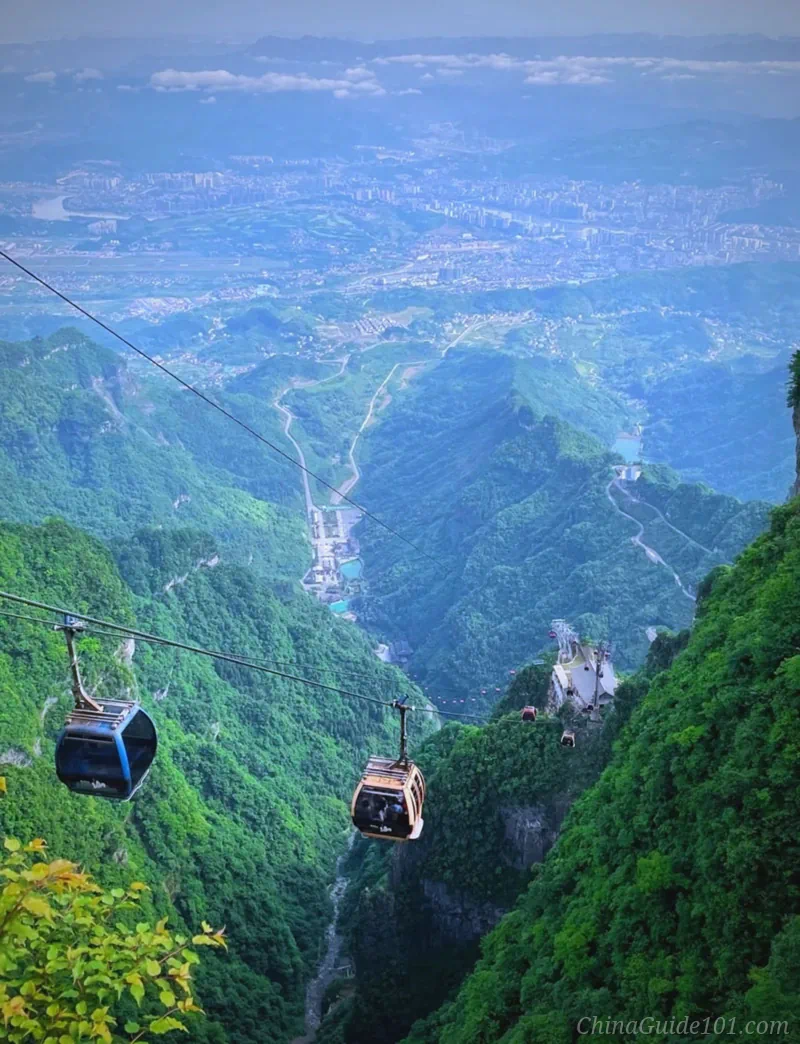
① The world's longest passenger cable car – It stretches 7,455 meters and climbs from Zhangjiajie city straight up into the mist, turning a simple ride into a 28-minute highlight reel.
② Heaven's Gate (Tianmen Cave)– A colossal natural arch, 131.5 meters high, cut straight through the mountain. Standing beneath it feels like you've walked into another world.
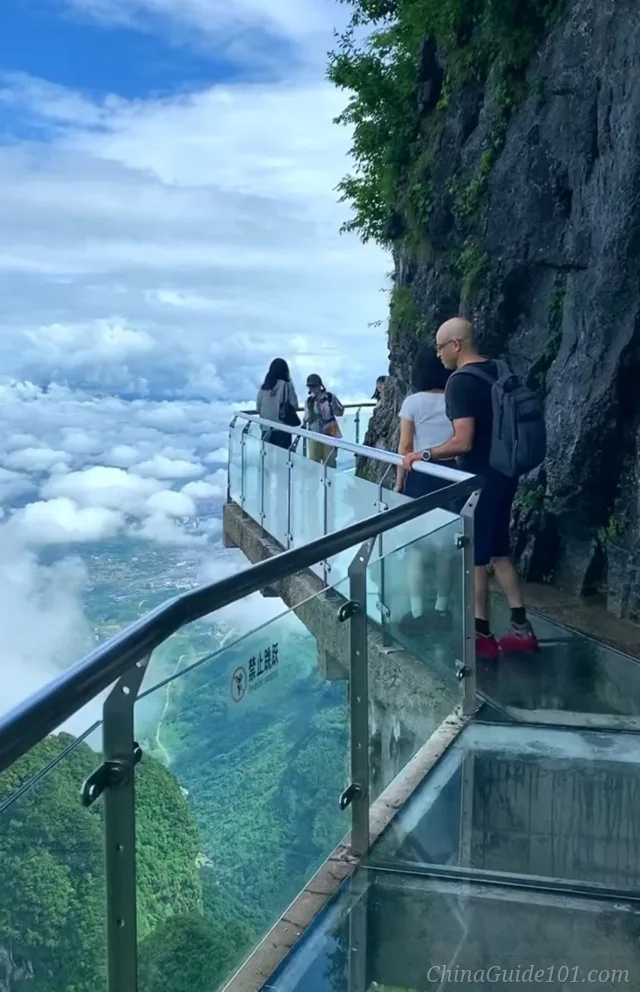
③ The Glass Skywalk – Vertigo-inducing glass panels suspended along a sheer cliff face at 1,430 meters. It's the one everyone talks about, and it's genuinely thrilling.
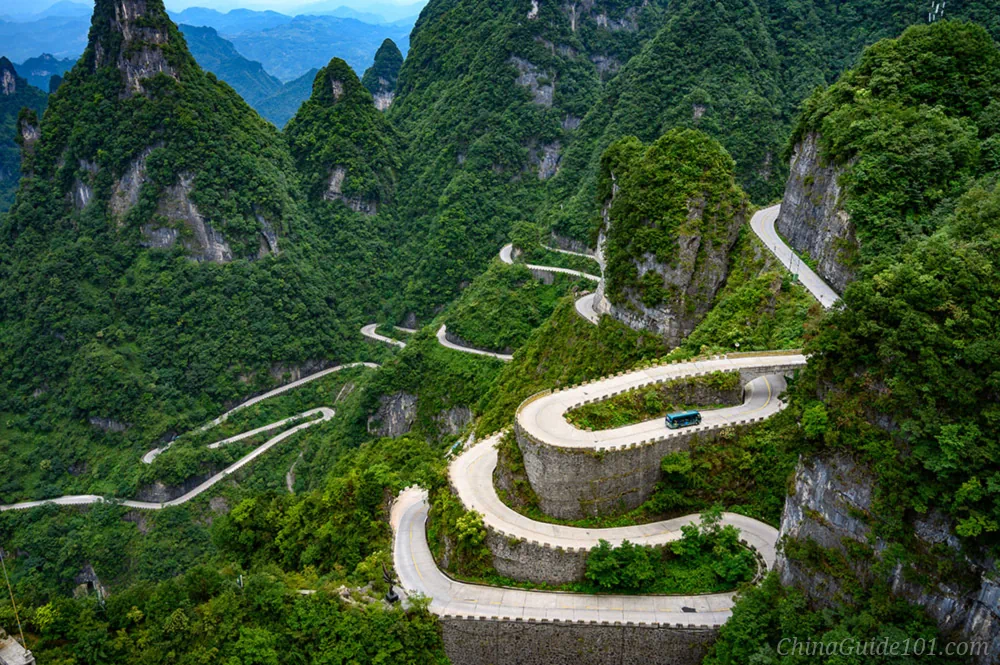
④ The 99 bends mountain road – One of China's most extreme bus rides, with 99 razor-sharp switchbacks spiraling up the mountain like a dragon's spine.
⑤ Panoramic views – On clear days you get endless karst peaks rolling toward the horizon; on cloudy days the mountain seems to float in a sea of white.
Unlike Zhangjiajie National Forest Park — which usually needs two to four days — Tianmen Mountain can comfortably be visited in one day. And that, for many travelers on a tight China schedule, is its superpower.
How Much Do Tickets Cost in 2026?
As of 2026, the standard ticket price remains 258 CNY (around US$36)for all main routes, with discounted tickets at approximately 147 CNY for eligible visitors (seniors over 60, students with valid ID, etc.). Children under 1.2 meters in height are generally free for the entrance, though they may need a transport ticket for safety management — it's best to check at the window.
This is where things get confusing for a lot of foreign visitors: the ticket price covers different transportation combinations depending on which route you choose. Routes are labeled A, B, and C. They cost the same, but the experience differs radically.
Here's what the ticket includes :
- Park entrance
- One-way Tianmen Mountain cable car ride (Route A or B — see below)
- One-way shuttle bus along the 99-bend road (Route A or B)
- All the main scenic spots on the mountain top
What the ticket does not include :
- Shoe covers for the Glass Skywalk (5 CNY, cash or WeChat)
- The lower section of the through-mountain escalator near Heaven's Gate (32 CNY per person)
- The small forest sightseeing cable car on the mountaintop (25 CNY, a charming open-air chairlift that's totally optional)
- Food, drinks, and lockers
A common misconception is that Route C offers a cheaper way to visit. It's the same 258 CNY, it simply uses buses for both the ascent and descent. For almost every traveler, Route A or B offers far better value. I'll explain why next.
Which Route Should You Choose? (A, B or C)
Important Operational Update: Starting 13 October 2026
The famous downtown Tianmen Mountain Cableway will stop carrying passengers for full reconstruction.Routes A and B are permanently suspended until further notice.Only Route C is available for all visits on or after 13 Oct 2026.
Before 13 Oct, A/B may still operate under the previous partial cableway maintenance setup.
Current Route C uses the Tianmen Cave Express Cableway (round trip from mountain gate)plus the 7-stage through-mountain escalators to reach the summit. The 99-bend shuttle bus is no longer used for ascent/descent on Route C. A free shuttle bus still runs between the downtown cableway lower station and the mountain gate for ticket holders.
This is the single most important decision you'll make for your Tianmen Mountain day. Get it wrong and you could spend hours queuing or miss the best views. Get it right and the mountain unfolds in front of you exactly as it should.
| Route | How You Go Up | How You Go Down | Recommended For |
|---|---|---|---|
| A | Tianmen Mountain Cable Car (from city center) | Shuttle bus down the 99-bend road | First-time visitors, classic experience |
| B | Shuttle bus up the 99-bend road | Tianmen Mountain Cable Car down to the city | Shorter cable car queues, those staying near the mountain entrance |
| C | Shuttle bus up | Shuttle bus down | Rare cases when the cable car is closed (e.g., maintenance or extreme wind); people with an intense fear of cable cars |
Is Route A worth it?For first-time visitors, it's the classic choice and the one to go for. You board the epic cable car right in downtown Zhangjiajie, floating silently over farms, rooftops, and then up into the peaks for nearly half an hour. After exploring the summit and walking the glass paths, you descend via escalators to Heaven's Gate, then ride a shuttle bus down the spine-tingling 99 bends. It's a logical, cinematic flow that ends right back at the mountain base, where a free shuttle takes you to the downtown cable car station. The main catch: the morning cable car queue in peak season can be long, so you need an early start.
What about Route B?It's a fantastic alternative, especially if the morning cable car line looks daunting. You start by taking a bus to the mountain entrance, shoot up the 99-bend road, stand right at Heaven's Gate, then use the through-mountain escalator to reach the summit. After exploring the top, you take the long cable car down to the city. The cable car queue at the end of the day is typically much shorter than Route A's morning queue. And if you're staying on the south side of the city or want to see Heaven's Gate earlier in the day when light is better for photos, this route works beautifully. Unless you're visiting in peak season and have your heart set on the classic cable-car-up experience, B is a very solid choice.
Route C is bus both ways. You'll spend more time on winding roads and miss the long cable car entirely. It's primarily offered on days when the main cable car undergoes maintenance (typically announced in advance) or during extreme weather. The views from the bus window of the 99 bends are fun once, but doing it twice while others float in a gondola feels like a missed opportunity. Unless you have a genuine phobia of cable cars or there's an operational closure, skip C.
For most first-time visitors,Route A with an early time slot is the way to go. If A is sold out, go B without hesitation. You'll still have a magnificent day.
What Are the Best Attractions?
Now that you've locked in your route, here's exactly what you'll experience, in the order most people encounter them if they follow Route A.
Tianmen Mountain Cable Car
The ride isn't just transportation; it's one of the main attractions. From the station near Zhangjiajie train station, you'll climb over 1,200 meters in elevation, passing city neighborhoods, terraced fields, and eventually plunging into thick cloud forest. The whole journey takes about 28 to 30 minutes. A small but important tip:sit on the right-hand side (as you face forward)for the most dramatic views of the mountain and the winding road below. If you're afraid of heights, the middle seat facing away from the windows helps, but honestly, even nervous flyers find this gondola smooth and steady.
Tianmen Cave (Heaven's Gate)
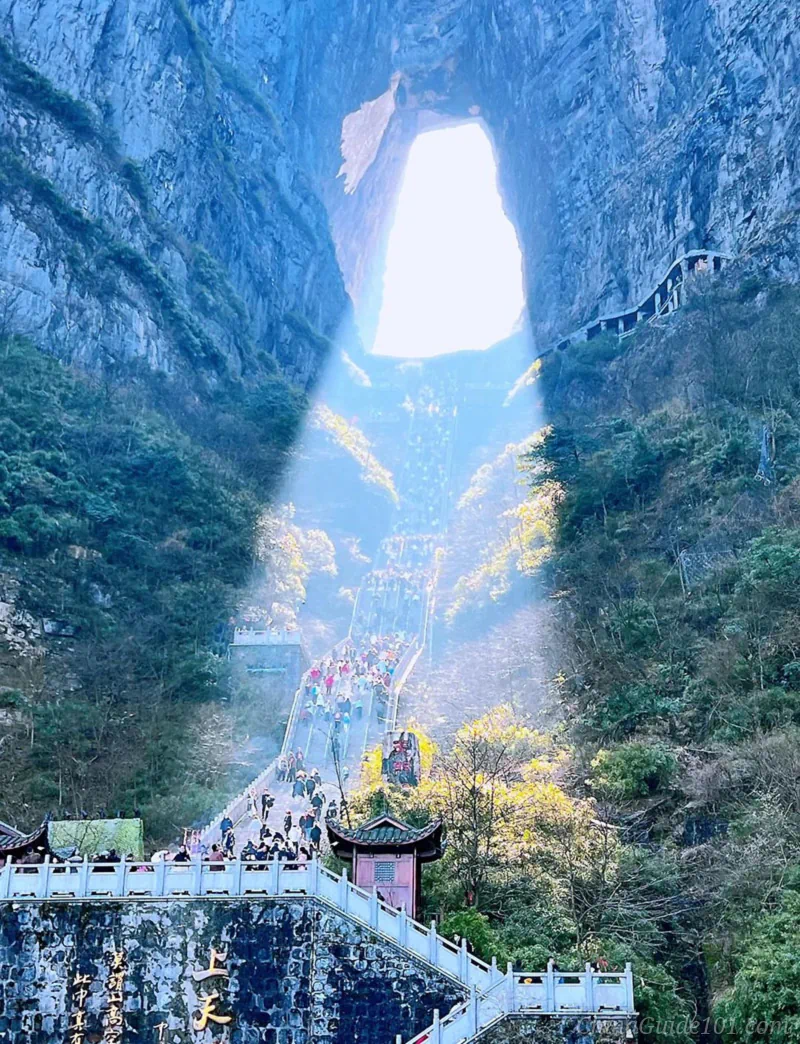
Once you reach the summit, you'll explore a network of cliff paths before eventually descending toward the mountain's most famous sight. Heaven's Gate is a natural arch so big it feels like someone punched a hole through the mountain with a giant thumb. The light that pours through it in the morning and late afternoon creates incredible photo conditions. Midday crowds pack the area, so if you can time your visit before 10:00 AM or after 3:30 PM, you'll get clearer shots and more breathing room. On misty days, the gate disappears and reappears dramatically, which is its own kind of magic.
Do You Have to Climb the 999 Steps?
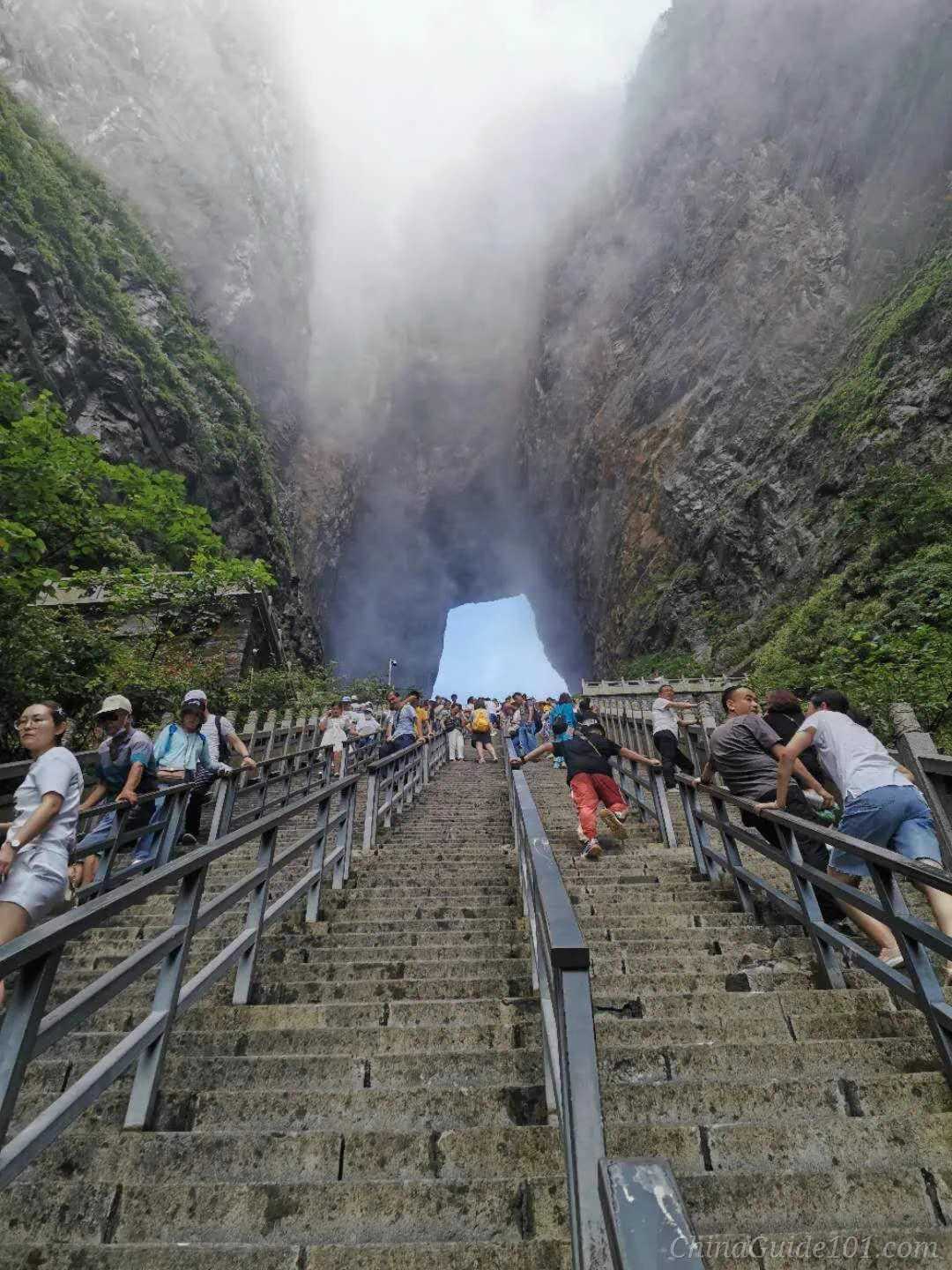
Leading up to the gate are 999 steep steps — a symbolic "stairway to heaven" that looks equally impressive from the top and the bottom. Do you have to climb them? Not at all. If you're following Route A, you'll actually come down from above and can simply admire the view from the top, then take the escalator down if you wish. If you're on Route B, you'll face the staircase from the bottom and can choose to climb it (a serious cardio workout) or ride the through-mountain escalator straight up for 32 CNY. I've climbed it, and while it's an achievement, I wouldn't call it essential unless you actively enjoy steep staircases. If you're traveling with seniors or anyone with knee issues, the escalator is the obvious choice and well worth the small fee.
Should You Walk the Glass Skywalk?
It certainly looks terrifying in photos. But for most people, only the first three steps feel genuinely scary. The skywalk juts out from the vertical cliff on the west side of the summit, and at 60 meters long it's more of a thrilling photo stop than an endurance test. You're given special fabric shoe covers (5 CNY) to keep the glass scratch-free. There's usually a queue to walk on it, and when you're shuffling along with other people, it feels far less exposed than the photos suggest. If heights genuinely terrify you, you can completely skip it — there's an ordinary stone path right next to it that leads to the exact same viewpoint. And yes, that old piece of advice still stands: avoid wearing a skirt or dress on glass walkway day, unless you're utterly indifferent to everyone below potentially getting an unintended view.
Cliff Hanging Walkway
While everyone fixates on the glass sections, many visitors overlook the cliff-hanging walkway that snakes along the eastern side of the mountain. It's a concrete path bolted into the rock face, often less crowded and with spectacular, wide-open views of the surrounding peaks. I actually preferred this section to the glass skywalk — it felt wilder, quieter, and the photo compositions were richer. Don't rush through it just to get back to the escalators.
The 99-Bend Road (Tongtian Avenue)
You'll experience this serpentine road either by bus going up or down, depending on your route. The road is a masterpiece of extreme engineering, with 99 turns packed into a tight ascent. If you're on Route A, you'll ride it going down at the end of the day — try to grab a window seat on the right side for the best outward views. If you're on Route B, it's your wild welcome to the mountain. A few people feel motion sickness from the constant hairpin turns, so if you're sensitive, take a ginger pill beforehand and keep your eyes on the horizon.
How Long Should You Spend at Tianmen Mountain?
Half a day isn't enough. You could rush through the summit in three hours, but you'd miss the slow, magical buildup that makes Tianmen special. Plan for one full day .
Here's a smooth, low-backtracking itinerary based on Route A:
07:45 – Arrive at the downtown cable car station. Even if your ticket says 8:30, showing up before 8:00 often gets you into an earlier wave.
08:00–08:30 – Board the cable car. Sip some water, charge your phone, and soak in the ascent.
08:30–11:00 – Explore the summit loop. Start with the west line (Glass Skywalk, Ghost Valley plank road) then switch to the east line (Cliff Hanging Walkway). By walking the full loop, you'll hit nearly every viewpoint without doubling back.
11:00–11:30 – Take the through-mountain escalator down toward Heaven's Gate. The upper section is included in your ticket; the lower section (32 CNY) is worth it unless you're determined to climb the 999 steps.
11:30–12:30 – Spend time at Heaven's Gate. Photograph it from the plaza below, look up at the staircase, and just let the scale sink in.
12:30–13:30 – Walk or ride the escalator down to the bus pickup point. Board the shuttle for the 99-bend road ride back to the mountain entrance.
13:30–14:00 – Transfer back to the city via free shuttle bus. You'll be at your hotel or a nearby restaurant by early afternoon, with the whole evening free.
If you're on Route B, simply reverse the sequence: bus up in the morning, explore Heaven's Gate first, then summit, then cable car down. The timing works equally well.
How to Get There
One reason Tianmen Mountain is so accessible is that it's practically in the city. The cable car station for Route A is a 5–10 minute walk from the Zhangjiajie train station and a cluster of hotels. Many travelers simply walk from their accommodation.
From Zhangjiajie city center : If you're staying near the bus/train station area, you're already there. Otherwise, a short taxi or Didi ride will get you to the station.
From Zhangjiajie Hehua International Airport : The airport is about 4–5 km from the cable car station; a taxi takes around 10 minutes and costs roughly 15–20 CNY.
From Zhangjiajie West Railway Station (high-speed): It's about a 15-minute taxi ride to the cable car station (around 20–30 CNY). Public buses also connect the station to the downtown area, but a taxi is simpler if you're carrying luggage.
Didi is the easiest way to travel between the airport, railway station, and downtown hotels if you don't want to use public buses. It removes any language barrier and gives you a clear fare upfront.
What surprises many visitors is how often the two Zhangjiajie attractions get mixed up. Tianmen Mountain is not the same as Zhangjiajie National Forest Park. That park is in Wulingyuan district, roughly 40 kilometers away. If you put the wrong destination into your map app, you'll lose half a day.
Best Time to Visit
Here's a quick overview of what to expect across the seasons:
| Season | Crowd | Weather | Recommended |
|---|---|---|---|
| Spring (Apr–May) | ⭐⭐⭐ | Mild, occasional rain | ✅ Great — flowers and comfortable temperatures |
| Summer (Jun–Aug) | ⭐⭐⭐⭐ | Hot, humid, thunderstorms | 👍 Good but crowded; start very early |
| Autumn (Sep–Nov) | ⭐⭐ | Crisp, clear, best visibility | ⭐ Best — golden light and ideal hiking weather |
| Winter (Dec–Feb) | ⭐ | Cold, possible snow, icy paths | ❄️ For snow lovers and solitude seekers |
Spring and autumn deliver the most comfortable temperatures and the best odds of clear skies. Autumn, in particular, brings crisp air and golden light that's perfect for photography. Early mornings after rain often produce spectacular seas of clouds, especially in spring and autumn — a dream for photographers. Mornings are generally clearer; afternoon cloud build-up is common.
Winter transforms the mountain into an icy fairytale. Snow on Heaven's Gate is an unforgettable sight, and the crowds thin dramatically. The caveat: the cable car may pause operations during heavy snow or ice, so check the forecast and the park's official notice before heading out.
Clouds and mist are part of the charm, not a dealbreaker. Even on an overcast day, watching Heaven's Gate appear and vanish in the swirling fog is hauntingly beautiful. If it's a thick, rainy fog where visibility drops to twenty meters, the mountain loses its grandeur, so aim for a day with at least partial visibility if you can.
Avoid the first week of October (China's National Day holiday, known as Golden Week) at all costs. The queues become hours-long, the walkways are packed shoulder to shoulder, and the magic evaporates. Lunar New Year and the May Day holiday bring similar — if slightly less intense — crowding.
Practical Tips
Start early.Even with a timed ticket, arriving at 7:30–8:00 AM gives you quieter paths and softer light. By 10:00 AM the summit can feel like a busy city square.
Wear proper shoes.There's a fair amount of walking on uneven stone paths. Comfortable sneakers or hiking sandals are perfect. Heels, flip-flops, or slick-soled fashion boots will make you miserable.
Dress for the mountain, not the city.Even in summer the summit can be 10°C cooler than downtown Zhangjiajie. A light jacket or windbreaker is wise year-round. And as mentioned, skip skirts and loose dresses on the glass walkways if privacy matters to you.
Use Didi for convenience.Didi is China's equivalent of Uber and works seamlessly for trips within Zhangjiajie. If you haven't set up mobile payment, a regular taxi will do, but having the app saves time and removes language hurdles.
Weather can close the cable car.Strong winds, thunderstorms, or heavy ice will halt operations for safety. The park usually announces closures by 8:00 AM. Have a flexible backup plan — the national park or a relaxed city day — just in case.
Buy tickets in advance.During peak seasons, same-day tickets may sell out, especially for Route A. Use the official WeChat mini-program (search "天门山") or a trusted platform like Trip.com . Foreign passports work fine; just enter your details carefully. You'll receive a QR code that you can scan at the gate.
Luggage and lockers.There are luggage storage services at the cable car station and near the mountain entrance. Leave your big backpack or suitcase — you'll want just a small daypack with water and snacks.
Toilets are available at the main stations and near the summit restaurants, though the ones mid-mountain can be basic. Carry tissues and hand sanitizer.
Cash isn't king here, but it helps.Mobile payment (WeChat/Alipay) dominates. If you haven't set those up, a small amount of cash works for the shoe covers and escalator fee, and there are ATM kiosks downtown.
FAQ
Q: Can I visit Tianmen Mountain and Zhangjiajie National Forest Park on the same day?
No, and please don't try. They're 40 km apart, and each deserves at least a full day. If you cram both into one day, you'll only experience traffic.
Q: Is the Glass Skywalk really scary?
It certainly looks terrifying in photos, but for most people it's intense for only the first few seconds. The glass is thick, the railing is solid, and the crowded queue means you're rarely looking down into empty space for long. If heights terrify you, just use the normal path beside it.
Q: How long is the cable car ride?
7,455 meters, taking roughly 28–30 minutes depending on wind. It's the world's longest passenger cable car, and the views get progressively more dramatic the higher you go.Important: The classic downtown cableway and Routes A/B are suspended from 13 Oct 2026. Read route update .
Q: Do I have to climb all 999 steps?
Not at all. The through-mountain escalator bypasses them for 32 CNY. On Route A you naturally descend from above and can avoid the climb; on Route B you can ride the escalator up and down.Important: The classic downtown cableway and Routes A/B are suspended from 13 Oct 2026. Read route update .
Q: Is Tianmen Mountain suitable for seniors or those with limited mobility?
Yes, with planning. Use the cable car and escalators instead of the staircase, stick to the main summit paths that are relatively flat, and take it slow. The park doesn't require extreme fitness.
Q: Which route is best for a first-time visitor?
Route A. The city-to-summit cable car then bus down gives the most complete experience. B is an excellent backup. C is only for when the cable car isn't running.Important: The classic downtown cableway and Routes A/B are suspended from 13 Oct 2026. Read route update .
Q: Can foreigners buy tickets?
Yes. Use your passport number on the official WeChat mini-program or a major OTA like Trip.com . You can also buy at the ticket window with your passport, but peak days may have long queues.
Q: Do I need to reserve tickets in advance?
Highly recommended, and sometimes required during summer months and holidays. Time slots fill quickly for Route A, so booking even a day ahead reduces stress.
Q: Can I skip the Glass Skywalk?
Absolutely. Every glass section has an alternative normal path. You won't miss any views; you'll simply stay a few meters further from the edge.
Q: Can I take a drone on Tianmen Mountain?
No. Drones are strictly prohibited throughout the scenic area. Security checks at the entrance will flag them, and flying inside can lead to confiscation or fines. Leave the drone at your hotel.
Q: What if the weather is bad?
Light mist is fine and often beautiful. Heavy rain or wind may close the cable car and limit visibility to near zero, in which case the park isn't worth the ticket price. Check the forecast and the park's official announcement before you go.
Q: Where can I eat?
There are small shops and a restaurant on the summit selling noodles, rice dishes, and snacks. Prices are predictably high. Packing your own sandwiches, fruit, and a large bottle of water is a smarter move.
One last reminder before you go: Tianmen Mountain is only half of what this region offers. To walk among the towering sandstone pillars that inspired Avatar , you'll need a separate trip into Wulingyuan. Our full Zhangjiajie National Forest Park Travel Guide covers ticket strategies, crowd-beating routes, and the best viewing platforms — tie them together and you'll have a trip that's equal parts adrenaline and awe.
Tianmen Mountain is one of those places that looks almost unreal until you're standing there yourself. Whether it's the slow climb of the cable car into the clouds or the first glimpse of Heaven's Gate through the mist, it's an experience that stays with you long after you've left Zhangjiajie. The cable car, the cliffs, and the view through Heaven's Gate are impressive, but what many people remember most is simply watching the clouds drift across the mountain. Give yourself enough time to slow down, and Tianmen Mountain becomes much more than just another scenic attraction.