
The Dujiangyan Irrigation System sits northwest of Chengdu , in Dujiangyan City, Sichuan Province. Created in the 3rd century BCE, it is not merely a preserved historic monument: the system still operates today, managing water flow from the Minjiang River to irrigate the fertile Chengdu Plain. Together with Mount Qingcheng , it forms the UNESCO World Heritage Site officially named Mount Qingcheng and the Dujiangyan Irrigation System , though the two locations deliver distinctly different visitor experiences.
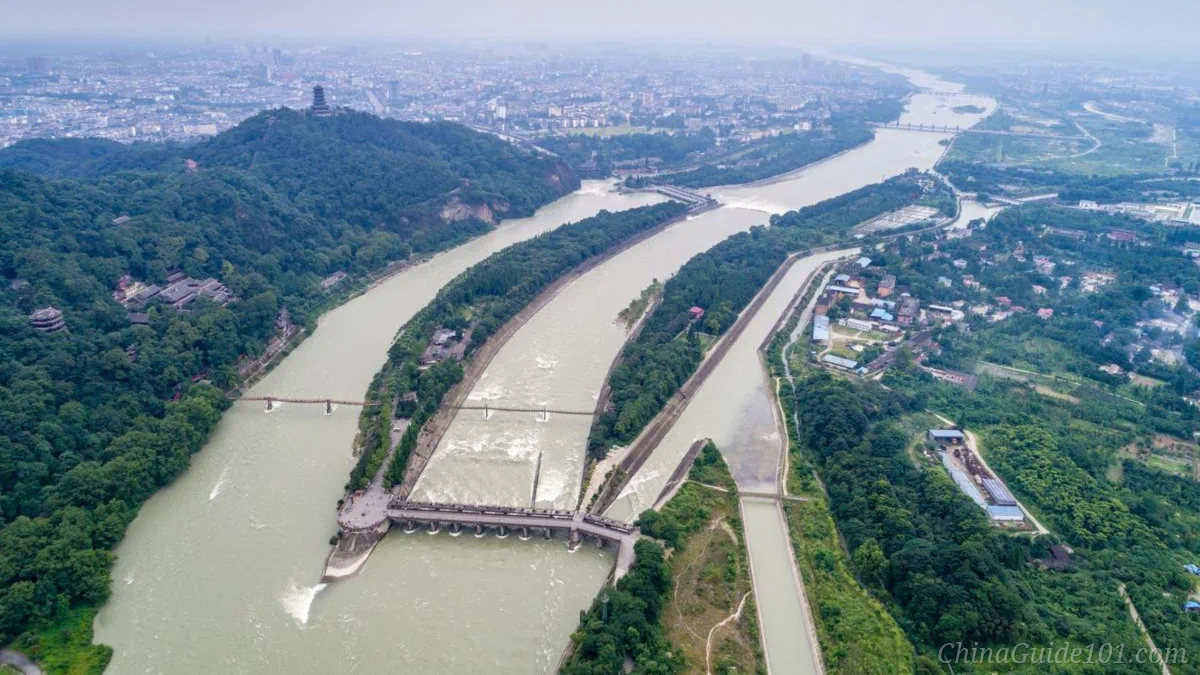
This guide focuses squarely on the irrigation works themselves. It answers practical travel questions: how to travel from central Chengdu, what tickets you need, how much time to reserve, how the hydraulic system functions, which viewpoints deserve your attention, and whether you can combine this site with Mount Qingcheng within a single day.
Is the Dujiangyan Irrigation System Worth Visiting?
Dujiangyan stands apart from most Chinese heritage attractions because it is a working hydraulic system, not a static ruin or temple complex. Its core appeal comes from observing how ancient builders shaped the river's natural flow to manage seasonal flooding and distribute water across the plain.
This site suits travellers interested in ancient engineering, river landscapes and cultural heritage. If you enjoy slow walking and learning how historic infrastructure continues to shape modern life, Dujiangyan will reward your trip. It also works well for visitors who want a change of pace from Chengdu's urban landmarks and a clear sense of how human ingenuity transformed a whole region's agriculture.
The trade-offs are worth knowing before you travel. The site involves extended walking over uneven stone paths, slopes and steps, so it may not be ideal if you are short on time, prefer dramatic city landmarks, or have limited mobility and would struggle with stairs. Group members at different fitness levels should expect to adjust the pace. Plan for roughly 3–4 hours for a complete visit; your actual time will shift depending on crowd levels, queue times and how much detail you want to absorb. This estimate covers only the irrigation scenic area and does not include extra stops around Dujiangyan City, Panda Valley or the Nanqiao night views.
Understanding the Dujiangyan Irrigation System
A 2,000-Year-Old Irrigation Project That Still Works
According to UNESCO's account, the Dujiangyan Irrigation System was created in the 3rd century BCE, during the Warring States period, when water management shaped the fate of the Chengdu Plain. Designed to tame seasonal flooding on the Minjiang River while delivering reliable irrigation water to surrounding farmland, the system still operates today. It adjusts river discharge and sediment movement year after year, with maintenance continuing across centuries.
The site shares UNESCO World Heritage listing with Mount Qingcheng, but keep the two destinations separate in your planning: Dujiangyan focuses on hydraulics and river engineering, while Mount Qingcheng centres on Taoist temples and mountain hiking. It is important to note that only the defined irrigation zone and Mount Qingcheng form the World Heritage property, not the whole of Dujiangyan City.
The Three Key Components
Three linked structures work in tandem to split, divert and clean the river water.
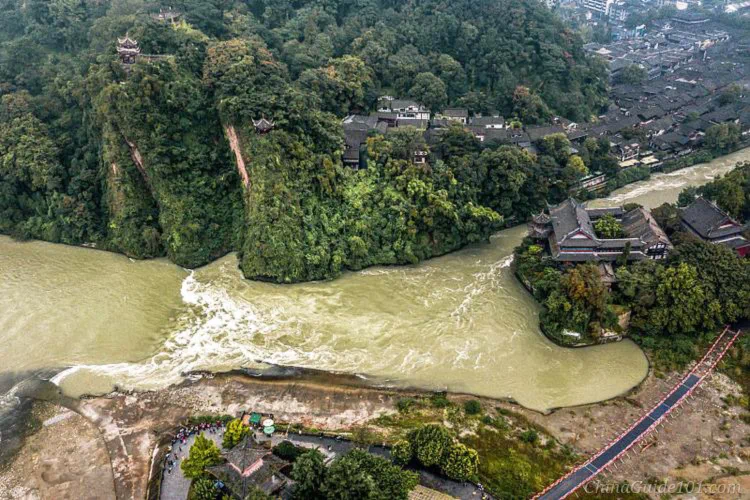
- Yuzui (Fish Mouth):The central dividing embankment. It splits the Minjiang River into two channels: the outer river carries excess flow downstream, while the inner river feeds water toward the irrigation network for the Chengdu Plain.
- Feishayan (Flying Sand Weir):An overflow structure. Its overflow structure helps divert excess water and sediment toward the outer river when flows are high. This is one of the system's key features, helping limit sediment build-up in the irrigation channel. Look at how water moves over the weir and how the structure fits into the wider system of water and sediment management.
- Baopingkou (Bottle-Neck Outlet):The narrow man-made inlet that regulates how much water enters the inner irrigation network feeding the plain. It is one control point in a larger arrangement rather than a standalone flood barrier.
Why the System Does Not Rely on a Conventional Dam
Most modern water control projects use large dams to block and store river water. Dujiangyan uses the river's natural gradient, channel shapes and gravity instead. By working with the landscape rather than blocking the entire river, ancient engineers created a way to redirect flow without a solid cross-river dam. You do not need advanced hydrology knowledge to appreciate it; walking between these three structures lets you directly observe how the river behaves at each point.
How the Three Components Work Together
The three main components are easiest to understand as parts of one connected system rather than separate attractions. Yuzui divides the river into different channels, Feishayan helps excess water and sediment leave the irrigation channel, and Baopingkou helps regulate the amount of water entering the network that serves the Chengdu Plain.
Their functions depend on one another. Dividing the river alone would not be enough if sediment gradually blocked the irrigation channel, while controlling the inlet would be less effective without the upstream diversion and overflow arrangements.
The water you see during your visit will not always look the same. Rainfall, seasonal river levels and operating conditions affect the appearance and movement of the water. Rather than expecting a fixed split between the two channels, observe how the river is directed through the different structures and how each section contributes to the overall design.
Best Things to See at Dujiangyan
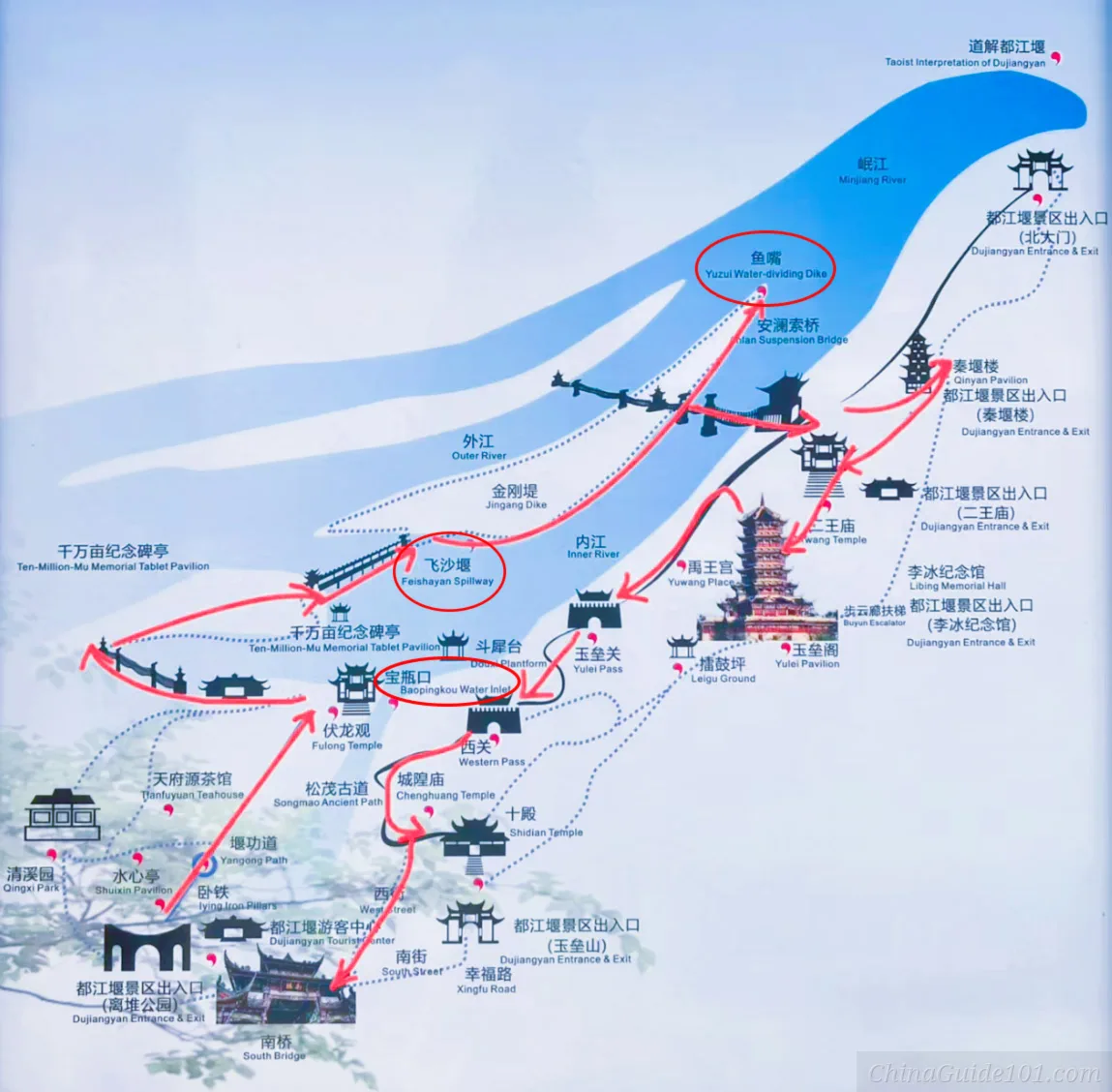
Qinyan Tower: Where to Make Sense of the Whole System
Before diving into the individual structures, look for viewpoints that reveal the full layout. Qinyan Tower sits at a higher elevation and offers a panoramic overlook of the three core hydraulic components and the Minjiang River. This elevated perspective helps visitors grasp how Yuzui, Feishayan and Baopingkou relate spatially.
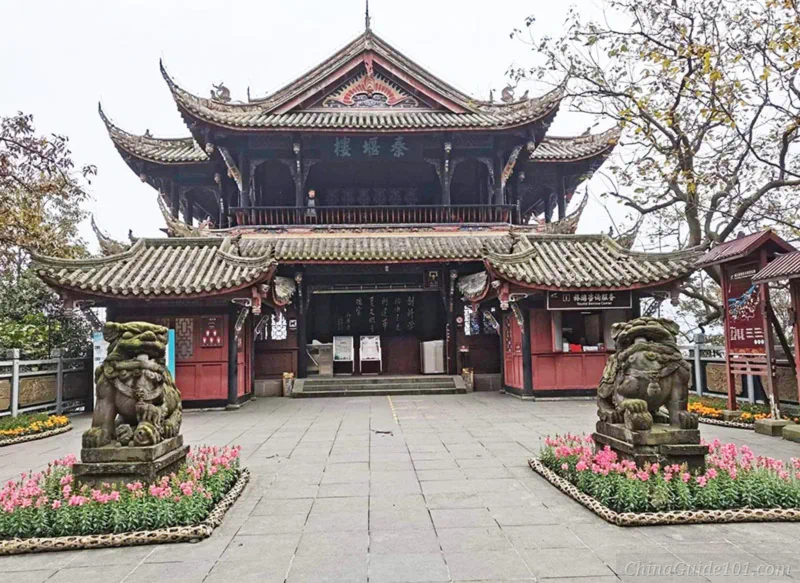
You may schedule this viewpoint either at the start of your route to orient yourself, or near the end to tie together what you have walked through. Confirm the tower's current access and position on the official scenic map before your trip, as viewpoints can shift with seasonal water levels or maintenance work.
Yuzui (Fish Mouth)
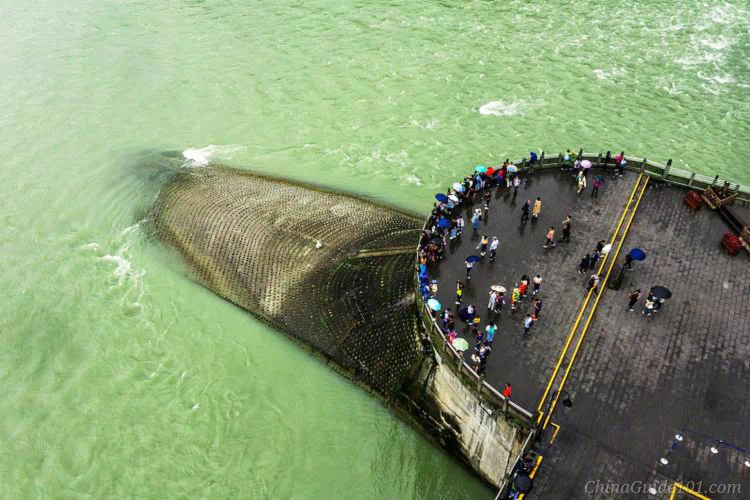
Yuzui is the heart of the irrigation system, a wedge-shaped stone embankment that divides the Minjiang River. Standing at the viewpoint here, you can clearly see the river separate into inner and outer channels. When you visit, watch how the water shifts between the two branches. This is not just a photo spot; this is where the whole hydraulic process begins. Spend 20–30 minutes here to take in the river dynamics before moving onward.
Feishayan (Flying Sand Weir)
Feishayan is the overflow and sediment-control section of the system. Its overflow structure helps divert excess water and sediment toward the outer river when flows are high. This is one of the system's key features, helping limit sediment build-up in the irrigation channel. Look at how water moves over the weir and how the structure fits into the wider system of water and sediment management.
Baopingkou (Bottle-Neck Outlet)
Baopingkou (Bottle-Neck Outlet or Bottle-Neck Channel) is the fixed narrow passage carved through bedrock. It acts like a natural valve and helps regulate the amount of water entering the irrigation channel feeding the Chengdu Plain. From the viewing platforms, you can see the constrained channel and understand its role within the full water management sequence. This completes the sequence of the three core engineering works. Later references in the article will use Baopingkou.
Anlan Suspension Bridge
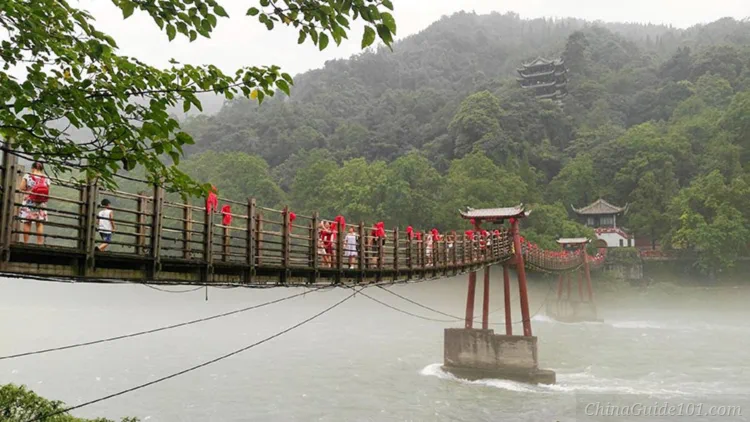
Anlan Suspension Bridge stretches across the river above the dividing zone, offering an elevated perspective over Yuzui and the two river channels. Always follow on-site safety instructions. Sections may close temporarily for maintenance or during high water levels. Do not crowd onto the bridge during peak visiting hours.
Erwang Temple
Erwang Temple sits on the hillside above the river, built to honour Li Bing and his son, the figures traditionally credited with creating the irrigation system. It is less about ornate temple architecture and more about cultural memory: the shrine is where generations have remembered the people who built the waterworks and the philosophy of working with the river rather than against it. From the temple grounds you get shaded rest and a panoramic view looking down onto Yuzui and the Minjiang.
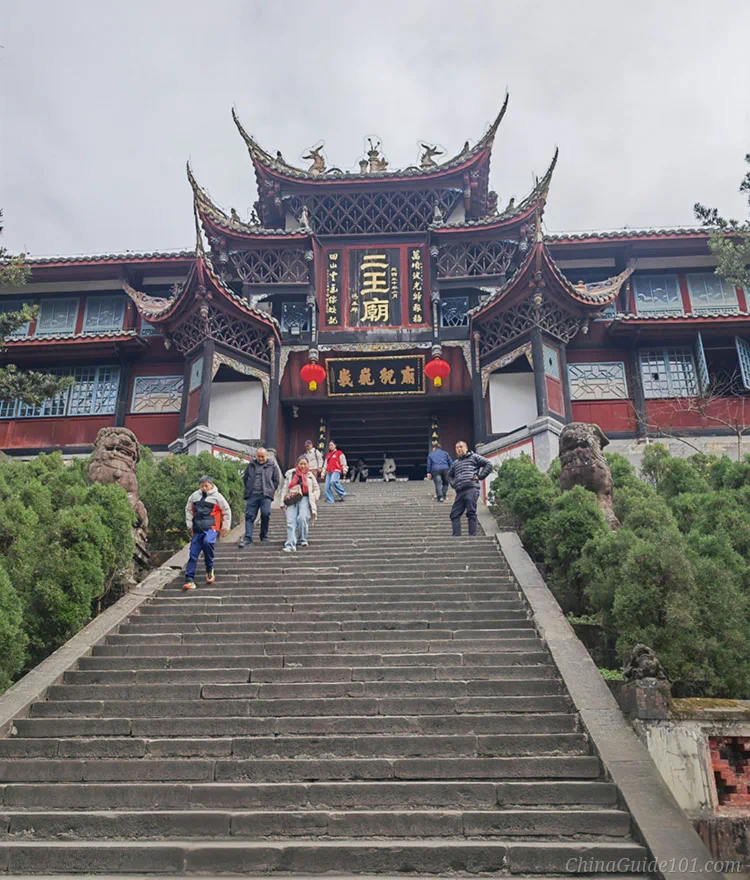
The temple suits visitors who want to connect the engineering with its human story and enjoy a quieter, elevated stop away from crowded riverside paths. Allow around 30 minutes if you choose to visit. If your priority is purely the hydraulic landscape, you can skip the climb and stick to the lower riverside route.
Fulong Temple and Other Historic Features
Fulong Temple sits near Baopingkou. It houses stone relics and historical markers connected to the irrigation works. It is a compact stop, best added if you have extra time and want to dive deeper into the human story behind the project. Skip it if your priority is only the hydraulic landscape.
Dujiangyan Tickets, Opening Hours & Reservations
Ticket Prices
Published visitor information commonly lists an adult admission price of ¥80 , but ticket prices and concession rules should be checked through the scenic area's current official booking channel before your visit. Concessions may apply for students, and older visitors may qualify for free or reduced entry depending on age and the season. Some discounts are limited to Chinese residents, so confirm your eligibility before travelling.
Separate fees apply for optional on-site transport, escalators or guided tours; these are not bundled within the base entrance ticket.
How to Book Tickets
Check the scenic area's current official ticketing instructions before your visit. Booking arrangements, passport requirements and on-site purchase options may vary, so international visitors should confirm which booking channel accepts foreign passports and whether advance reservation is required for their travel date. Booking ahead is sensible during public holidays and other busy periods. As an alternative, you may secure entry tickets via Trip.com . This third‑party platform provides an English‑language booking interface, accepts international credit‑card payments, and supports passport‑based real‑name reservations.
Opening Hours and Last Admission
Published visitor timetables list two seasonal windows, though these dates and cutoff times are subject to change for maintenance, flood risk or special events.
- Peak season: 08:00–18:00, ticket sales stop at 17:30
- Off season: 08:00–17:30, ticket sales stop at 17:00
Check both the opening time and the last admission time before departure, particularly if you are arriving by train or planning to visit Mount Qingcheng on the same day.
How to Get to Dujiangyan from Chengdu
By Train from Chengdu
Intercity rail is a convenient option for many travellers coming from Chengdu. If you start in central Chengdu, take a metro line to Xipu Station first, where the metro and intercity rail connect at a shared transfer area, then board a train toward Dujiangyan.
PRO TIP: Best Train Station
Lidui Park Station is generally the most convenient rail stop for the irrigation scenic area.
Allow time to walk from the station to the entrance, and follow signs to the correct gate. If trains to Lidui Park are unavailable for your travel date, you can book to Dujiangyan Station instead; this is a railway scheduling alternative only. Dujiangyan Station sits further from the site and requires a taxi or local bus for the final leg. If your itinerary also includes Mount Qingcheng, you may book onward trains to Qingchengshan Station.
The intercity ride typically takes around 20–30 minutes. Timetables and fares change, so confirm real-time schedules on the day of travel. Remember that train tickets and scenic-area tickets are separate bookings; availability of one does not guarantee the other.
By Metro and Bus
Public transit combining metro and local buses is possible, but routes involve multiple transfers and uncertain timing. Reliable, fully verified step-by-step bus routing is not available for this guide. Bus signage in English is limited, and service intervals may be longer on weekends. This choice is only recommended for budget travellers comfortable navigating local Chinese transit independently.
By Taxi or Private Transfer
Taxis and private transfers deliver door-to-door convenience, which suits groups, travellers carrying luggage, or those who want to avoid train station transfers. Travel time depends heavily on road congestion. On busy weekends and holidays, highway traffic can add significant delays.
Which Transport Option Is Best?
| Option | Convenience | Transfer Workload | Best For |
|---|---|---|---|
| Intercity train to Lidui Park Station | High | Low | Most day visitors; fast, predictable timing |
| Intercity train to Dujiangyan Station + taxi | Medium | Moderate | Travellers whose train arrives at Dujiangyan Station or whose schedule makes it more convenient |
| Public metro + local bus | Low | High | Budget travellers comfortable with Chinese transit |
| Private transfer / taxi | Highest | None | Groups, luggage, tight schedule |
Choosing Your Entrance and Walking Route
Before entering Dujiangyan Scenic Area, check the current scenic map and confirm which gate your ticket or transport arrangements lead you to. The entrance you choose can affect the order in which you encounter the main waterworks, temples and viewpoints. Do not assume that every route begins at the same location or follows the same direction.
Two common entry strategies exist for first-time visitors:
- The Qinyan Tower entrance, if open and accessible on the day — Gentle downhill itinerary.Enter at the higher Qinyan Tower entrance, start with the panoramic overlook, then travel downhill past Erwang Temple, Anlan Suspension Bridge, Yuzui, Feishayan and Baopingkou, exiting near Lidui Park. This path minimises uphill climbing and lets you first grasp the full layout from above.
- Lidui Park / South Gate entry — This is the standard entry point for many visitors arriving at Lidui Park Station. You will start at lower elevation, visit Baopingkou first, then continue upstream toward Feishayan and Yuzui. If you wish to visit Erwang Temple or Qinyan Tower, you will need to climb uphill.
For a first visit, prioritise the three main hydraulic components: Baopingkou, Feishayan and Yuzui. Seeing them in context makes it easier to understand how the system diverts water, manages sediment and feeds the irrigation network. If you have additional time, include Anlan Suspension Bridge and Erwang Temple for different views of the river and the historical traditions surrounding the project.
Allow some flexibility in your schedule. Walking distances, stairs, crowds and temporary access restrictions can affect the time needed between stops. If a bridge or path is closed, follow the route displayed by the scenic area rather than attempting to maintain a fixed itinerary.
Dujiangyan Walking Routes: 2–4 Hours
Option 1: Gentle Downhill Route (3–4 Hours)
Spend your opening moments at the tower viewpoint to absorb the full layout of the irrigation system.
Continue downhill to Erwang Temple, then cross Anlan Suspension Bridge if open.
Visit the three key hydraulic structures, then stop at Fulong Temple if time permits.
Finish and leave the scenic area close to Lidui Park Station.
Option 2: Shorter Route from Lidui Park (2–3 Hours)
This condensed itinerary targets travellers arriving at Lidui Park Station or those with limited time. Enter from the south gate, walk toward Baopingkou first, followed by Feishayan, then continue to Yuzui. Cross Anlan Suspension Bridge if it is open, then loop back toward your exit. This route keeps your focus on the core waterworks; skip Erwang Temple and Fulong Temple to save time.
Walking Difficulty and Accessibility
The route follows stone paths, slopes and staircases beside the river. There are no long steep mountain climbs, but uneven paving and steps make the walk moderately demanding. Some viewing platforms and sections of the trail are not wheelchair-friendly. Wear sturdy walking shoes. If anyone in your group struggles with stairs, plan to skip the hillside Erwang Temple section and stick to the lower riverside pathways.
What to Do After Visiting Dujiangyan
If you finish the irrigation scenic area with time to spare, you can extend your visit into the surrounding urban area rather than adding another major attraction immediately. Nanqiao and the nearby historic streets are possible stops for a meal, a relaxed walk or photographs of the riverfront.
Keep this extension separate from your core irrigation-system itinerary. The waterworks themselves deserve several hours if you want to understand the three main structures and explore the viewpoints at a comfortable pace. If you also want to visit Mount Qingcheng, consider whether adding the city centre would leave enough time for transport and the return journey.
Evening scenery around Nanqiao is a separate experience from the daytime irrigation works. If it is a priority, check local conditions and transport options in advance, especially when travelling by train. Do not assume that a daytime sightseeing ticket includes every nearby attraction or that evening services will match the daytime schedule.
Can You Visit Dujiangyan and Mount Qingcheng in One Day?
Visit Dujiangyan Only
If your main goal is understanding the irrigation system, reserve the full day just for Dujiangyan. You can move at a slower pace, pause at each hydraulic feature, read signage and absorb the engineering story without rushing. This choice gives the best experience of the UNESCO site.
Combine Dujiangyan with Mount Qingcheng
Dujiangyan and Mount Qingcheng are listed together on the UNESCO register as Mount Qingcheng and the Dujiangyan Irrigation System , yet they offer different experiences. Dujiangyan focuses on river engineering; Mount Qingcheng is a Taoist mountain forest site with temples and hiking trails.
A same-day combination trip is physically possible, but it will be rushed . Your experience depends on whether you pick Front Mountain or Back Mountain of Qingcheng, plus your fitness level and seasonal crowding. Front Mountain has more preserved temples and easier paths, while Back Mountain offers heavier hiking and longer walking times. If you combine both sites in one day, you will only get a quick overview of each, rather than a deep visit to the irrigation system.
Best Time to Visit Dujiangyan
Spring and autumn bring mild temperatures and comfortable walking weather. Summer is hot and humid, and river flow is higher during rainy periods, which changes how the water appears at Yuzui and Feishayan. Winter brings cooler air and shorter daylight hours.
Weekdays are quieter than Saturdays, Sundays and national public holidays. Morning arrival helps you avoid peak crowds and get cleaner views before tour groups fill the paths. Heavy rain may close Anlan Suspension Bridge temporarily for safety, and high river levels can alter visible water features. The river scene changes naturally with seasonal flow.
Practical Tips for Visiting Dujiangyan
- Check ticket availability and official notices ahead of your trip, especially for national holidays, as entry capacity limits may trigger sales suspensions.
- Save the Chinese name of the scenic entrance and train stations on your phone for taxi and transit drivers.
- Wear non-slip walking shoes. Stone paths beside the river turn slippery after rain.
- Build extra buffer time for train connections and queueing at ticket gates.
- Pack rain gear if visiting during the rainy season.
- Stay behind safety railings along river edges, and follow posted rules on Anlan Suspension Bridge.
- Guided tours can help explain the hydraulic concepts, but they are optional. Many visitors prefer self-guided walking with pre-read background information.
- Do not underestimate staircases and uneven stone trails if travelling with visitors with limited mobility.
- Do not plan a tight same-day itinerary combining Dujiangyan and Mount Qingcheng if you want to fully explore the irrigation works.
- Do not ignore temporary closures of Anlan Suspension Bridge after heavy rain or high water levels.
- Do not assume your scenic ticket covers on-site escalators, shuttle transport or guided tours.
Frequently Asked Questions
Q: Is Dujiangyan Irrigation System worth visiting?
Yes, if you want to see a working ancient hydraulic project near Chengdu. It works best for visitors interested in engineering and river landscapes, and rewards a slow, unhurried visit.
Q: How long do you need at Dujiangyan?
Plan for 3–4 hours for a complete visit. A streamlined 2–3 hour itinerary covers only the core waterworks.
Q: How do you get to Dujiangyan from Chengdu?
Intercity rail via Xipu Station is a convenient option for many travellers. Private transfers, taxis and local buses are alternatives.
Q: Which train station is closest to Dujiangyan Scenic Area?
Lidui Park Station, generally the most convenient rail station for the scenic irrigation zone. Dujiangyan Station sits further away and requires extra local transport.
Q: Which entrance should you use for Dujiangyan Scenic Area?
Two main options exist: the Qinyan Tower entrance (check access status on the day) for a downhill, panoramic-first route, or the Lidui Park / South Gate for the standard entry. Confirm current gate access on the official scenic map before arrival.
Q: How much is the Dujiangyan entrance ticket?
Published visitor information commonly lists an adult admission price of ¥80. Discounts may apply for students and older visitors. Confirm eligibility and current pricing from the official channel.
Q: Do you need to book tickets in advance?
Check the current booking policy before travel. Booking ahead is strongly recommended during holidays, as capacity limits can pause online sales. International visitors should verify passport acceptance for ticketing.
Q: What are the three main parts of the irrigation system?
Yuzui (Fish Mouth), Feishayan (Flying Sand Weir) and Baopingkou (Bottle-Neck Outlet). Together they split, divert and manage river water using gravity and terrain.
Q: Is Dujiangyan still in use today?
Yes. Developed more than 2,000 years ago, the irrigation system continues to regulate Minjiang River water and supply irrigation across the Chengdu Plain, with ongoing maintenance over centuries.
Q: Can you visit Dujiangyan and Mount Qingcheng in one day?
It is possible, but the day will feel rushed. The two sites share UNESCO listing yet differ greatly, so a combined trip only allows a surface-level look at both.
Q: Is the walking route suitable for visitors with limited mobility?
Partially. Riverside paths have uneven stone paving and staircases. Visitors with mobility limits should avoid steep slopes and the hillside Erwang Temple section.
Q: Can you visit Dujiangyan without a guided tour?
Yes. Many visitors go self-guided and rely on on-site signage and pre-read background information. A guide can help explain the engineering, but is not required.
Q: Should you visit Dujiangyan in the morning or afternoon?
Morning is often a good choice, especially on busy days, because it gives you more time to explore before crowds build up. Conditions vary by season and visitor numbers, so check the weather and transport schedule when planning your arrival.