
Mount Qingcheng and the nearby Dujiangyan Irrigation System form a UNESCO World Heritage property inscribed in 2000. Mount Qingcheng is closely tied to the origins of Taoism, while Dujiangyan is an ancient irrigation system that still serves the Chengdu Plain today.
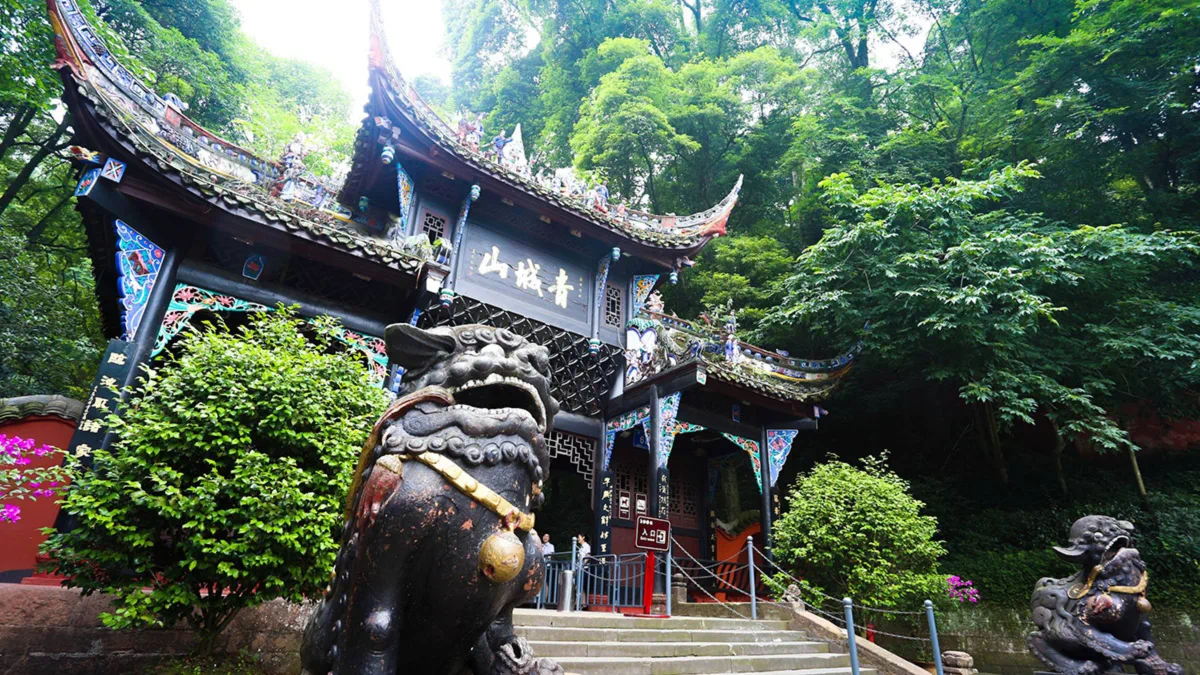
Tucked roughly an hour northwest of central Chengdu , this mountain is celebrated across China for its quiet, secluded charm. Lush forests, shaded stone paths and ancient Taoist temples create a far more subdued vibe than rugged, summit-focused hiking destinations.
PRO TIP: Two Separate Entrances
The scenic area is commonly split into Front Mountain and Back Mountain, which feature separate entrances, distinct ticketing rules and different transport connections. Front Mountain is best known for its Taoist temples and cultural heritage, while Back Mountain centres on forest trails, streams and waterfalls. Pick which section you want to explore before you set out, as travelling between the two entrances adds significant extra travel time.
Is Mount Qingcheng Worth Visiting?
What Makes Qingcheng Mountain Special?
Mount Qingcheng's appeal lies in slow, leisurely wandering through bamboo and broadleaf woodland, punctuated by centuries-old stone stairways, gentle water channels and Taoist shrines. Compared with more exposed, summit-driven destinations such as Mount Huashan, Qingcheng Mountain delivers a different kind of experience: shaded woodland paths, Taoist architecture and plenty of spots to pause and take in the surroundings. That said, both sections require substantial walking over stone steps, so overall difficulty depends heavily on the route you choose. Front Mountain hosts the best-preserved and most culturally important Taoist buildings, while Back Mountain leans into wilder forest scenery, tumbling streams and small waterfalls. Paired with nearby Dujiangyan, it gives visitors a concise introduction to both the spiritual traditions and ingenious engineering of ancient Sichuan.
Who Will Enjoy It Most?
It suits travellers curious about China's Taoist heritage, anyone looking for a peaceful forest escape from busy Chengdu, and casual walkers comfortable with steady stair climbing. Families can visit, though children need close supervision on damp, uneven stone surfaces. It is less ideal if you are chasing sweeping alpine views, quick summit photo opportunities, or low-effort sightseeing with minimal walking. Those with limited mobility will find the stone trails challenging, even with cable car support available.
How Much Time Should You Allow?
A cable-assisted visit focused on Front Mountain's main highlights may take around 3–4 hours, depending on walking pace and how long you spend exploring the temple sites. A more comprehensive visit can take far longer, so budget extra time if you wish to explore without rushing. A full Back Mountain hiking itinerary generally calls for 5–6 hours, with additional buffer time for rest breaks, ferry queues and cable car waits. Shorter outings are possible, but total travel time depends heavily on your selected route and walking speed.
PRO TIP: Front + Back Same-Day Warning
Visiting both Front and Back Mountain in a single day is technically doable only with an extremely early start, a brisk pace and private taxi transfers between entrances; most independent travellers will find this schedule exhausting and rushed. If pairing Qingcheng Mountain with Dujiangyan, stick to one side of the mountain rather than trying to fit both in.
Front Mountain vs. Back Mountain: Which Should You Visit?
Front Mountain: Taoist Temples and Cultural Heritage
Front Mountain is the cultural heart of Mount Qingcheng. Its clearly marked trail connects a series of well-preserved Taoist palaces and caves, including Jianfu Palace and Tianshi Cave, foundational sites in Taoist history. Paths are well signposted, busier than those on Back Mountain, and built around gradual shaded stair climbs. Cable cars and a short lake ferry cut down steep uphill walking, making it the natural default for first-time visitors coming to experience this sacred Taoist mountain. Admission costs more here, and the experience revolves around historic temples and cultural heritage rather than extended forest hiking.
Back Mountain: Forest Trails, Streams and Waterfalls
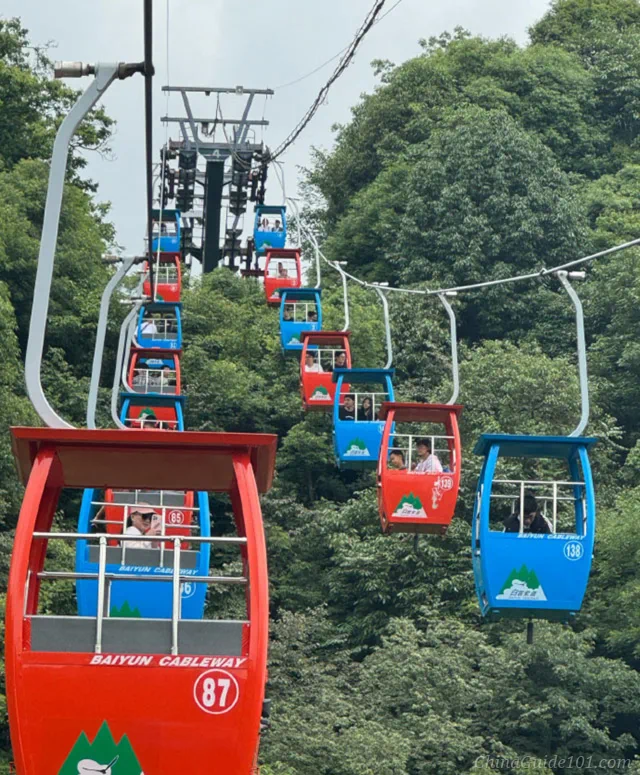
Back Mountain is built around quiet valley hiking, following a creek that cascades over rock ledges into a series of small waterfalls and pools. It has far fewer formal temple structures and noticeably lighter foot traffic. The main entry and exit sit near Tai'an Ancient Town, a traditional mountain town lined with casual restaurants and family-run guesthouses. This side caters to hikers and nature lovers who prioritise forest walking over temple sightseeing. Entry tickets cost less, but the trail is longer and requires continuous movement. Two separate cable cars serve distinct segments of the valley rather than offering a shortcut across the whole route: Jinli Cable Car runs from Feiquanfang (near Tai'an Ancient Town) up to Youyicun, while Baiyun Cable Car connects Youyicun uphill toward Baiyun Temple. A small Cuiyinghu ferry crosses a narrow gorge; if you skip the ferry, you will need to take a longer detour trail.
- Pick Front Mountain if this is your first trip and you care about Taoist heritage
- Pick Back Mountain for quiet forest hiking, streams and waterfalls
- Pair Front Mountain with Dujiangyan for a realistic one-day heritage itinerary
- Plan to rush both Front and Back Mountain on the same day unless you have a private driver
- Choose Back Mountain if you want lots of preserved temple architecture
- Underestimate the continuous stair walking on the Back Mountain valley trail
Which Side Is Better for First-Time Visitors?
For most first-time day trippers departing from Chengdu, Front Mountain is the better pick. It delivers the classic Mount Qingcheng experience, groups key Taoist landmarks conveniently, and fits neatly into a half-day itinerary combined with Dujiangyan. Choose Back Mountain only if forest hiking is your top priority, you prefer quieter trails, and you have reserved at least half a day for walking.
Mount Qingcheng Tickets, Opening Hours and Cable Cars
PRO TIP: Pricing Disclaimer
The prices below are reference figures gathered from available sources, not a guarantee of current official rates. Confirm the applicable admission ticket, cable car fare, ferry charge and operating schedule through the scenic area's official booking channels before your visit. Admission tickets, shuttle services, cable cars and ferry rides are usually charged separately and may not be bundled into a single combo ticket, depending on current ticketing arrangements. Always check the official booking page for live rates, timed-entry rules, temporary maintenance closures and seasonal adjustments before travel.
Front Mountain Ticket Prices
The Front Mountain main admission ticket covers the linked temple trail network. Cable cars, Yuecheng Lake ferry and entry shuttle buses are optional add-ons.
- Front Mountain entry ticket:CNY 80 adult (reference only)
- Front Mountain cable car (Yuecheng Lake to Siwangguan / Shangqing Palace area):CNY 35 one-way /CNY 60 round trip (reference only)
- Yuecheng Lake ferry:CNY 5 one-way (reference only)
- Front Mountain sightseeing shuttle: runs between the main parking complex and Front Mountain gate,CNY 10 one-way (reference only)
Back Mountain Ticket Prices
Back Mountain's lower entry fee covers the valley hiking route. Its two cable car lines and Cuiyinghu ferry run independently.
- Back Mountain entry ticket:CNY 20 adult (reference only)
- Jinli Cable Car (Feiquanfang / Tai'an Ancient Town ↔ Youyicun):CNY 30 one-way (reference only)
- Baiyun Cable Car (Youyicun ↔ Baiyun Temple):CNY 45 one-way (reference only)
- Cuiyinghu ferry: around CNY 2–3 per crossing, subject to on-site notice
Cable Cars and Other Optional Fees
Cable cars on neither side drop you directly at a viewpoint or summit. They remove one long uphill stretch, yet plenty of stone walking remains both before and after every ride. The Yuecheng Lake ferry on Front Mountain is a short scenic crossing that replaces a lakeside footpath. Shuttle buses connect parking zones and trailheads, and they are especially helpful on hot days or for visitors carrying luggage.
How to Buy Tickets with a Foreign Passport
Mount Qingcheng uses a real-name ticketing system. Ticket booking and entry procedures may vary depending on your travel document and whether you are visiting Front Mountain or Back Mountain. The ¥80 ticket covers only the Front Mountain scenic zone and excludes add-ons such as shuttle buses, cableways, ferry rides, sedan chair services and guided tours.
Foreign visitors can generally use a passport or an eligible foreign permanent residence permit for ticket purchases. Visitors from Hong Kong, Macao and Taiwan may use their relevant travel documents. Full-time undergraduate and below international students qualify for a 50% discount on the Front Mountain entry ticket with valid student ID. All non-Chinese ID holders enter via the manual inspection lane. Requirements can vary, so confirm the current procedure before your visit.
You can check the following ticket booking options:
Official WeChat accounts:Search for 悦游都江堰or 青城山都江堰to check ticket availability and booking instructions. Unused tickets must be cancelled before 23:59 on the day after your scheduled visit for an automatic refund; after that cutoff, tickets cannot be refunded online. Offline refund requests can be submitted via the service hotline within 30 days of your visit date.
Trip.com:Check Mount Qingcheng tickets on Trip.com .
On-site ticket counter:Present your original physical passport or eligible travel document to buy tickets and complete manual verification. Availability and procedures may vary, especially during busy periods.
Bring the original travel document used for booking, and allow extra time for identity verification. During weekends and public holidays, check availability in advance rather than relying on same-day ticket purchases.
Opening Hours and Last Entry
Scenic area gate hours and cable car operating times do not align. Cable cars and shuttles close much earlier than the main gates.
| Season | Dates | Gate Hours | Stop selling same-day tickets | Last entry |
|---|---|---|---|---|
| Peak season | April 1 – October 31 | 08:00–17:30 | 17:00 | 17:30 |
| Off season | November 1 – March 31 | 08:30–17:00 | 16:30 | 17:00 |
Plan for 5.5–7 hours for a full Front Mountain visit.
PRO TIP: Service Suspension Risk
Fog, heavy rain, thunderstorms or maintenance work can suspend cable car service with little advance warning. Build in plenty of buffer time and avoid arriving late in the afternoon. Always check official notices separately for cable car-specific hours.
How to Get to Mount Qingcheng from Chengdu
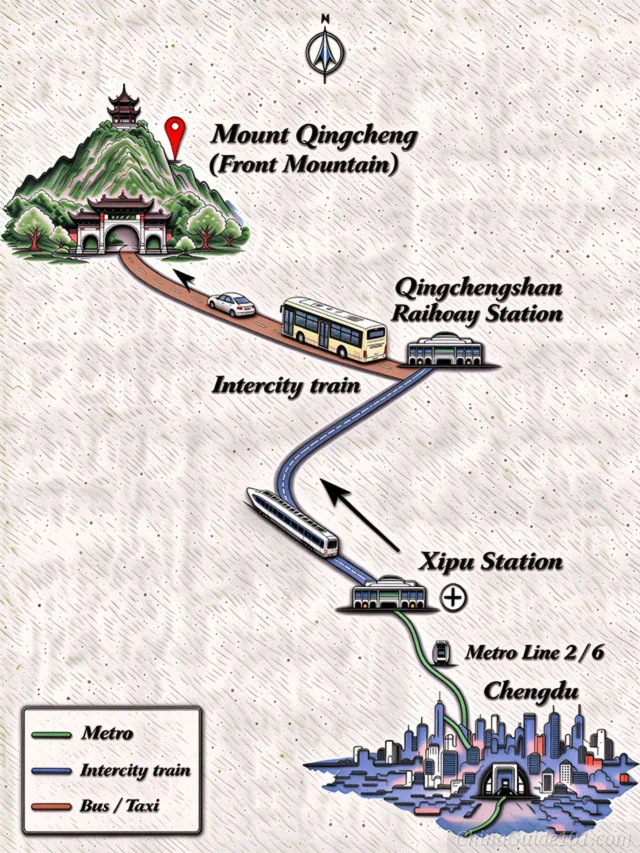
By Intercity Train from Xipu Station
The most reliable option for independent travellers is the intercity train departing Xipu Station for Qingchengshan Railway Station. Take Chengdu Metro Line 2 or Line 6 to Xipu and transfer within the station without exiting. The train journey from Xipu to Qingchengshan usually takes around 25–40 minutes, depending on the specific service. Fares are typically about CNY 10 one way, but verify the current timetable, ticket availability and return services before travelling. Do not assume trains run at the same frequency all day long. Secure return tickets in advance for weekends and holidays, as seats fill quickly.
PRO TIP: Train Station ≠ Mountain Gate
Critical reminder: arriving at Qingchengshan Railway Station does not place you at either mountain gate; you will need a second transfer.
From Qingchengshan Railway Station to Front Mountain
Public bus 101 connects Qingchengshan Railway Station with the Front Mountain parking zone; its listed fare is around CNY 2 , though routes, timetables and stops are subject to change. Allow roughly 10 minutes of travel time as a rough estimate. Once you reach the parking area, you can walk toward the main gate or purchase the sightseeing shuttle ticket to the entrance. Taxis and ride-hailing rides from the station to Front Mountain generally cost CNY 15–25 and work better for small groups or travellers with bags. Always double-check the local bus schedule, as service may be reduced or paused during off-peak periods.
How to Reach Back Mountain and Tai'an Ancient Town
Back Mountain sits considerably farther from the railway station. Shared minibuses depart near the station for Tai'an Ancient Town, the primary Back Mountain trail village. Fares usually run around CNY 13–16 per person, and the ride takes roughly 40 minutes. These shared vans stop running relatively early each evening. A direct taxi or ride-hailing car is your best backup if you arrive late or prefer not to wait for a shared departure.
By Taxi, Ride-Hailing or Private Transfer
A direct private car from central Chengdu to either mountain gate takes 1–1.5 hours, depending on your starting point and traffic conditions. This works well for families, groups, or visitors combining Qingcheng Mountain with Dujiangyan who want flexible timing. When booking private transport, clearly state whether you are heading for Front Mountain or Back Mountain; drivers will not automatically know which entrance you mean.
Getting There from Dujiangyan
Dujiangyan and Mount Qingcheng sit close enough to plan a combined itinerary. Taxis between the Dujiangyan scenic entrance and Front Mountain take roughly 25–30 minutes as a baseline estimate, not including waiting, parking or security checks. Travelling from Dujiangyan to Back Mountain's Tai'an Ancient Town takes longer, usually 40 minutes or more.
PRO TIP: Combined Itinerary Pick
If building the classic one-day combo, Front Mountain is the realistic pairing for Dujiangyan; Back Mountain adds too much travel and hiking time for a relaxed visit.
Best Things to Do on Mount Qingcheng
Front Mountain Taoist Temples
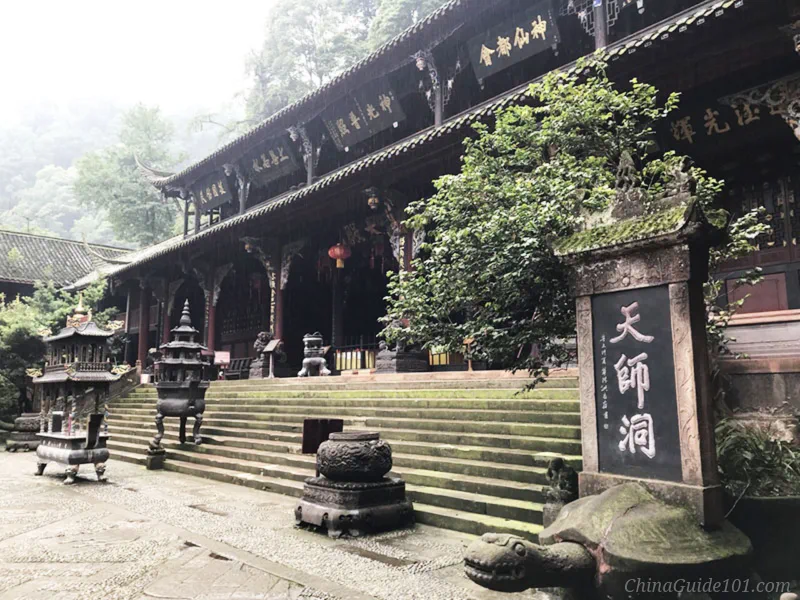
Explore Jianfu Palace and Tianshi Cave, core Taoist heritage sites; walk gently uphill toward Laojun Pavilion. This is the cultural heart of Qingcheng, where Taoism first took root. Wander shaded stone paths between ancient wooden halls, old cypress trees, stone inscriptions and sacred courtyards, ideal for travellers who prioritise heritage, quiet meditation spaces and historic architecture over strenuous hiking.
Back Mountain Valley Hike
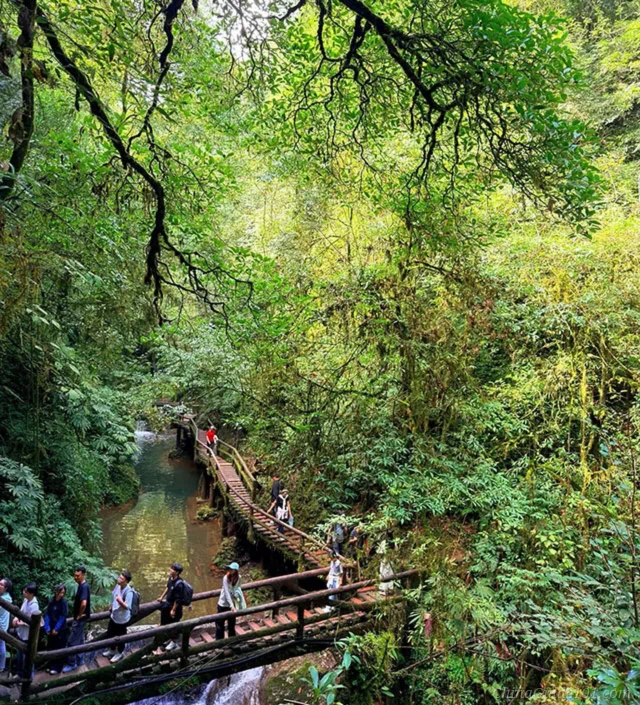
Follow the stream past waterfalls and rock pools; optional Jinli / Baiyun cable cars and Cuiyinghu ferry. The back valley keeps a wilder, greener atmosphere, with cool shaded trails that trace the river through mossy gorges. You can pick and choose transport shortcuts to tailor difficulty: ride the ferry across quiet Cuiyinghu lake, or take one of the two cableways to skip steeper climbs if you want to extend your time enjoying waterfalls and forest scenery.
Tai'an Ancient Town
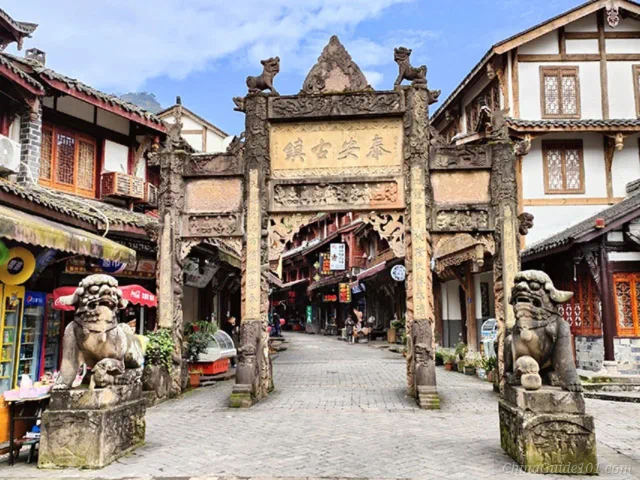
Rest, eat local Sichuan mountain food, tea houses and family guesthouses at the Back Mountain gateway. This low-key riverside settlement sits right at the entrance to Back Mountain, making it a natural pause point before or after your valley hike. Slow down with a cup of local tea, sample home-style mountain dishes, browse small craft stalls, or book an overnight stay if you plan a relaxed two-day Qingcheng itinerary.
Cable Car Ride
Save legs on the steepest uphill sections, but expect stone stair walking before and after the ride. Cable cars are a practical tool rather than a full shortcut: every line lands you still among forest paths, and you will still climb or descend stone steps to reach temples, viewpoints or connecting trails. They work well for travellers with limited time, sore knees, or those who simply want to trade steep climbing for elevated forest views from above the treeline.
Best Mount Qingcheng Itineraries
The best itinerary depends on how much time you have and whether you prefer Taoist temples, forest hiking, or a visit to the nearby Dujiangyan Irrigation System. Use the options below to choose a realistic plan, and allow extra time for transfers, queues and mountain trails.
Front Mountain Half-Day Itinerary
This itinerary is best for visitors who want to experience Mount Qingcheng's Taoist heritage but have limited time. Focus on the main temples and forest paths rather than trying to visit every attraction.
Travel from Chengdu to Qingchengshan Railway Station, then transfer to the Front Mountain entrance.
Explore the lower temple area and continue toward Yuecheng Lake if it fits your route.
Consider the cable car if it is operating and suits your plans. Allow time to visit Shangqing Palace and nearby highlights.
Follow the signed route downhill, visiting Tianshi Cave if time and your chosen route allow.
Return to the entrance area and continue to your next destination.
Allow around 4 hours or more for the mountain visit, plus travel and transfer time. The exact duration depends on your walking pace, cable car use, queues and the route you choose. This itinerary works best when you are not also trying to fit Dujiangyan into the same day.
Back Mountain One-Day Itinerary
Choose this option if you prefer forested trails, streams and waterfalls to a temple-focused visit. Back Mountain is better suited to visitors who are comfortable with several hours of walking and uneven steps.
Travel to Tai'an Ancient Town and enter the Back Mountain scenic area.
Follow the signed trail through the forested valley. Consider the Jinli Cable Car if it is operating and you want to reduce the initial climb.
Continue toward Cuiying Lake if your chosen route includes it, and check whether the small ferry is operating before relying on it.
Decide whether to continue toward the Baiyun Cable Car section or shorten the walk according to your time, energy and the current trail conditions.
Follow the designated exit route and arrange transport back to your accommodation or onward destination.
Allow around 5–6 hours for a substantial hike, plus transport time. The duration depends on the route, cable car and ferry availability, walking pace and trail conditions. Check the current trail map and any closure notices before setting out, and confirm whether your chosen route returns to the same entrance or requires a transfer.
Mount Qingcheng and Dujiangyan in One Day
This itinerary is for travellers who want to visit Qingcheng Mountain and the Dujiangyan Irrigation System on the same day before returning to Chengdu. It combines a shortened visit to Front Mountain in the morning with an afternoon at Dujiangyan.
Start early and keep the Qingcheng visit focused. Trying to see every temple or add Laojun Pavilion may leave too little time for Dujiangyan.
Take the metro or a taxi to Xipu Station and allow enough time to find your platform and board your train.
Choose an early intercity service and check the return options before departure. Qingchengshan Railway Station is not directly at the scenic area entrance, so you will need another transfer.
Take a local bus or taxi to the Front Mountain scenic area. Confirm the current bus stop and service locally, especially on weekends and public holidays.
Follow the signed route through the lower scenic area, allowing time for the historic Taoist buildings and forest paths. Continue toward Yuecheng Lake if it fits your chosen route.
If operating, the cable car can reduce part of the uphill walk. Check its current operating status and the location of its stations before relying on it for your schedule. Allow time to explore Shangqing Palace and nearby highlights.
Follow the signed route toward the exit, visiting Tianshi Cave if time allows. Aim to finish the Qingcheng visit by late morning or around midday so that you have a useful afternoon at Dujiangyan.
Take a taxi or another suitable local connection to the Dujiangyan scenic area. Allow roughly 30–45 minutes as a planning buffer, depending on your pickup point, traffic and waiting time. Confirm the exact destination with your driver.
Follow the signed visitor route to see the key irrigation works, including Fish Mouth, Flying Sand Weir and Bottle-Neck Channel. If time and access allow, continue to Anlan Suspension Bridge and Erwang Temple. Prioritise the main engineering sites if you arrive later in the afternoon.
After leaving the scenic area, travel to the railway station that matches your booked train. Lidui Park Station and Dujiangyan Station are different stations, so check your ticket carefully and leave enough time for the transfer.
Allow around 3–4 hours for a shortened Front Mountain visit, plus travel and waiting time, and another 2.5–4 hours for Dujiangyan, depending on how much you want to see. This is a full and tightly scheduled day, not a relaxed visit. Check current opening hours, last admission, cable car operations and train timetables before setting out. If you want more time at both sites, plan a two-day visit instead.
Mount Qingcheng and Dujiangyan in Two Days
A two-day itinerary gives you more time to explore Mount Qingcheng and Dujiangyan without rushing between sites. Choose between a culture-focused route and a nature-focused route, then decide where to stay based on your plans for the following morning. Front Mountain and Back Mountain are separate visitor areas, so plan for road transfers rather than assuming you can walk directly from one to the other.
Where to Stay
Tai'an Ancient Town is a convenient base for exploring Back Mountain, with accommodation close to the hiking area. However, it is not necessarily the best choice if you plan to visit Dujiangyan or Front Mountain the next day. For a morning visit to the irrigation works, consider staying near Guanxian Ancient Town or South Bridge in Dujiangyan. If Front Mountain is your next destination, compare accommodation near the Front Mountain entrance with options near Qingchengshan Railway Station. Check the actual transfer time for your chosen route before booking.
Cultural & History Route: Front Mountain and Dujiangyan
Best for travellers interested in Daoist heritage, historic temples and ancient water engineering. This route keeps the two main cultural sites on separate days and avoids rushing through either one.
Travel from Chengdu to Qingchengshan Railway Station, then transfer to the Front Mountain entrance. Explore the main temple areas and forested mountain paths, including Tianshi Cave and Shangqing Palace if time, your chosen route and walking pace allow. Stay overnight near Guanxian Ancient Town or South Bridge in Dujiangyan, making it easier to visit the irrigation works the following morning. South Bridge is also a convenient place for an evening stroll.
Explore the historic irrigation works, including Fish Mouth (Yuzui), Flying Sand Weir (Feishayan) and Bottle-Neck Channel (Baopingkou). If time allows, visit Anlan Suspension Bridge and Erwang Temple, then continue to Guanxian Ancient Town before returning to Chengdu. Check the current opening hours and allow enough time to reach your departure station.
Nature & Hiking Route: Back Mountain and a Flexible Second Day
Best for travellers who prefer forest trails, streams and waterfalls. This route begins with a substantial hike in Back Mountain, while the second day can focus on Daoist heritage or Dujiangyan's historic waterworks.
Travel to Tai'an Ancient Town and enter the Back Mountain scenic area. Follow a suitable trail through the forested valleys, allowing time for streams, waterfalls and rest stops. Cable cars and the ferry may help shorten parts of the visit, but check their operating status before relying on them. If you want to prioritise hiking and spend the evening near the trailhead, stay in Tai'an Ancient Town. If you plan to visit Dujiangyan on Day 2, consider transferring to accommodation in Dujiangyan after your hike, provided you have enough time and suitable transport.
Option A — Front Mountain:Visit the main Daoist temples and historic sites, allowing time for the mountain's steps and uphill sections. This option is better if you want to experience both sides of Mount Qingcheng over two days.
Option B — Dujiangyan:Explore the ancient irrigation works and, if time permits, Guanxian Ancient Town. This option provides a contrast to the natural scenery of Back Mountain, but requires a road transfer and a suitable onward connection.
Allow for transfers between the scenic areas and your accommodation. A taxi or ride-hailing service may be more convenient when connections are time-sensitive, while public transport can be a lower-cost alternative if a suitable service is available. Check current routes and departure times in advance, especially when travelling from Tai'an Ancient Town or returning to Chengdu.
Best Time to Visit Mount Qingcheng
Spring, Summer, Autumn and Winter
Spring (March–May) brings fresh green foliage and lighter crowds before summer heat arrives. Summer (June–August) stays lush and cool within the shaded valleys, yet afternoon thunderstorms are common, and damp stone steps become extremely slippery. Autumn (September–November) is widely considered the best window: mild temperatures, more stable weather and soft light ideal for forest photography. Winter (December–February) is quiet with far fewer tourists, though fog rolls in frequently and shaded steps remain damp for days at a time.
Weekdays vs. Weekends and Public Holidays
Weekdays offer the quietest temple visits and emptier trails. Saturdays, Sundays and Chinese public holidays draw large crowds of day-trippers from Chengdu, concentrated heavily on Front Mountain. Long cable car queues and parking delays are normal on these dates. If you can only visit on a weekend, take the very first morning intercity train out of Xipu.
PRO TIP: Slippery Trail Warning
Mount Qingcheng sits within a moist mountain climate. Even when no rain is falling, shaded stairways stay damp and slippery. Fog can drift in rapidly, obscuring views and cutting visibility short. Pack a lightweight rain jacket and non-slip footwear regardless of the morning forecast.
Practical Travel Tips
- Wear sturdy closed non-slip walking shoes
- Bring a thin waterproof shell, enough water and snacks
- Keep children supervised beside streams and wet rock edges
- Save Chinese place names for taxi drivers: 青城山前山、青城后山、泰安古镇
- Carry small cash for shared vans, ferries and family stalls
- Wear smooth city trainers, flip-flops or sandals
- Rely fully on mobile signal deep inside the forest
- Expect full barrier-free accessible paths
- Count on cheap, abundant food choices on the mountain trails
Frequently Asked Questions
Q: Is Mount Qingcheng worth visiting from Chengdu?
Yes, if you enjoy quiet forest walking or Taoist cultural sites. It offers a peaceful counterpoint to Chengdu's busy urban pace and pairs neatly with Dujiangyan for a heritage-focused day trip. It is not the right pick if you are chasing dramatic high mountain panoramas.
Q: Is Front Mountain or Back Mountain better?
Front Mountain for Taoist temples and cultural sightseeing. Back Mountain for forest, streams and longer hiking. Most first-time day trippers will prefer Front Mountain.
Q: How long does it take to visit Mount Qingcheng?
A cable-assisted Front Mountain visit focused on key highlights may take 3–4 hours; a complete, unrushed tour can take much longer. A substantial Back Mountain hike usually runs 5–6 hours, depending on your trail selection, cable car use and walking pace. Visiting both in one day means a rushed schedule plus extra taxi transfers.
Q: Can you visit Mount Qingcheng and Dujiangyan in one day?
Yes, if you choose Front Mountain, stick to a condensed sightseeing route and start very early. Back Mountain plus Dujiangyan is too packed for a relaxed independent day trip and works better over two days. For a slower, more thorough visit to both sites, plan two days.
Q: How do you get to Mount Qingcheng from Chengdu?
Take Metro Line 2 or 6 to Xipu Station, then catch the intercity train to Qingchengshan Railway Station. From there, take a bus, shared minibus or taxi either to the Front Mountain parking zone or Tai'an Ancient Town for Back Mountain.
Q: Is there an intercity train to Qingcheng Mountain?
Yes, the intercity service departs Xipu Station. The trip normally takes 25–40 minutes and fares are roughly CNY 10 one way. Check timetables ahead; service frequency varies across the day.
Q: How much does Mount Qingcheng cost?
Front Mountain admission is listed at CNY 80; Back Mountain admission is listed at CNY 20. Cable cars, shuttles and ferries are separate optional fees and are not included in the main ticket. All figures are reference values only, verify official rates before travel.
Q: Can foreign visitors buy tickets with a passport?
The scenic area uses real-name reservations. Rules for passport holders vary, so check ahead whether you can book online or need to present your passport at an on-site ticket counter.
Q: Is Mount Qingcheng suitable for older visitors or children?
It can work, but expect lots of stone steps. Front Mountain with cable car support is far more manageable than Back Mountain's long valley hike. Watch children closely near wet, slippery edges and stream pools.
Q: Is the cable car worth taking?
For most visitors, yes, especially on Front Mountain. It removes the steepest uphill stretch and lets you save energy for temple exploration. It will not eliminate all walking.
Q: What should you wear for hiking?
Non-slip closed walking shoes are the most important item. Bring a lightweight rain shell, extra water and sun protection. Avoid slippery flat sandals or smooth-soled city shoes.
Q: Is Mount Qingcheng crowded on weekends?
Yes, Front Mountain fills up quickly on Saturdays, Sundays and public holidays. Catch the earliest intercity train from Xipu if you must visit then. Back Mountain stays quieter than Front Mountain, though its main trail also gets busier at weekends.
All ticket prices, reservation procedures, cable car timetables and shuttle availability are reference information and may shift with seasons, weather or maintenance work. Double-check official notices before travelling, especially around public holidays.