
Stretching across steep mountain slopes roughly two‑and‑a‑half hours north‑west of central Guilin, the Longji Rice Terraces are far more than a single scenic overlook. This sprawling mountain region is made up of several traditional ethnic villages, thousands of cascading farmed terraces, and a network of hiking paths winding up and down forested hillsides.
KEY PLANNING DECISION
If you are visiting from Guilin, the main decision is not simply whether to visit Longji, but which part of the terraces to visit and whether to stay overnight. Many first‑time visitors underestimate the size of this site, and end up rushing between villages without getting the quiet mountain atmosphere that makes Longji special.
What Are the Longji Rice Terraces?
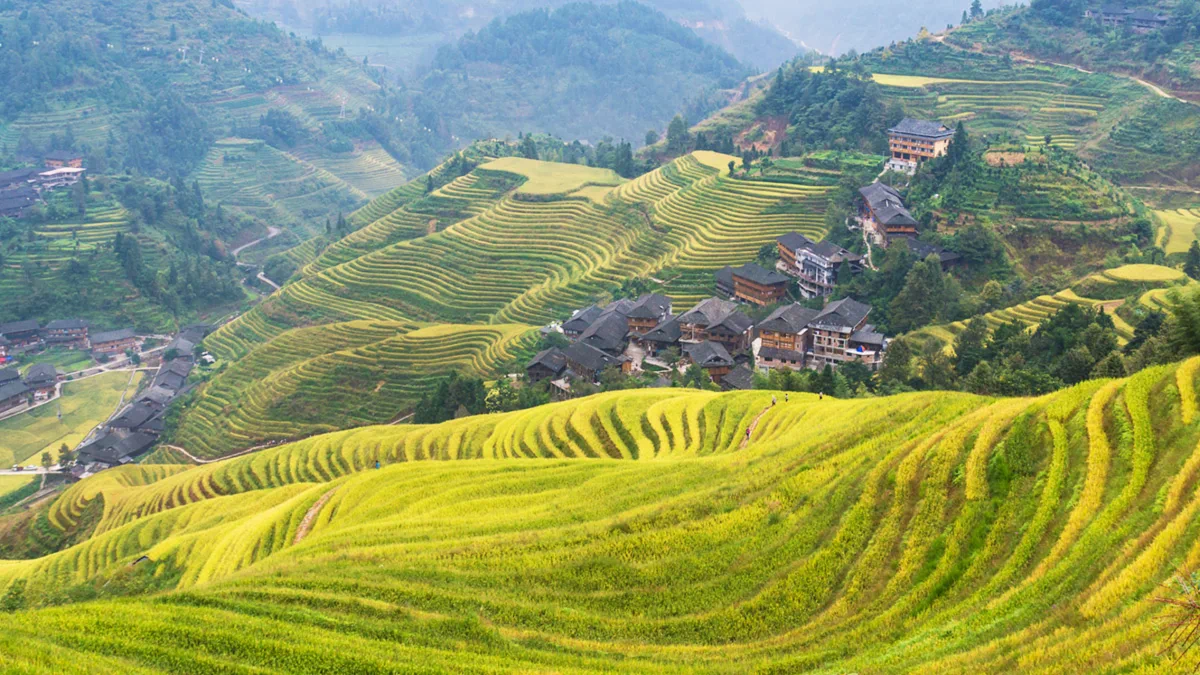
The Longji Rice Terraces, also called Dragon's Backbone Terraces, are a living agricultural landscape rather than a man‑made historic monument. For hundreds of years, local Zhuang and Yao communities have hand‑carved flat rice paddies onto these steep mountain slopes. Stretching across multiple connected mountain ridges, the whole site changes dramatically through each season, shifting from reflective flooded water in spring to lush green rice, golden harvested grain, and quiet fallow hills in winter.
NAVIGATION NOTICE
Unlike a single compact scenic spot you can quickly walk through, this mountain region spreads over a wide area, which explains why many first‑time visitors struggle to decide exactly where they should start their exploration.
Where Are the Longji Rice Terraces?
Longji Rice Terraces is the broad name used for this mountain terrace region. Within the scenic area, visitors usually focus on Ping'an Village and Jinkeng‑Dazhai, while other villages offer quieter cultural experiences. The terraced farmlands sit inside Longsheng Various Nationalities Autonomous County in northern Guangxi. The whole scenic zone spreads across multiple mountain ridges; there is no one single "Longji Village" where everything is concentrated. The driving distance from downtown Guilin is around 80‑100 km , with winding mountain roads accounting for the final stretch of the journey.
WEATHER & TRAVEL TIME
This mountain setting means weather can shift very quickly, and travel times are less predictable than sightseeing within Guilin city itself.
Why Are the Longji Rice Terraces Famous?
These farmed hillsides were built across many centuries by local Zhuang and Yao ethnic communities. Generations of farmers carved flat planting surfaces out of near‑vertical mountain slopes, creating the stepped landscape visitors come to see today. The dramatic look of the terraces changes completely through the year: mirror‑like flooded water in spring, thick lush green rice over summer, golden grain in autumn harvest season, and bare, quiet hills through the cold winter months. Local families still live, farm, and prepare traditional meals within the terrace zone.
CULTURAL APPEAL
Much of the appeal comes from combining dramatic mountain scenery with living village culture, rather than visiting a museum or static historic monument.
How Were the Terraces Built?
Traditional farmers constructed retaining walls along steep mountain slopes to hold soil and water. An intricate gravity‑fed irrigation system channels rainfall and mountain spring water through successive tiers of paddies. The terraces are a long‑standing example of traditional mountain agriculture, rather than a landscape created for tourism.
Longji Rice Terraces: Which Area Should You Visit?
Many foreign travellers get confused trying to untangle the names Ping'an, Dazhai, Jinkeng, Guzhuang and Huangluo. Visitors mainly focus on Ping'an and Jinkeng‑Dazhai for the terraces and hiking, while Guzhuang and Huangluo offer more village and cultural experiences.
| Area | Best for | Landscape | Hiking | Stay overnight |
|---|---|---|---|---|
| Ping'an | First‑time visitors, older travellers, families | Classic, neatly curved terrace formations; iconic postcard viewpoints | Moderate; shorter stone‑step walks | Yes, well‑established guesthouse choices |
| Dazhai (Jinkeng) | Photographers, hikers, visitors wanting vast sweeping mountain views | Larger‑scale, deeper mountain panorama; higher elevation viewpoints | More demanding; longer uphill stone trails | Yes; range of mountain‑view homestays |
| Guzhuang / Huangluo | Village culture, slower travel | Traditional village scenery and cultural experiences | Easier walking | Limited accommodation |
Ping'an Village
Ping'an Zhuang Village was the first section of Longji to develop for tourism, so visitor infrastructure here is mature. The two famous viewpoints are Nine Dragons and Five Tigers and Seven Stars Accompanying the Moon. Most core sightseeing walks loop between these two overlooks. The hiking trails are stone steps, with some gentle uphill stretches, but overall less strenuous compared to Dazhai‑Jinkeng. For a standard visit without extended hiking, plan roughly two to three hours exploring the main viewpoints. A good selection of wooden stilt‑house‑style guesthouses sits within or just above the village centre; many rooms open onto direct terrace views.
BEST FOR DAY TRIPS
If you are on a one‑day trip from Guilin and prefer to avoid steep long climbs, Ping'an is a solid starting choice.
Dazhai Village (Jinkeng)
Dazhai sits inside the Jinkeng Yao terrace zone, home to the Red Yao ethnic community. The terraces here spread over a much wider mountain area, delivering bigger, more expansive panoramic mountain views. This is where the Longji cable car operates, running uphill towards Golden Buddha Peak (Jinfo Peak), the highest major viewpoint of the whole scenic area. Even with the cable car, there are still plenty of stone walking trails around the mountain ridges. Hiking routes between the three main overlooks involve steep stair climbs in sections.
LUGGAGE WARNING FOR DAZHAI HOMESTAYS
Overnight homestays are scattered at different elevations; note that many lodges require walking up stone steps from the main parking zone, so travelling with large rolling suitcases can be inconvenient.
Jinkeng Rice Terraces
Jinkeng is the name commonly used for the terrace area around Dazhai Village. Visitors will often see "Jinkeng‑Dazhai" used together in booking materials. The three signature viewpoints here serve very different purposes: West‑Hill Music is a popular choice for sunrise photography, Thousand‑Layer Terraces works well for daytime landscape shots, while Golden Buddha Peak, reachable via cable car, is a popular choice for sunset photography in the Jinkeng area. If you want to combine cable‑car transport with hiking, a popular plan is riding the cable car uphill to Golden Buddha Peak, then slowly hiking downhill along the stone trails back towards Dazhai village.
INTER-VILLAGE TREKKING
Longer cross‑mountain hiking trails also connect Jinkeng‑Dazhai over the mountain ridge to Ping'an Village,a multi‑hour trek suited to reasonably fit hikers .
Tickets and Opening Hours
Longji Rice Terraces Ticket Prices
The main scenic area gate ticket is valid for three consecutive calendar days from first entry. The main admission ticket currently covers the main four visitor areas : Ping'an, Jinkeng‑Dazhai, Guzhuang and Huangluo. That is a key advantage: once you hold your valid main admission ticket, you can travel between these different village areas over your multi‑day stay, without purchasing separate village entry fees.
| Item | Price (CNY) | Notes |
|---|---|---|
| Adult main admission | CNY 80 | Valid 3 days across all four covered visitor zones; foreign visitors may purchase with physical passport at on‑site windows or via major third‑party travel platforms such as Trip.com |
| Student under 18 / Senior 60‑64 | CNY 40 | Half‑price discount with valid ID document |
| Children under 1.2 m / Seniors 65+ | Free | Proof of age required at ticket checkpoints |
| Internal scenic‑area transport | Additional fee may apply | Check the current shuttle arrangement and fare when booking or entering the scenic area |
| Jinkeng Golden Buddha Peak cable car | Around CNY 100 round‑trip | Optional; available in the Dazhai‑Jinkeng area |
TICKET PURCHASING & VERIFICATION
Online booking systems built for Chinese mobile numbers can sometimes create hurdles. You may buy tickets in‑person at the main visitor centre service counter by presenting your physical passport. Always keep your admission receipt or electronic ticket handy, as staff may check tickets again at secondary checkpoints near mountain villages.
Opening Hours
Opening hours vary slightly by service. Ticket gates, internal shuttle services and the Jinkeng cable car generally operate from around 07:30 to 17:30. Exact last‑entry and last‑departure times can vary by service and season, so check the current schedule before travelling.
AFTER-HOURS SAFETY
After formal services finish for the day, overnight visitors staying in mountain villages remain inside the scenic zone. Hiking on unlit mountain stone paths after sunset is strongly discouraged.
How to Get to Longji Rice Terraces from Guilin
From Guilin to Longji by Bus & Shared Shuttle
Regular public buses are available, but services are less convenient for international visitors because schedules and transfer arrangements can vary. Pre‑booked direct shuttles or private transfers are usually simpler.
SCENIC-AREA TRANSFER WARNING
Shared shuttle prices vary by departure point and booking provider, so check whether the quoted fare includes the scenic‑area transfer.For visitors arriving by coach or other larger vehicles, an additional scenic‑area transfer may be required to reach the village parking zones. Confirm the current arrangement with your transport provider.Even when you arrive at the main scenic gateway, remember you will still need to arrange uphill transport into Ping'an or Dazhai village parking zones for larger‑group arrivals; your shared city‑to‑mountain transfer does not automatically include this internal scenic‑area transport fee. It is sensible to confirm drop‑off points when you make your booking.
Private Transfer or Taxi
Private cars and hired drivers work very well for small family groups, or travellers with overnight luggage who want flexible departure times. A private car from Guilin to the Longji scenic‑area entrance takes roughly two to two‑and‑a‑half hours, depending on traffic and road conditions.
VEHICLE ACCESS RULES
One important distinction is vehicle size: large vehicles and coaches may need to transfer to scenic‑area transport at the entrance, while smaller private cars can generally continue towards the village parking areas. Confirm the current access rules with your driver or transfer provider when booking, especially if you are travelling in a larger vehicle. This option is ideal if your travel party wants to avoid fixed bus timetables, or you hope to combine Longji with brief extra stops en route.
From Yangshuo to Longji
Getting directly from Yangshuo to Longji is less convenient than travelling out of Guilin. The total road journey time sits between three and four hours. There are very few reliable direct public bus services running Yangshuo‑Longji.
ITINERARY PLANNING TIP
For most itineraries, you have two realistic choices: you can either book a pre‑arranged private car straight from Yangshuo to the Longji visitor centre, or travel back north first to Guilin, then continue onward toward Longji by shared shuttle. If your overall Guilin‑Yangshuo itinerary is tight, do not underestimate this travel time; many visitors mistakenly hope to squeeze Yangshuo sightseeing and Longji terraces all on one single busy day, which can make for a very rushed day.
From Guilin Railway Station / Guilin North Station
Shared tourist shuttle services frequently list pick‑up points outside both Guilin Railway Station and Guilin North Railway Station. If you arrive into Guilin by high‑speed train, you do not necessarily need to travel all the way into central downtown before departing for Longji.
RAILWAY STATION PICKUP ADVICE
When booking your shared shuttle service online, double‑check exactly which railway‑station exit the meeting point uses, because these stations are large and walking distances between different exits can be substantial.
How Long Do You Need at Longji?
| Suggested Time Allocation | Plan Overview |
|---|---|
| Half‑day visit | Generally too short. Travel time from Guilin already consumes most available hours; little time left for relaxed hiking or photography. Not recommended. |
| One full day | Visit main viewpoints plus short‑to‑moderate hiking; you may see morning or late‑afternoon light only if you leave Guilin extremely early. You must return down the mountain before the final evening internal transport. |
| 1 night / 2 days | Best overall choice for most first‑time visitors. It leaves you time for both sunset and morning light on the terraces, plus proper mountain hiking, without rushing. |
| 2+ days | For serious hiking, multi‑village ridge walks, slow village cultural exploration, and photography‑focused travel. |
DAY TRIP VS. OVERNIGHT STAY
For the majority of international visitors, the core decision sits between doing Longji as a packed one‑day excursion out of Guilin versus spending one night up in one of the mountain villages. Day trips can work, but you will miss the quieter misty morning views before day‑tour crowds flood the viewpoints. Staying overnight gives you access to these quieter early‑morning conditions.
Best Viewpoints at Longji Rice Terraces
Ping'an Viewpoints
Nine Dragons and Five Tigers : This is the most iconic classic viewpoint for Ping'an. The curved lines of terraces follow five hill mounds and nine long descending mountain ridges. It works beautifully in spring when paddies hold reflective water, and also looks striking in golden autumn light. You can reach it via a short uphill walk from Ping'an village centre. It is suitable for casual walkers and families. Sunrise and sunset are both popular here.
Seven Stars Accompanying the Moon : The second major overlook inside Ping'an. Seven smaller circular terrace mounds sit within the wider stepped hillside. This spot tends to have slightly fewer visitors than Nine Dragons and Five Tigers. It requires a moderate uphill stroll from the village centre, excellent for morning photography when soft light falls across the layered paddies.
PING'AN ACCESS NOTE
There is no cable car serving either of the Ping'an viewing platforms, so all access is on foot via stone steps.
Dazhai / Jinkeng Viewpoints
Golden Buddha Peak (Jinfo Peak): The highest major viewpoint of Jinkeng‑Dazhai. You can reach this summit either by riding the cable car uphill or by a steep long hiking trail. Golden Buddha Peak is a popular choice for sunset photography in the Jinkeng area. If you take the cable car up, many visitors choose a slow downhill hike back along the mountain trails afterwards rather than riding the cable car down again. Allow roughly an hour or more if you plan to hike back down to Dazhai village from this peak.
West‑Hill Music (Xishan Shaoyue): A popular sunrise viewpoint in Jinkeng‑Dazhai. Sitting on a broad mountain ridge, it opens up panoramic views over thousands of descending terrace layers. Getting here requires uphill hiking from Dazhai village; walking one‑way takes roughly an hour or more.
SUNRISE PHOTOGRAPHY TIP
If you stay overnight locally, you can start walking before dawn for sunrise.
Thousand‑Layer Terraces : Positioned on the lower mountain slope. This viewpoint emphasises the dense vertical stacking of terrace after terrace down the steep hillside. Daytime light works best here; it is often included on walking loops between the village and the higher ridge overlooks.
Hiking the Longji Rice Terraces
First, a straightforward answer to a common visitor question: Longji is not technical mountain hiking requiring special climbing gear. Even so, nearly all trails consist of uneven, stone‑paved steps; there are repeated steep uphill and downhill stretches, so physical stamina matters. Slippery surfaces after rain are a consistent hazard in this mountain zone.
| Hiking Route | Approx Time | Difficulty | Best for |
|---|---|---|---|
| Short village‑viewpoint loop walk | 1‑1.5 hours | Easy‑Moderate | First‑time visitors, families with limited walking capacity, casual sightseeing |
| Main viewpoint circuit within one village zone | 2.5‑3.5 hours | Moderate | Most general visitors exploring Ping'an or Dazhai‑Jinkeng |
| Cross‑ridge village‑to‑village hike (Ping'an ↔ Dazhai) | 4.5‑6 hours | Moderate‑Hard | Experienced hikers; prepare water, snacks and weather‑proof outer layers |
TRAIL ACCESSIBILITY NOTE
The short walks are manageable for reasonably mobile visitors, but they still involve stone steps and uphill sections.
Hiking With Children or Older Travelers
If travelling with older guests or young children, prioritise Ping'an for shorter, gentler walking loops. If you stay within the Dazhai‑Jinkeng zone, strongly consider purchasing the cable‑car ticket to Golden Buddha Peak to cut out the steep uphill climb.
- Always wear closed, non‑slip walking shoes.
- Carry bottled water, as there are very few shops along remote mountain trails.
- Use the Dazhai cable car to eliminate steep uphill climbs if walking with limited mobility.
- Do not attempt the long cross‑mountain ridge hike between Ping'an and Dazhai with young children or anyone with limited mobility.
When Is the Best Time to Visit Longji Rice Terraces?
Spring — Water‑Filled Terraces (Mid‑April through mid‑June)
Farmers fill the stepped paddies with water ahead of rice planting. When skies are clear, each flat terrace holds a mirror reflecting clouds, sky, and surrounding mountain ridges. Morning mist frequently drifts across the hills, which creates good conditions for landscape photography. The most dramatic mirror‑like conditions are often seen around May and early June, although timing varies with local planting schedules and weather.
SPRING WEATHER WARNING
Bear in mind spring is also the wetter mountain season, so prepare for fog and occasional rain showers; some mornings may be completely shrouded in cloud, obscuring the terraces from view.
Early summer — Green Rice Fields (June to August)
Young rice plants grow thick and lush, painting the entire mountain slope in rich shades of green. The mountains are noticeably cooler than the hot lowland Guilin city in summer. This is still rainy season, though, so afternoon thunder showers happen often; hiking trails can turn slippery quickly. Summer draws fewer photography‑oriented tourists than spring or autumn.
Autumn — Golden Rice Terraces (Mid‑September to early November)
Ripening rice turns the terraces golden‑yellow across the mountain slopes. This is one of Longji's busiest periods, especially around China's National Day holiday in early October. The exact timing of the golden terraces varies with altitude, local farming schedules and weather.
PEAK AUTUMN BOOKING TIP
Book village homestays well in advance if travelling during this window.
Winter (December‑February)
Winter is much quieter, and the terraces are generally less lush after the main harvest season. Visibility can be good on clear days, while mist and cold weather can limit views. Visitor numbers drop sharply, and mountain guesthouses are generally quieter, with prices often lower than during peak periods.
| If you want… | Consider visiting… |
|---|---|
| Mirror‑like flooded water terraces for photography | Mid‑April to mid‑June |
| Lush green rice hillsides | June‑August |
| Golden harvested‑season yellow terraces | Mid‑September to early November |
| Fewer tourists, quieter mountain stays | Winter months or weekdays outside peak seasons |
Should You Stay Overnight in Longji?
Stay Overnight If You Want…
- Watch sunrise or sunset directly over the rice terraces.
- Escape day‑tour crowds and enjoy a quiet mountain atmosphere after day groups depart.
- Complete longer ridge hiking routes across the mountain slopes.
- Experience slow‑paced village travel and taste local Zhuang and Yao home‑cooked meals.
DAY TRIP VS. OVERNIGHT CHOICE
If your total travel schedule is extremely tight and you can only spare a single day, a day‑trip is workable, but you will miss the quieter misty morning views that day‑trippers cannot easily experience. Staying overnight gives you more time for hiking and allows you to see the terraces around sunset and early morning, when day‑trip visitors are fewer.
Stay in Ping'an or Dazhai‑Jinkeng?
| Ping'an Village | Dazhai‑Jinkeng | |
|---|---|---|
| Access | Easier; shorter walking distances from parking area to most guesthouses | Many lodges require steep stone‑step climbs from the main parking zone; rolling suitcases are awkward |
| Hiking | Shorter, gentler viewpoint walks | More extensive hiking trail network; cable‑car option available for Golden Buddha Peak |
| Views | Classic, tightly curved terrace formations | Vast sweeping panoramic mountain vistas across multiple mountain ridges |
| Accommodation | Wider range of mid‑range and budget homestays; more developed tourist services | Mix of simple homestays and newer boutique mountain lodges; fewer restaurant choices in some upper‑hill locations |
| Best for | First‑time visitors, families, older travellers | Photographers, keen hikers, visitors chasing dramatic wide mountain scenery |
Longji Rice Terraces Day Trip from Guilin
A Longji day trip is feasible, but your whole day will feel busy because of the lengthy travel time to and from Guilin. You need an early departure out of Guilin city, ideally leaving around 07:30 or earlier, to give yourself adequate sightseeing time before the final evening internal transport back downhill to the visitor centre. Plan lunch at one of the village restaurants inside Ping'an or Dazhai rather than rushing back down the mountain for food.
Option 1: Ping'an Day Trip (slower‑paced)
Departure & Arrival
Guilin → shared transfer to Longji main visitor centre → internal mountain transport uphill to Ping'an parking.
Viewpoints & Sightseeing
Walk to Nine Dragons and Five Tigers and Seven Stars Accompanying the Moon viewpoints.
Lunch & Village Stroll
Lunch in Ping'an village, followed by a short leisurely village stroll.
Return Journey
Return by mountain transport and shared bus back to Guilin. You will finish sightseeing by mid‑to‑late afternoon.
LIGHTING WARNING FOR OPTION 1
You should not plan around sunrise or sunset on this itinerary.
Option 2: Dazhai‑Jinkeng Day Trip (better wide landscape views)
Transfer Uphill
Guilin → Longji visitor centre → mountain transport uphill to Dazhai parking.
Cable Car & Downhill Hike
Buy the cable‑car ticket uphill to Golden Buddha Peak first, spend time at the summit viewpoint, then hike slowly downhill via the stone trails past Thousand‑Layer Terraces back towards Dazhai village for lunch.
Lower Village & Departure
After lunch, take a brief walk around the lower village area before catching the mountain transport back downhill.
LIGHTING & DEPARTURE NOTICE FOR OPTION 2
On this day itinerary you can potentially catch late‑afternoon soft light, but you must keep a close eye on the official final departure time to avoid being stranded on the mountain after services end.
SAME-DAY TRAIN DEPARTURE WARNING
Do not plan a tight late‑evening high‑speed train departure out of Guilin on the same day you visit Longji. Unexpected delays on winding mountain roads can easily make you miss your train.
Longji Rice Terraces 2‑Day Itinerary (Overnight)
Day 1 Arrival & Sunset Views
Leave Guilin in the late morning, travel to the Longji visitor centre, take the internal mountain transport uphill to your chosen village (Ping'an or Dazhai‑Jinkeng). Check in to your mountain homestay, drop luggage. Spend the afternoon exploring local viewpoints. Stay up on the mountain for sunset light falling over the stepped rice paddies. Overnight in the mountain village. Eat a local dinner at your guesthouse.
Day 2 Sunrise, Trail Exploration & Departure
Wake early for terrace sunrise and mist before day‑tour crowds arrive. Continue your hiking or sightseeing loop across nearby trails. Have lunch in the village. Afterwards, take the mountain transport downhill back to the main visitor centre, then board your transfer bus back to Guilin.
OPTIONAL RIDGE TREK
If you feel energetic and your three‑day‑valid ticket is still active, you could optionally hike across the mountain ridge to the neighbouring village zone before heading back down. Keep in mind that this cross‑mountain hike adds several hours to your schedule.
Practical Tips for Visiting Longji
- Wear sturdy closed walking shoes with good anti‑slip soles; stone steps get slippery after mountain rain.
- Carry your own bottled water when you go hiking; supplies are limited on remote mountain trails.
- Always pack lightweight rain protection. Mountain weather shifts fast, sudden showers are common regardless of season.
- Keep a small amount of cash as a backup, especially for small village businesses and mountain services.
- Foreign visitors should carry the physical passport that you used when purchasing your entry ticket; staff may request ID checks at ticket points.
- Build extra buffer time into your schedule for slow, winding mountain road travel; delays are not uncommon.
- Start early. Whether day‑tripping or overnight, early mornings deliver the best light and fewer crowds.
- Before you depart Guilin, quickly check local mountain weather forecasts; heavy fog can completely block terrace views at higher viewpoints.
- If you are doing a day trip, avoid booking a tightly scheduled evening train out of Guilin on the same day.
Longji Rice Terraces vs Other Guilin Attractions
| Attraction | Best for |
|---|---|
| Longji Rice Terraces | Mountain terrace landscapes, hiking, traditional Zhuang‑Yao mountain‑village cultural stays |
| Li River Cruise (Guilin‑Yangshuo) | Classic karst river scenery, boat sightseeing along the river valley |
| Yangshuo | Gentle karst hills, cycling, riverside leisure, cafes and small‑town atmosphere |
Many first‑time visitors ask: should I visit Longji Rice Terraces or spend extra days in Yangshuo? There is no universal right answer. If your itinerary allows enough time in the Guilin region, it is possible to combine both experiences . If your available travel time is limited to just two or three days around Guilin‑Yangshuo, you need to weigh priorities. Choose Longji if mountain hiking, high‑elevation terrace scenery and ethnic‑village homestay experiences appeal most strongly to you. Prioritise Yangshuo and Li River cruise if river karst landscapes, cycling and relaxed low‑altitude countryside leisure are higher on your travel wish‑list.
LOGISTICS REMINDER
Bear in mind travel time to Longji is substantial, so it cannot be treated as a quick casual side stop.
Frequently Asked Questions
Is Longji Rice Terraces worth visiting?
Longji is a strong choice if you enjoy mountain landscapes, walking and rural village experiences. If your itinerary is very compressed and you have only 2‑3 total days for Guilin‑Yangshuo sightseeing, evaluate carefully, as the lengthy travel time eats up a large chunk of your day.
How far is Longji Rice Terraces from Guilin?
Roughly 80‑100 km by road.Typical journey time is between two and two‑and‑a‑half hours, depending on road and weather conditions.
Can you visit Longji Rice Terraces as a day trip?
Yes, technically possible, but it makes for a long, busy excursion. Spending a night on the mountain gives you more flexibility if your travel schedule allows it.
Which village is best in Longji?
Ping'an works better for first‑time visitors, families and older travellers seeking gentler walks. Dazhai‑Jinkeng is the better pick for photographers and hikers chasing sweeping large‑scale mountain views.
How difficult is hiking at Longji Rice Terraces?
Short viewpoint loops are easy‑moderate. The cross‑ridge hike connecting Ping'an and Dazhai is long and strenuous, suitable for reasonably fit hikers only. All trails have uneven stone steps.
What is the best month to visit Longji Rice Terraces?
The two peak scenic windows are mid‑April‑mid‑June (flooded mirror terraces) and mid‑September‑early November (golden harvest rice). Outside these periods you will see green summer rice or quiet winter fallow hills.
Can foreigners visit Longji Rice Terraces?
Yes, international visitors are welcome. You may buy admission tickets either online via major travel platforms, or in‑person with your physical passport at the visitor‑centre ticket windows.
Should you stay overnight at Longji?
Staying overnight gives you more time for hiking and allows you to see the terraces around sunset and early morning, when day‑trip visitors are fewer.