
The Bund is Shanghai's most iconic waterfront promenade, renowned for its historic European-style architecture and breathtaking views of the futuristic Lujiazui skyline across the Huangpu River. This practical 2026 guide covers everything you need to know for your visit, including best viewpoints, evening light-up times, and walking routes.
| Information | Details |
|---|---|
| Location | Huangpu District, central Shanghai |
| Chinese Name | Wàitān (外滩) |
| Main Experience | Historic waterfront promenade + panoramic Pudong skyline views |
| Entrance Fee | Free . No tickets, no reservations. |
| Recommended Time | 2–3 hours |
| Best Window | Late afternoon through sunset and evening illumination (lights are typically on from 18:00 to 22:00, with slight seasonal variations) |
| Main View | The modern Pudong skyline across the Huangpu River |
| Goes Well With | Nanjing Road, Lujiazui, Huangpu River cruise |
What Is The Bund?
The Bund is a 1.5-kilometre public waterfront promenade situated along the western bank of the Huangpu River in central Shanghai. It encompasses both the paved riverside walkway and a striking collection of 52 historical buildings that housed banks, trading houses, and consulates during the late 19th and early 20th centuries.
Today, it serves as Shanghai's premier city landmark. Visitors gather here not only to appreciate its classic European-style architecture, but also to take in panoramic views of the modern Lujiazui financial district directly across the water, including the Oriental Pearl Tower and Shanghai Tower.
Why Is The Bund Famous?
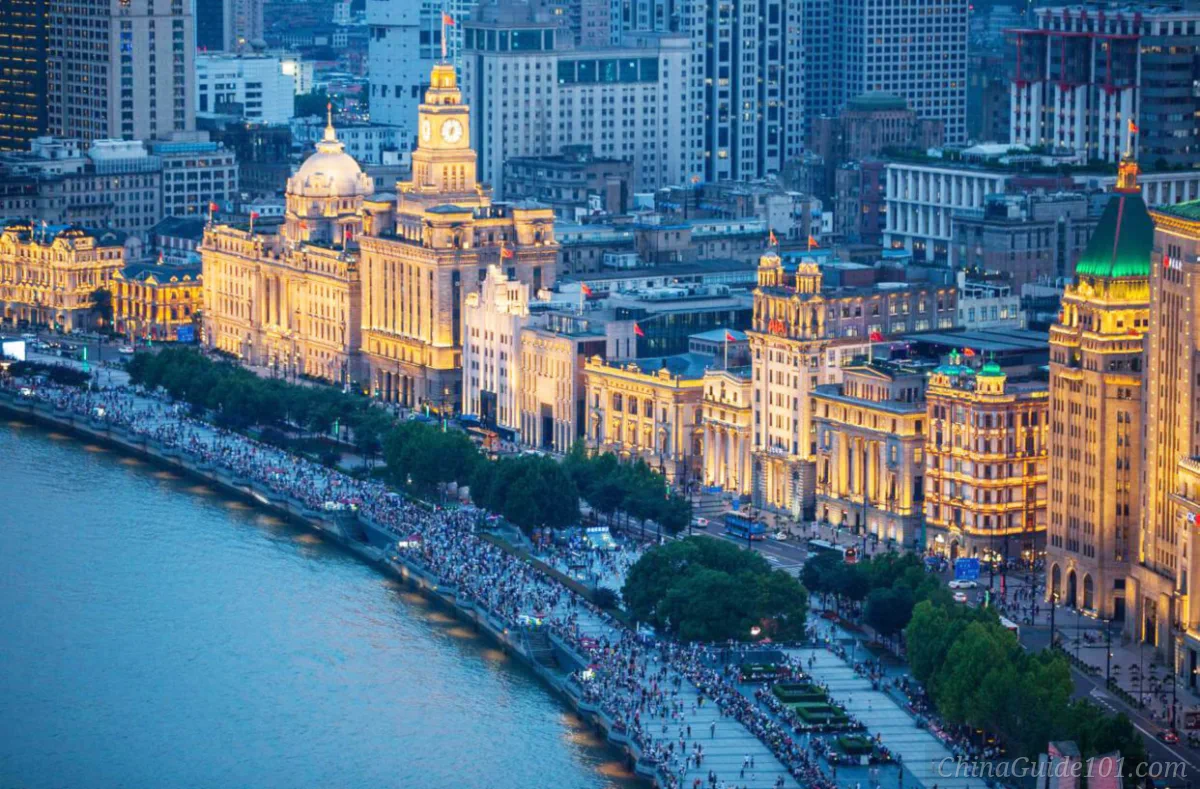
Put simply, The Bund is a waterfront walkway where you can see two different versions of Shanghai standing side by side. You are on the west bank of the Huangpu River, lined with century‑old stone buildings that once served as the city's banks, hotels and international trading houses. Look across the water, and you will see Pudong's futuristic skyline of modern glass skyscrapers.
That contrast is the whole point. Old Shanghai and new Shanghai, a few hundred metres apart, separated only by the river. No tickets or guided tours are required to experience its charm — a leisurely walk along the promenade is enough to understand why this waterfront defines Shanghai's identity.
What Can You See at The Bund?
The Bund Historic Buildings
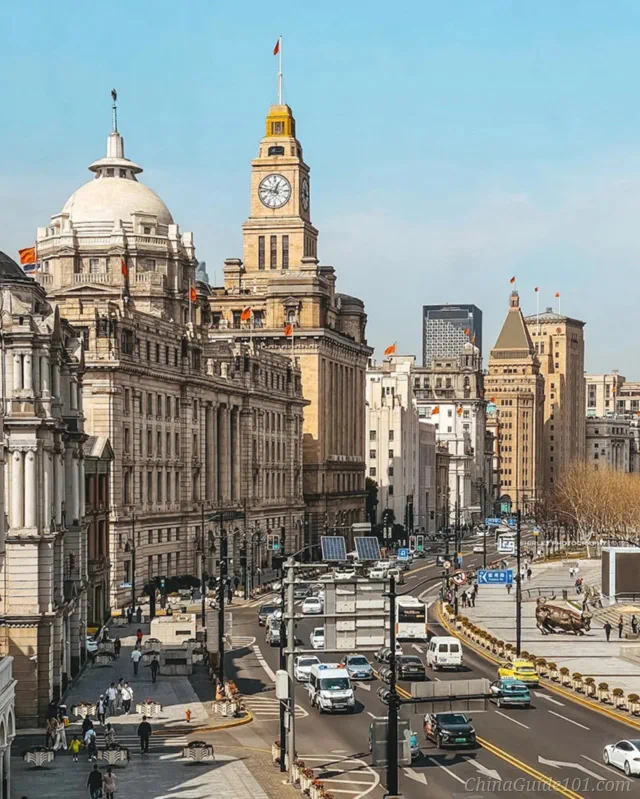
The Bund stretches for about 1.5 kilometres and is lined by 52 historic buildings in a range of architectural styles, including neoclassical, Gothic and Baroque influences. Often called an open‑air museum of international architecture, these structures were once the core financial and diplomatic hub of old Shanghai.
Most buildings now operate as commercial offices rather than public exhibition spaces. Visitors primarily experience their grand exterior facades and intricate vintage details, which offer a vivid glimpse of Shanghai's early global prosperity without needing indoor entry. Many of these facades remain instantly recognisable; several well‑known names among the row include the former HSBC building and the Customs House with its famous clock tower. Even if you cannot step inside, take a moment to look upward at the stone carvings, columns and decorative roofwork.
Huangpu River and Pudong Skyline
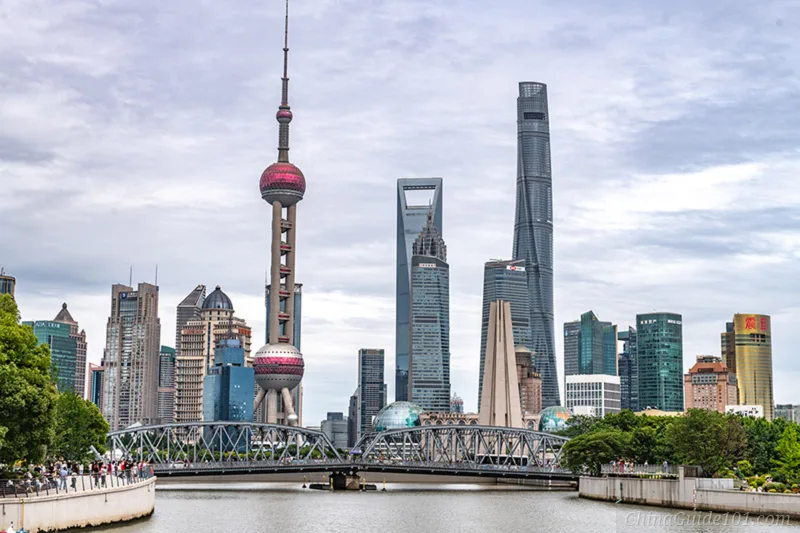
The east‑facing view from the promenade is the highlight for most visitors. Several landmarks define the Pudong skyline, and you will start recognising them quickly:
- Oriental Pearl Tower — the spiky tower with distinctive spherical structures, featured on countless Shanghai postcards.
- Jin Mao Tower — a pagoda‑inspired supertall skyscraper with a classic, timeless silhouette.
- Shanghai World Financial Center — easily identified by its unique top rectangular opening, nicknamed the "bottle opener" by locals.
- Shanghai Tower — the twisting tower and China's tallest building by architectural height.
You do not need paid observation decks to enjoy these iconic views. The free public waterfront promenade delivers the classic panoramic skyline sight that draws travellers worldwide.
The Bund Promenade
The pedestrian walkway in front of the historic buildings is wide and generally easy to walk along. In daylight, you can watch river traffic and sightseeing cruises move along the Huangpu River, with clear visibility of every skyscraper's architectural details. After dark, the entire waterfront transforms: historic facades glow with warm golden lighting, while the modern Pudong skyline lights up with vibrant neon and cool blue illumination.
Strolling along the promenade itself is the core activity. Benches are spaced at intervals if you want to pause, sit and simply watch river traffic drift past. On weekends and holidays the walkway fills quickly, so if you prefer quiet sightseeing try arriving earlier in the day.
Other Landmarks Along The Bund
Several underrated landmarks add depth to your waterfront walk, requiring no extra detours. The Bund Financial Bull is a popular photo stop near the southern end. At the northern end, Waibaidu Bridge provides a classic foreground for skyline photographs, while the Monument to the People's Heroes stands near the northern section of the promenade.
Waibaidu Bridge holds special local significance; this steel truss bridge was completed in 1908 and marked an important early engineering milestone for the city. Many vintage Shanghai photographs feature this bridge framing the river view. The tall stone monument honours those who lost their lives in revolutionary struggles; it is a quiet, reflective spot along the busy waterfront.
Where Are the Best Views at The Bund?
Best View of the Pudong Skyline
The central section of the Bund, around the area opposite Lujiazui, offers one of the clearest classic views of the Pudong skyline. Expect larger crowds here, as many visitors stop to take photos.
Best Spots for Historic Buildings
To focus on the vintage architectural row rather than the river skyline, turn west toward the city from the promenade. The northern section near Waibaidu Bridge is often less crowded than the central Bund. Morning light can be particularly good for photographing the intricate stone and structural details of the historic buildings.
Best Photo Spots
| Spot | Best For |
|---|---|
| Central promenade (around Lujiazui opposite) | Classic full Pudong skyline views, day or night |
| Waibaidu Bridge area (north) | Historic facades, bridge‑and‑skyline compositions |
| Southern Bund | Wider river views and generally fewer people than the central section |
| Huangpu Park area | Suzhou Creek, Huangpu River and northern skyline views |
PRO TIP: SKYLINE VISIBILITY
Keep in mind that haze can occasionally soften distant views of Pudong skyscrapers. If you are chasing perfect skyline shots, a bright clear day will reward your photography efforts.
The Bund Walking Route
Classic The Bund Walking Route
This north‑to‑south route eliminates backtracking and follows the most logical sightseeing flow for first‑time visitors:
Start at Waibaidu Bridge to capture layered bridge, river and skyline scenery.
Walk south at a relaxed pace towards the main waterfront area.
Pause at the central viewpoint for the iconic Pudong panorama. Slow down further as you pass the historic buildings.
Continue to the southern end. (Note: If you plan to connect to Nanjing Road shopping street, exit the waterfront at the central Bund section rather than walking all the way to the southern end for a more convenient route.)
How Long Does the Walk Take?
Adjust your pace based on your travel schedule and photography goals:
- About 1 hour — Quick north‑to‑south stroll, core skyline and landmark snapshots
- 2‑3 hours — Standard full visit, including building sightseeing, sunset viewing and evening illumination
- 3+ hours — Leisure photography‑focused visit, covering blue hour and full night skyline views
PRO TIP: PLANNING YOUR TIME
If you intend to stop frequently for photos or linger to watch sunset, budget extra time for your waterfront walk.
The Bund at Night: Is It Worth Visiting?
Daytime vs Nighttime
| Category | Day | Evening & Night |
|---|---|---|
| Historic Buildings | Sharp, clear architectural details and textures | Warm floodlighting creates a soft, atmospheric vintage vibe |
| Pudong Skyline | Crisp structural details and clear urban layering | Fully illuminated neon skyline, the iconic Shanghai night view |
| Photography Style | Clean architecture and street‑level landscape shots | Atmospheric blue‑hour silhouettes and city light portraits |
| Crowd Level | Manageable, spacious walking conditions | Significantly busier on weekends and public holidays |
| Overall Atmosphere | Calm, relaxed casual sightseeing mood | Lively, bustling downtown Shanghai night vibe |
PRO TIP: BEST VISIT TIME
If you only have time for one visit, avoid choosing strictly day or night. Arrive in the late afternoon, explore in natural daylight, stay through sunset, and watch the waterfront and skyline transition to full night illumination.
PRO TIP: LIGHT ILLUMINATION SCHEDULE
The Bund's historic buildings and the Pudong skyline are illuminated after dark—typically from 18:00 to 22:00 (starting around 19:00 in summer).Note that the light show turns off promptly at 22:00 , so be sure to schedule your visit well before then to experience the fully lit skyline. On major national holidays, special themed light displays may run, though these are not guaranteed year‑round.
Best Time to Visit The Bund
Spring and autumn generally offer the most comfortable conditions for walking along the waterfront. April to May and October to November are often particularly pleasant, although weather and visibility vary from year to year.
Summer (June‑August) brings hot, humid weather; afternoon sunshine can be very strong. River breezes do offer some cooling relief, but sun protection is strongly recommended. Winter (December‑February) is cool and windy by the river, so bring a warm jacket if you plan to stay out after sunset. Visibility over the Huangpu River can change quickly depending on haze.
Beyond seasonal weather, the time of day shapes your whole experience. Mornings are peaceful with thinner crowds; late‑afternoon brings that magical transition period between daylight and artificial night lighting. Friday and Saturday evenings draw the largest visitor numbers along the promenade.
How to Get to The Bund
By Metro (Recommended for most visitors)
East Nanjing Road Station (Lines 2 and 10) — the most convenient metro stop. Take Exit 7 to come out directly onto Nanjing Road Pedestrian Street, where a straight 10-minute walk east leads straight to the promenade.
From Hongqiao Railway Station
Take Metro Line 2 toward Pudong International Airport and get off at East Nanjing Road Station. The journey takes roughly 40 minutes.
From Pudong International Airport
Metro Line 2 provides a connection between Pudong International Airport and central Shanghai. Allow around one hour or more to reach East Nanjing Road, depending on the service and transfer conditions. Check the destination displayed on the train before boarding, as not every Line 2 service operates through the entire line.
Taxis & Ride‑Hailing
- Walk one block inland to a more accessible pickup point if necessary.
- Don't expect taxis or ride-hailing vehicles to drop off or pick up directly beside the waterfront, as street space right on the promenade is heavily restricted for vehicles and rush hours make stopping difficult.
Huangpu River Ferry (Alternative Arrival Option)
For a cheap and scenic river crossing, take the public commuter ferry from Jinling East Road Ferry Terminal (金陵东路渡口)on the Bund side to Dongchang Road Ferry Terminal (东昌路渡口)in Lujiazui. Tickets cost only ¥2 and can be paid via Alipay, WeChat Pay, or contactless transit cards, offering an affordable alternative to costly sightseeing cruises.
Where to Stay Near The Bund
Use this overview to pick an area based on your travel priorities:
| Area | Best For |
|---|---|
| The Bund / Huangpu River waterfront | Upscale hotels, wonderful evening views right outside your door; higher price range |
| East Nanjing Road | Central location for sightseeing and shopping; walkable to the waterfront |
| People's Square | Good mid‑range hotel selection; convenient metro hub for day trips across Shanghai |
| Lujiazui (Pudong side) | Stunning west‑facing rooms with direct views back over to the Bund historic facades |
PRO TIP: VIEW CHOICE
If waterfront views are your priority while sleeping, compare both banks: staying on the Pudong side gives you a bedroom view looking west onto the lit‑up Bund buildings, whereas accommodation on the Bund itself faces east toward the Pudong skyscrapers. Both options have their appeal for visitors.
The Bund Half-Day Itinerary
PRO TIP: SEASONAL TIMING
The schedule below is ideal for spring, summer, and early autumn. In winter, as sunset occurs around 17:00, shift the entire timeline 1 to 1.5 hours earlier.
This practical timeline lets you experience daylight views, sunset, blue hour, and the illuminated night skyline without rushing:
Arrive at the promenade, start your leisurely north‑to‑south walking route
Explore Waibaidu Bridge and the quieter northern waterfront
Wander past the row of historic buildings; stop for photos
Make your way toward the central viewpoint
Position yourself at the central skyline viewpoint
Enjoy the blue hour and watch the buildings and skyline light up
Stroll and take night photos along the promenade
After you finish the waterfront walk, you can easily walk over to East Nanjing Road for dinner. This half‑day plan works well if you are combining The Bund with other downtown Shanghai activities on the same day.
The Bund Travel FAQs
Q: Is The Bund free to visit?
Yes. The public waterfront promenade has no entry charge, tickets or advance reservations .
Q: How long do you need at The Bund?
Most travellers spend 2‑3 hours . If you would like to see both daylight scenery plus the illuminated night skyline, plan for closer to 3 hours.
Q: What is The Bund famous for?
The striking contrast:grand colonial‑era historic architecture lining the west bank of the Huangpu River, facing the futuristic modern skyscraper skyline of Pudong across the water.
Q: Can you visit The Bund and Lujiazui on the same day?
Yes. The Bund and Lujiazui are easy to pair in a single trip. Walk the promenade in the afternoon, then cross the river to Lujiazui for evening city views.
Q: Is a Huangpu River cruise worth adding?
Night‑time river cruises offer a completely different perspective, looking back toward the lit‑up Bund facades from the water. If you dislike large crowds on the shore‑side promenade, a cruise can be a good alternative. However, cruises add significant extra cost; you can still see excellent night views staying on land.
Q: Can foreign visitors visit The Bund without a Chinese ID card?
Yes. The public waterfront is open to visitors and does not require a ticket or reservation.Carry your passport when travelling in Shanghai, however, as you may need it for ticketed attractions, cruise boarding or other identity checks.
PRO TIP: CROSSING THE RIVER
Take the ¥2 public ferry or Metro Line 2 to cross between The Bund and Lujiazui. We recommend skipping the overpriced Bund Sightseeing Tunnel, which offers limited value compared to the ferry.
Practical Tips for Visiting The Bund
PRO TIP: MAXIMIZE YOUR VISIT
If your Shanghai itinerary is tight, prioritise the late‑afternoon‑to‑evening window. This single visit gives you both daylight views of the old buildings and the famous glowing night‑time skyline across Huangpu River. The waterfront is accessible around the clock, but the main evening period offers the most distinctive Bund experience. Keep in mind that special large‑scale events may temporarily restrict sections of the promenade; you can check for local public‑event announcements shortly before your Shanghai trip.