
Roughly 120 kilometres east of Xi'an in Huayin, Shaanxi, Mount Huashan is the western sacred peak among China's Five Great Mountains. Its jagged granite massif is crisscrossed by narrow, open ridge paths and steep stone steps — earning it a reputation as one of China's steepest and most dramatic mountains. This is not a casual stroll; Huashan calls for thoughtful advance planning. It suits travellers comfortable with uneven ground and high exposed ridges, while visitors expecting gentle, easy sightseeing will likely find it tough going. This guide is written for independent international travellers figuring out how to tackle the climb, which cable car to pick, and whether a day trip from Xi'an is realistic.
Is Mount Huashan Worth Visiting?
Mount Huashan's biggest draw is its raw cliffside scenery: narrow ridge trails, sweeping granite ridgelines and sweeping views stretching out over the Qinling Mountains. It appeals strongly to hikers, landscape photographers and anyone chasing dramatic mountain scenery. It can also work for casual sightseers, as long as they stick to cable-supported routes and come ready for steep stair climbs.
That said, the mountain is not for everyone. Travellers with a fear of heights, persistent knee pain, limited stamina or mobility challenges are better off sticking to shorter, easier sections, or skipping the full peak loop entirely.
PRO TIP: Route Planning Rule
Do not try to pair Huashan with the Terracotta Warriors on the same day. Travel time, cable car queues and the physical effort involved make this schedule far too tight, and you will likely end up rushed for both.
Understanding Mount Huashan and Its Five Main Peaks
Mount Huashan has five main peaks connected by steep stone paths and ridgelines. Each has a different character, from sunrise viewpoints and dramatic granite formations to the mountain's highest summit. Knowing what each peak offers can help you decide which areas to prioritise, especially if you are using a cable car and have only one day on the mountain. The peaks are connected by walking routes, but there is no single sightseeing order that suits every visitor.
East Peak
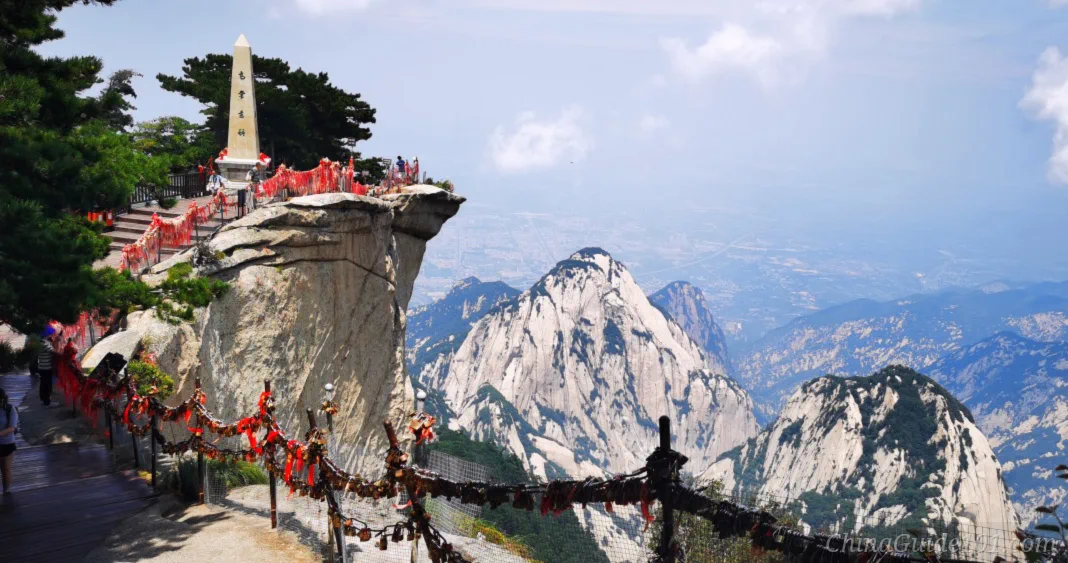
East Peak (Chaoyang Peak, 朝阳峰) is best known for sunrise views. Its exposed eastern outlook and Chaoyang Terrace (Facing-the-Sun Terrace) make it a popular destination for visitors who stay overnight or begin hiking before dawn. If sunrise is your priority, plan your route and overnight arrangements around the time needed to reach the peak in darkness. Weather, visibility and crowd levels can all affect the experience.
West Peak
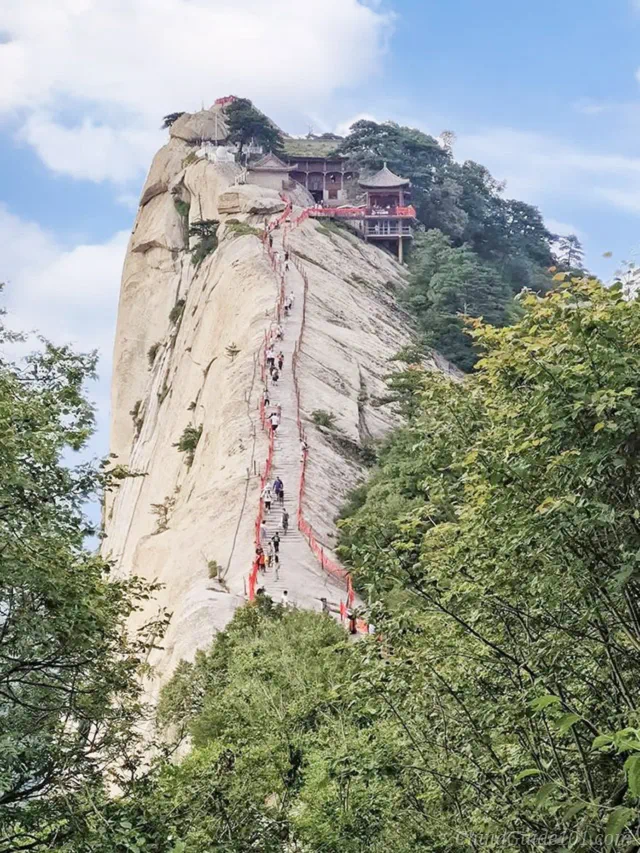
West Peak (Lianhua Peak, 莲花峰) is known for its dramatic granite formations, steep cliff faces and rocks traditionally associated with the shape of a lotus flower. The upper station of the West Peak Cable Car brings visitors directly into the high mountain area near this peak, making it a convenient starting point for many sightseeing routes. From here, visitors can continue on foot toward South Peak and other parts of the main peak area, depending on their time and physical condition.
South Peak
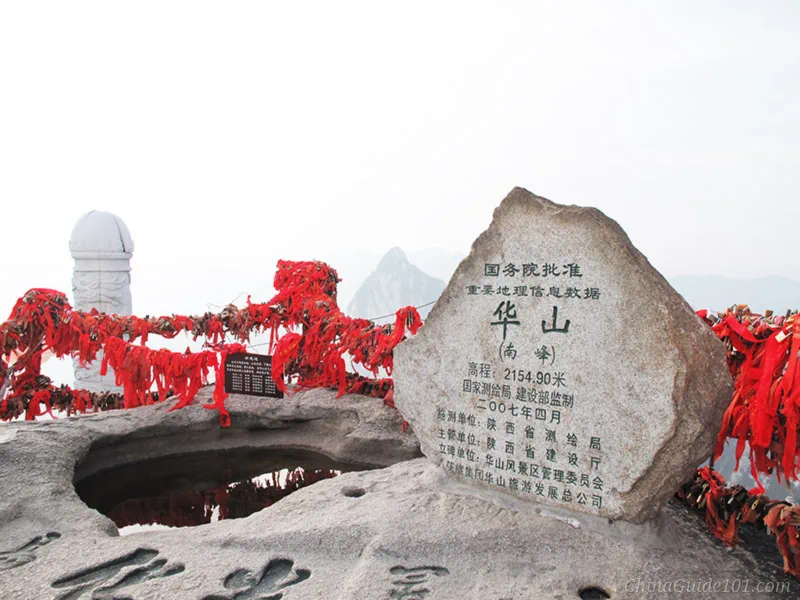
South Peak (Luoyan Peak, 落雁峰) is the highest of Huashan's five main peaks and offers expansive views across the surrounding mountain landscape on clear days. The famous Plank Walk in the Sky (Changkong Zhandao) is also located in the South Peak area. Access to the plank walk is subject to operating arrangements, queues and safety restrictions, so check the current conditions before making it a central part of your itinerary.
North Peak
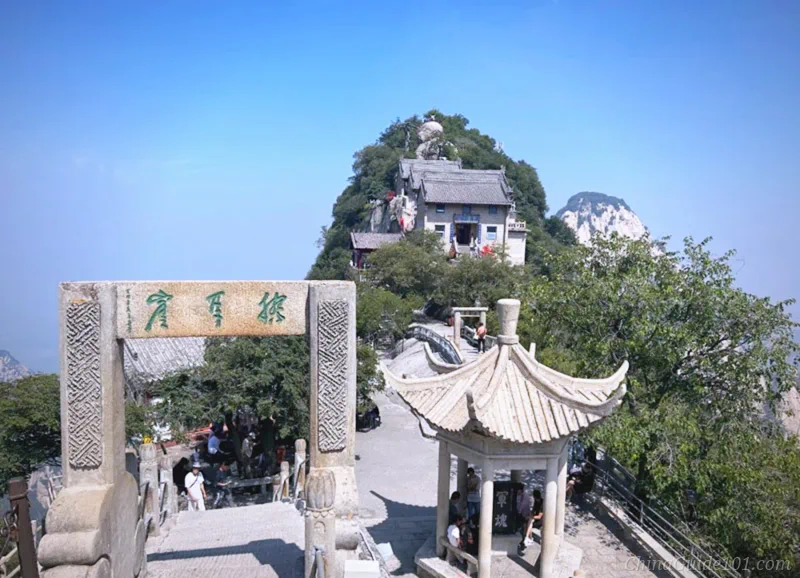
North Peak (Yuntai Peak, 云台峰) is the lowest of the five main peaks and the upper station of the North Peak Cable Car. It is an important point on routes that approach the higher peaks from the northern side. Visitors hiking up from the traditional valley trail near Yuquan Courtyard arrive by a different route from those taking the cable car, so do not confuse the cable car station with the trailhead. From North Peak, continuing toward the other peaks involves substantial uphill walking and steep stair sections.
Central Peak
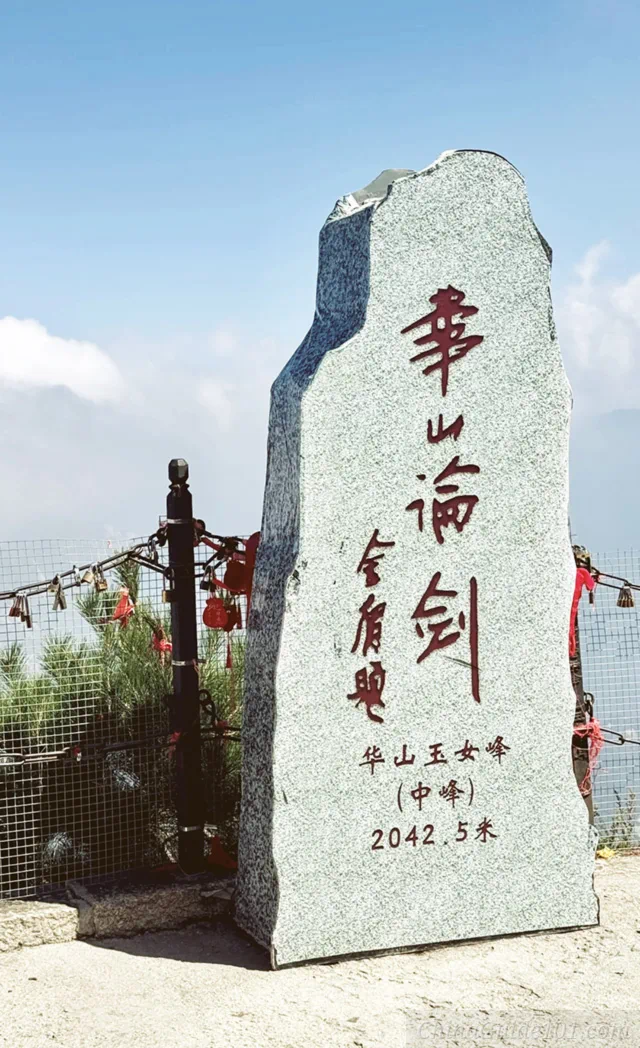
Central Peak (Yunü Peak, 玉女峰), also known as Yunü Peak or Jade Maiden Peak, lies among the main peak group and is associated with traditional legends about the Jade Maiden. It is often visited while walking between the better-known peaks rather than treated as a separate destination. Although many visitors spend less time here than at East, West or South Peak, it helps complete an understanding of Huashan's five-peak layout.
The two cable cars serve different sides of the mountain and lead to different starting points for your walk. The West Peak Cable Car gives access to the upper mountain near West Peak, while the North Peak Cable Car reaches the lower North Peak area. Choose your route before buying tickets, and allow enough time for the steep steps and walking distances between peaks. Reaching one peak does not mean the others are close or easy to reach.
Mount Huashan Tickets, Cable Car Prices and Cable Car Operating Hours
Prices below were verified in October 2026. Entry tickets, tourist shuttle buses and cable car fares are sold separately with no bundled packages available.
Scenic-Area Admission Tickets
The adult entry ticket costs CNY 160 in peak season (March 1 – November 30) and CNY 100 in the off season (December 1 – February 28 of the next year). This main ticket is valid for 48 hours and includes access to Xiyue Temple and Xianyu Valley. Shuttle buses and cable cars are additional paid items. Always check the official booking page for updated timed-entry rules and entrance access terms before your trip.
Tourist Shuttle Bus
One-way, Tourist Center ↔ Cable Car Terminals
West Peak shuttle:CNY 40 (fixed price all year round, no seasonal change);
North Peak shuttle:CNY 20 (fixed price all year round).
One-Way Cable Car Fares
West Peak Cable Car:CNY 140 (peak season) /CNY 120 (off season);
North Peak Cable Car:CNY 80 (peak season) /CNY 45 (off season).
PRO TIP: Cable Car Schedule Warning
Cable cars normally run 07:00–19:00. Timetables shift with the seasons, and the West Peak and North Peak lines run different operating hours. Check the official schedule for your travel date, including the last uphill boarding time and the final downhill departure time. These two cutoff times are not identical. Reserve plenty of buffer time for hiking and long queues. Service may also be suspended without prior notice due to strong winds, thunderstorms, ice or routine maintenance.
Two separate entry gateways apply to different routes:
- Hikers taking the original footpath start at Yuquan Courtyard (Huashan Gate) with a hiking-only ticket.
- Visitors taking cable cars must start from the main Tourist Center. Always confirm your ticket covers the entrance you plan to use before booking.
Optional Extra Charges (Voluntary Experience)
Plank Road in the Sky and Eagle Turning Over have been suspended for facility maintenance and safety upgrades starting 15 September 2026. They remain closed until further official notice. Each normally costs CNY 30 per person with advance reservation required once they reopen. All other areas of Huashan stay open as normal.
Ticket Bundle Note
The official reservation page offers many combo packages with different combinations of entry ticket, cable car and shuttle bus. Package pricing varies widely. Double-check exactly what each bundle includes before checkout, to avoid buying services you do not need or missing transport required for your planned route.
How to Buy Tickets with a Foreign Passport
Mount Huashan runs a real-name, timed-entry reservation system. Ticket booking and entry procedures differ for visitors using non-Chinese travel documents. The main entry ticket is valid for 48 hours and covers the main scenic zone, Xiyue Temple and Xianyu Valley; shuttle buses, cable cars and optional experience routes are priced and booked separately.
Foreign visitors may use a passport or a valid foreign permanent residence permit for ticket arrangements. Visitors from Hong Kong, Macao and Taiwan can use their relevant travel permits. All non-Chinese ID holders must visit the special ticket counter to complete document verification and exchange for entry credentials. Requirements are subject to change, so verify the latest procedure before your trip.
You can check the following ticket booking options:
- Official WeChat account:Search for 华山旅游服务平台(Huashan Tourism Service Platform) to view ticket availability, timed-entry slots and booking rules. Passport holders often cannot complete fully online check-in and will need on-site document exchange after booking. Bookings are available up to 10 days in advance, and sales close once daily capacity is reached.
- Trip.com:Check Mount Qingcheng tickets on Trip.com .
On-site special ticket counter: Present your original physical passport or eligible travel document to complete manual verification and ticketing. Availability is limited, especially on weekends and public holidays.
Bring the original travel document used for your reservation, and set aside extra time for manual verification and ticket exchange. Book well ahead for weekends and statutory holidays; do not rely on same-day on-site purchases.
West Peak Cable Car vs North Peak Cable Car
| Comparison Item | West Peak Cable Car | North Peak Cable Car |
|---|---|---|
| Core advantage | Drops you close to the high summits of West and South Peaks | Lower overall cost; the upper station sits right beside the North Peak viewpoint |
| Best for | Travellers prioritising South, West and East Peaks and wanting to cut down on steep uphill walking | Budget-focused visitors, or those starting their hike from the lower North Peak area |
| Route considerations | You still face lots of walking, ridge crossings and stair climbs between the five peaks | Once you get off the cable car, a long uphill stretch waits to reach the higher South and East Peaks |
| Cost profile | More expensive, including the pricier West Peak shuttle fare | Cheaper overall |
PRO TIP: Cable Car Function Note
These cable cars only run up from the valley to the peaks. They do not ferry you between summits. Your choice of uphill and downhill cable car shapes your whole day's walking route, not just one short transfer.
Best Mount Huashan Hiking Routes
Cable cars cut down the uphill climbing, but hopping between multiple peaks still means lots of walking, steep steps and uneven terrain. Pick your route based on your fitness level, how much time you have, and how comfortable you are with heights.
All time estimates below are approximate. Actual walking time will change depending on queue waits, your pace, crowds and weather.
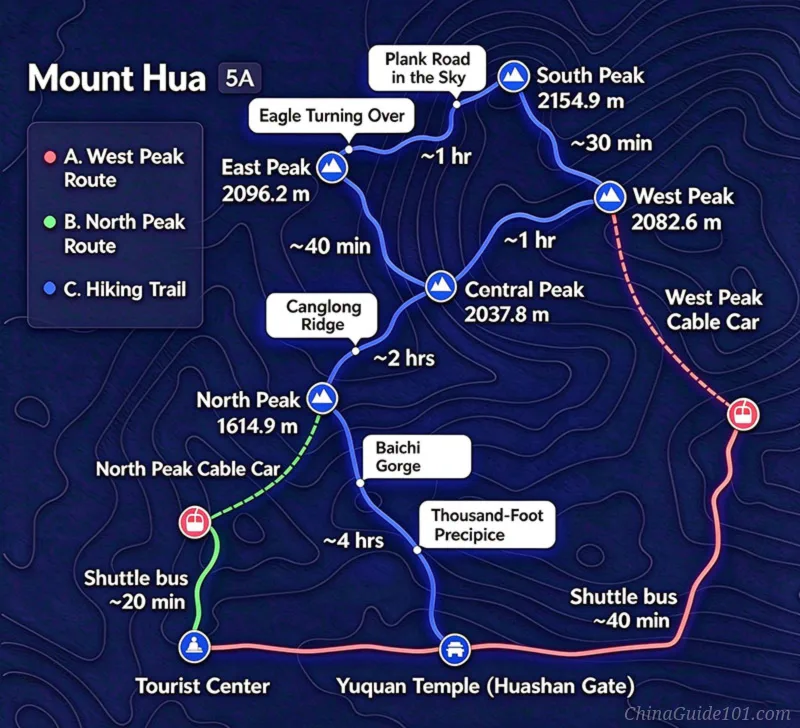
West Peak Up, North Peak Down (Recommended for Fit First-Time Visitors)
Take the West Peak cable car uphill, then make your way across South, East and Central Peaks before descending to North Peak to catch the North Peak cable car back down. Most of this loop heads downhill, which eases strain on your knees, and there is no backtracking. Set aside 5–7 hours of walking on the mountain, not including queues and transfers. This route covers the five main peaks and suits reasonably fit travellers who want to experience Huashan's full summit loop.
North Peak Up, West Peak Down
This one works for fit hikers happy with sustained uphill climbing. You hike up from North Peak toward Canglong Ridge and the central peak loop, then exit via the West Peak cable car. It avoids a long downhill finish but demands more steady climbing. Plan 6–7 hours on the peaks.
West Peak Up and Down
This shorter loop skips North Peak and Canglong Ridge entirely. You visit West, South, East and Central Peaks only, cutting total hiking distance substantially. It is a solid pick for visitors short on time or with lower stamina who want to limit how far they walk. Expect 4–5 hours of hiking.
North Peak Up and Down
This low-cost, lighter itinerary sticks to North Peak and its immediate surroundings, with no climb up to South Peak. It will not give you the full iconic Huashan summit experience, so it only makes sense for travellers on a tight schedule.
Full Hiking Route Without Cable Cars
The traditional trail starting at Yuquan Courtyard is extremely tough and demands good fitness. Do not lock in rigid timelines; the full ascent can easily fill a whole day, depending on how often you stop to rest. Many experienced hikers set off overnight to reach East Peak for sunrise, but this needs careful overnight planning and cannot be squeezed into a same-day day trip from Xi'an. You cannot switch over to the cable car route halfway up.
PRO TIP: Avoid Being Stranded
For all cable-supported itineraries, leave plenty of buffer time before the final uphill boarding cutoff, so you do not get stranded on the peaks after the last downhill cable car departs.
Best Things to See on Mount Huashan
Canglongling (Black Dragon Ridge)
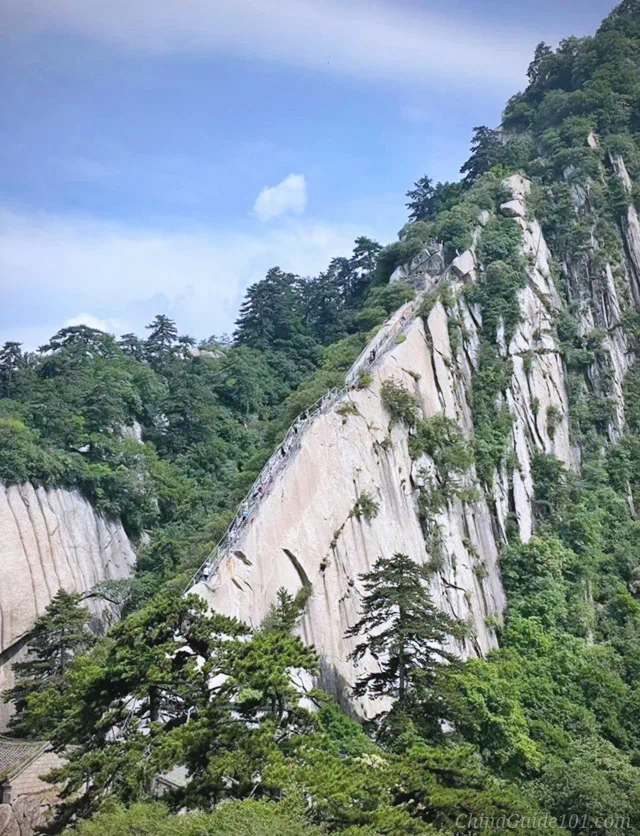
Canglongling is one of Huashan's best-known steep ridge paths, with a long flight of stone steps climbing along a narrow mountain spine. The ascent is physically demanding, and the exposed setting makes it one of the mountain's most memorable sections. Expect slower progress when the trail is crowded, keep to the designated path and avoid stopping in narrow sections where you may block other hikers.
Golden Lock Pass (Jinsuoguan)
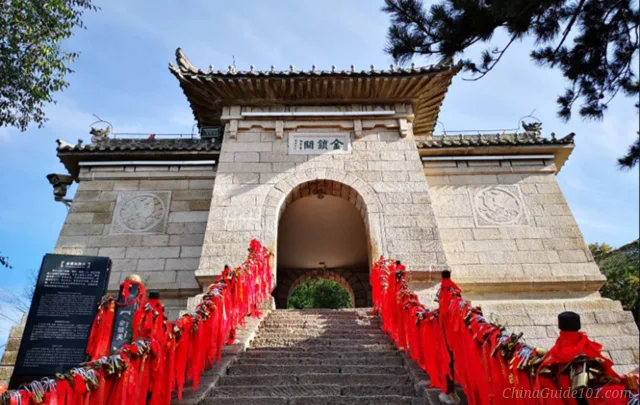
Golden Lock Pass is a historic mountain gateway along the route through Huashan's main peak area. Visitors often associate it with the colourful locks attached to nearby railings, traditionally left as symbols of good wishes and lasting bonds. It is also an important landmark for understanding the walking routes between the peaks. Check trail signs at the pass before continuing, as your next section depends on whether you are heading toward East Peak, West Peak or another part of the mountain.
East Peak Sunrise Viewpoints
East Peak, also known as Chaoyang Peak, is one of Huashan's most popular areas for watching sunrise. The eastern outlook can be especially rewarding when the sky is clear, but visibility depends on weather conditions. If sunrise is a priority, plan your ascent and overnight arrangements in advance, bring suitable warm layers and allow extra time for crowds around popular viewing spots.
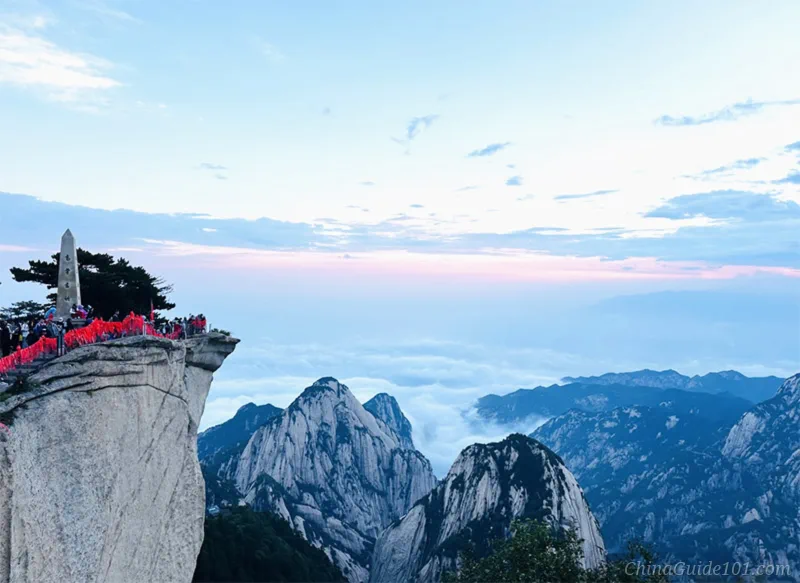
South Peak Summit
South Peak, known as Luoyan Peak, is the highest of Huashan's five main peaks. Its summit area offers a sense of scale and expansive views across the surrounding mountain ridges when conditions are clear. Allow time for the steep paths leading to the summit, and remember that cloud, wind and visibility can change quickly at higher elevations.
West Peak (Lianhua Peak)
West Peak is known for its dramatic granite cliffs and distinctive lotus-like rock formations. The surrounding ridges and deep valleys create some of Huashan's most striking mountain scenery. The West Peak Cable Car provides access to the upper mountain near this peak, making it a popular starting point for visitors who want to explore the main peak area without climbing all the way up from the valley.
Changkong Plank Walk (Plank Road in the Sky)
The Changkong Plank Walk is one of Huashan's best-known cliffside experiences, featuring a narrow walkway fixed to the rock face. It is an optional activity, not a requirement for visiting the five main peaks. As noted above, the route has been suspended for facility maintenance and safety upgrades since 15 September 2026. Do not include it in your planned route unless an official notice confirms that it has reopened.
Yaozi Fanzhen (Eagle Turning Over)
Yaozi Fanzhen is another famous exposed route on Huashan, known for its steep rock-face passage and demanding movement along fixed footholds and handholds. Like the Changkong Plank Walk, it is an optional experience rather than a necessary part of a standard visit to the main peaks. It has also been suspended for facility maintenance and safety upgrades since 15 September 2026. Check the official notice for reopening updates before your visit.
Check Optional Routes Before You Go
Do not build your entire Huashan itinerary around the Changkong Plank Walk or Yaozi Fanzhen. Both are optional experiences and may be unavailable because of maintenance, weather or operational restrictions. Check the latest official notices before departure and keep an alternative route in your plan.
How to Get to Mount Huashan from Xi'an
The most reliable option for independent travellers is the high-speed train from Xi'an North Railway Station to Huashan North Railway Station. Trains run regularly from early morning, and the ride takes just 25–35 minutes. Book tickets early, especially for weekends and national holidays, as seats sell out quickly.
Once you arrive at Huashan North Railway Station, check local bus options heading for the Huashan Visitor Center. The scenic area's official transport guidance mentions free Routes 1 and 2, but confirm whether these buses are running and their timetables before you travel. Taxis and ride-hailing work better for early departures or anyone carrying luggage. Pre-booked private transfers are ideal if you are heading straight to Yuquan Courtyard for the full foot ascent, rather than the cable-car Tourist Center.
PRO TIP: Do Not Mix Up Locations
It is vital to keep these three locations straight: Huashan North Railway Station, the cable-car Tourist Center, and Yuquan Courtyard (the hiking entrance). Mixing them up can cost you hours and make you miss your timed entry slot. Group tour buses are available but less flexible, with fixed schedules and extra stops. Self-guided train plus taxi remains the most practical choice for a day trip.
Can You Visit Mount Huashan in One Day?
A one-day trip from Xi'an is doable, but only with cable-supported routes and an early start. You will need to catch one of the earliest high-speed trains out of Xi'an North, make the transfer from the station to the Visitor Center, finish any required document checks and security, and start your cable car ascent before crowds build up.
The classic West-Up North-Down loop fits comfortably into a single day if you stick to your timeline and add extra buffer time for cable car queues. That said, the full trail hike with no cable cars is too much for a relaxed same-day return trip. Overnight climbing requires rest supplies and advance planning. On weekends and public holidays, cable car waits can stretch for hours, which can derail a tight one-day schedule.
Best Time to Visit Mount Huashan
Spring (April–June) and autumn (September–October) offer the most pleasant hiking weather. Temperatures stay mild, rain is uncommon, and visibility across the granite ridgelines is usually good. These are the top seasons for first-time visitors.
Summer (July–August) is hot, with sudden afternoon thunderstorms. Storms often shut cliffside attractions such as the Plank Walk, and thick fog can wipe out summit views. If you visit in summer, hike early in the morning before bad weather rolls in.
Winter (December–February) is cold, with ice-covered stone steps and occasional snow. Crowds thin out significantly, but many exposed ridge sections close for safety. When ice covers the steps, you will need anti-slip gear and must follow on-site staff directions. Winter visits suit only experienced cold-weather hikers.
If you are chasing sunrise, check daily official updates: fog, wind or ice can ruin sunrise viewing even in peak season.
Safety Tips and What to Pack
- Wear sturdy, non-slip hiking shoes
- Bring lightweight gloves to grip safety chains and knee sleeves for long downhill sections
- Pack a light windproof layer for cooler summit temperatures
- Bring enough water and snacks for your planned hike
- Step aside into wider pull-offs for photos, do not block the trail
- Stick to marked trails and follow staff closure instructions
- Wear ordinary casual trainers which slip easily on damp stone steps
- Rush downhill just to catch the last cable car
- Attempt the full five-peak loop if you have vertigo, knee trouble or heart conditions
- Enter off-trail areas or ignore closure signs
Frequently Asked Questions
Q: Is Mount Huashan worth visiting from Xi'an?
Yes, if you are comfortable with steep mountain terrain. Its dramatic ridge walks feel unlike most standard sights around Xi'an, and a cable-assisted day trip means you do not need to book overnight accommodation.
Q: How long do you need to visit Mount Huashan?
Set aside 5–7 hours on the peaks for the popular West-Up North-Down route, 4–5 hours for the shorter West Peak round trip, and a full day or longer for the trail hike with no cable cars. These times do not include queues or travel between shuttle and cable car stops.
Q: Can you visit Mount Huashan in one day from Xi'an?
Yes, if you take cable cars and leave Xi'an very early. The full trail hike without cable cars is not practical for a relaxed same-day return.
Q: How Much Does a Mount Huashan Day Trip Cost?
For the classic West Peak-up, North Peak-down route, the estimated peak-season cost for scenic-area admission, two shuttle bus rides and two one-way cable car journeys is about CNY 440 per person, based on the listed fares. This estimate excludes high-speed rail tickets from Xi'an, meals, drinks and any optional attractions. Confirm current fares and ticket arrangements before your visit.
Q: Is the West Peak or North Peak cable car better?
For most first-time day trippers, the West Peak cable car is the better starting point, putting you close to the main high summits. The North Peak cable car works best as your downhill exit.
Q: Can you hike Mount Huashan without taking a cable car?
Yes, starting at Yuquan Courtyard on the ancient trail. It is a strenuous long hike, often done as an overnight climb to catch sunrise from East Peak.
Q: Which Mount Huashan route is best for first-time visitors?
West Peak up, North Peak down. This downhill-heavy loop covers the five main peaks and puts less strain on knees, with no backtracking. It works for visitors with reasonable fitness.
Q: How do you get from Xi'an to Mount Huashan?
Take the high-speed train from Xi'an North Station to Huashan North Station, then transfer by bus or taxi either to the Tourist Center for cable-car entry or Yuquan Courtyard for hiking entry.
Q: Is Mount Huashan suitable for beginners?
It can work for newer hikers if they choose the cable-assisted West-Up North-Down route and take it slowly. The full trail ascent is not beginner-friendly.
Q: Is the Mount Huashan Plank Walk compulsory?
No. It is an optional cliff attraction, subject to weather, daily capacity and opening status. Do not centre your whole itinerary around it.
Q: Is Mount Huashan dangerous?
The standard marked summit trails are manageable as long as you follow signage and take care on steep steps. The optional Plank Walk and Hawk Turning Over carry extra risk and only operate with staff on site.
Q: Can foreign visitors buy Mount Huashan tickets with a passport?
Mount Huashan uses real-name timed reservations. Rules for passport holders vary, so check ahead whether you can book online and if you need in-person verification, either through the official hotline or your booking platform.
Q: What is the best season to visit Mount Huashan?
Spring and autumn bring the most stable weather and clear summit views. Summer brings frequent thunderstorms, while winter means icy steps and restricted trail access.
Q: Can you see the sunrise on Mount Huashan without staying overnight?
Only by starting a night hike from Yuquan Courtyard and climbing through the dark to reach East Peak before dawn. Cable cars do not run early enough for sunrise on a regular day trip from Xi'an.
Ticket prices, reservation procedures, cable car schedules and trail access can change with the season or weather. Confirm the latest official notices before travelling, especially during public holidays and winter.